What Lies Beneath
Months before our trip to Stockholm, I stumbled across an article about the city’s extraordinary subway stations—vast underground spaces carved directly into the rock and transformed into works of art. The photos immediately caught my attention, so when we planned a mini break to Stockholm over the summer, exploring the Tunnelbana was firmly on my list.
I wasn’t disappointed.
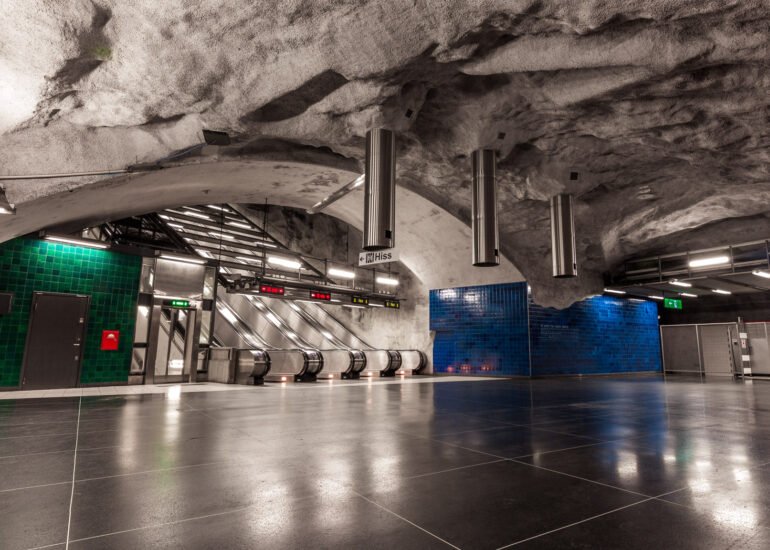
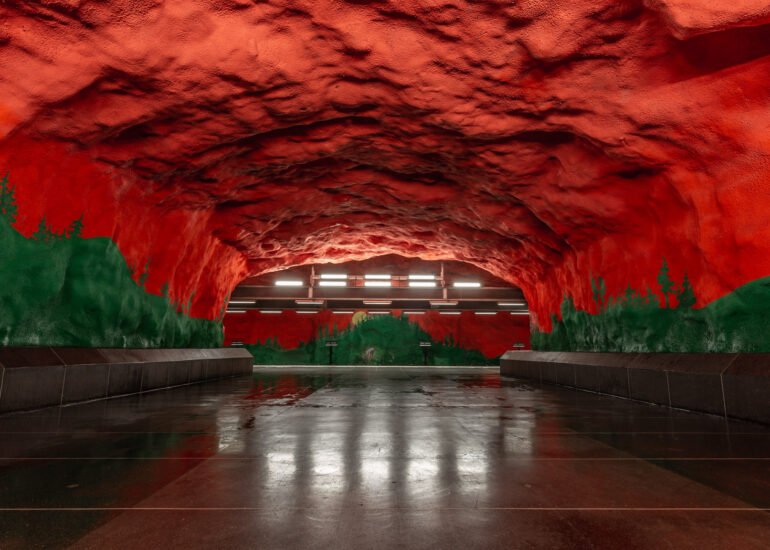
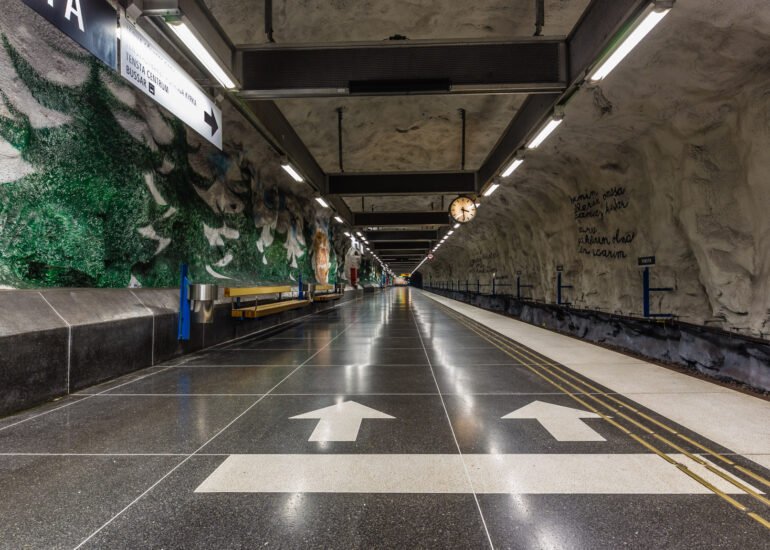
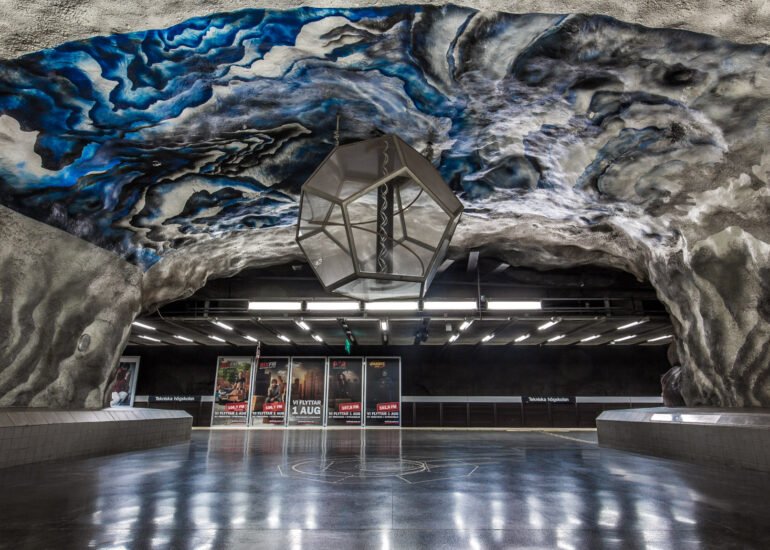
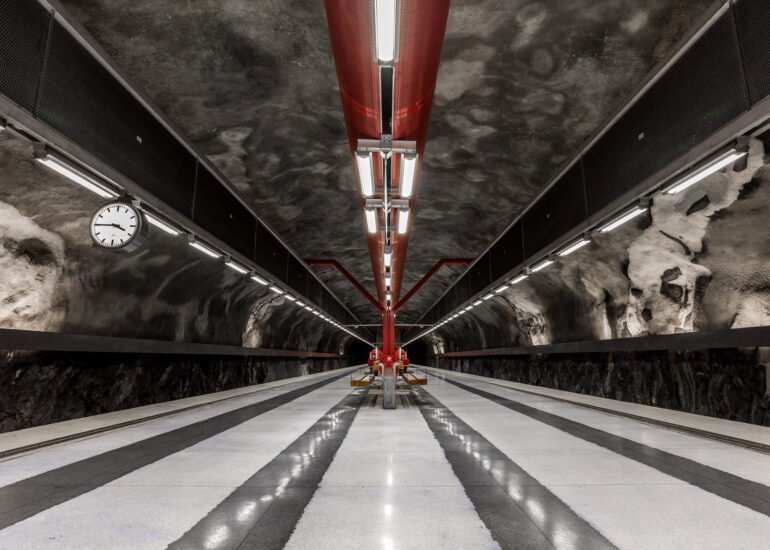
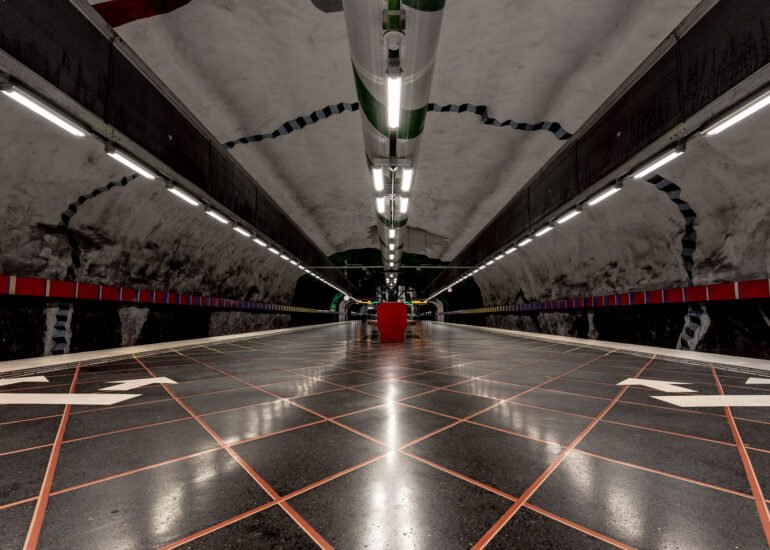
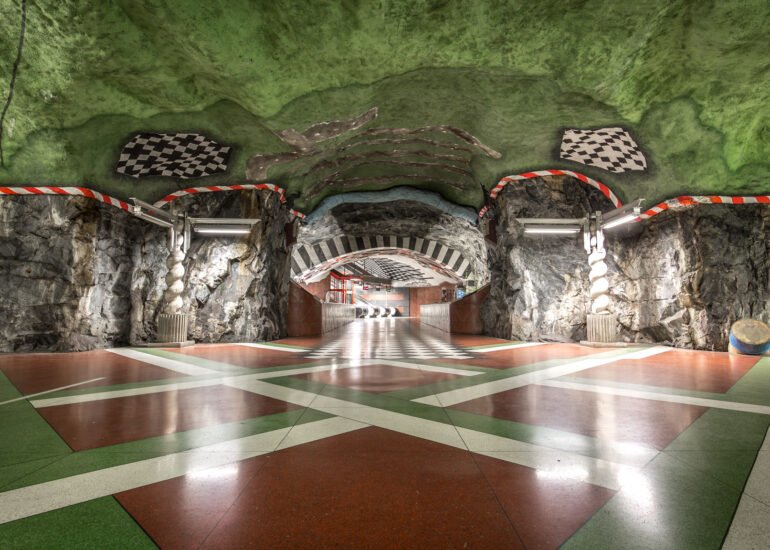
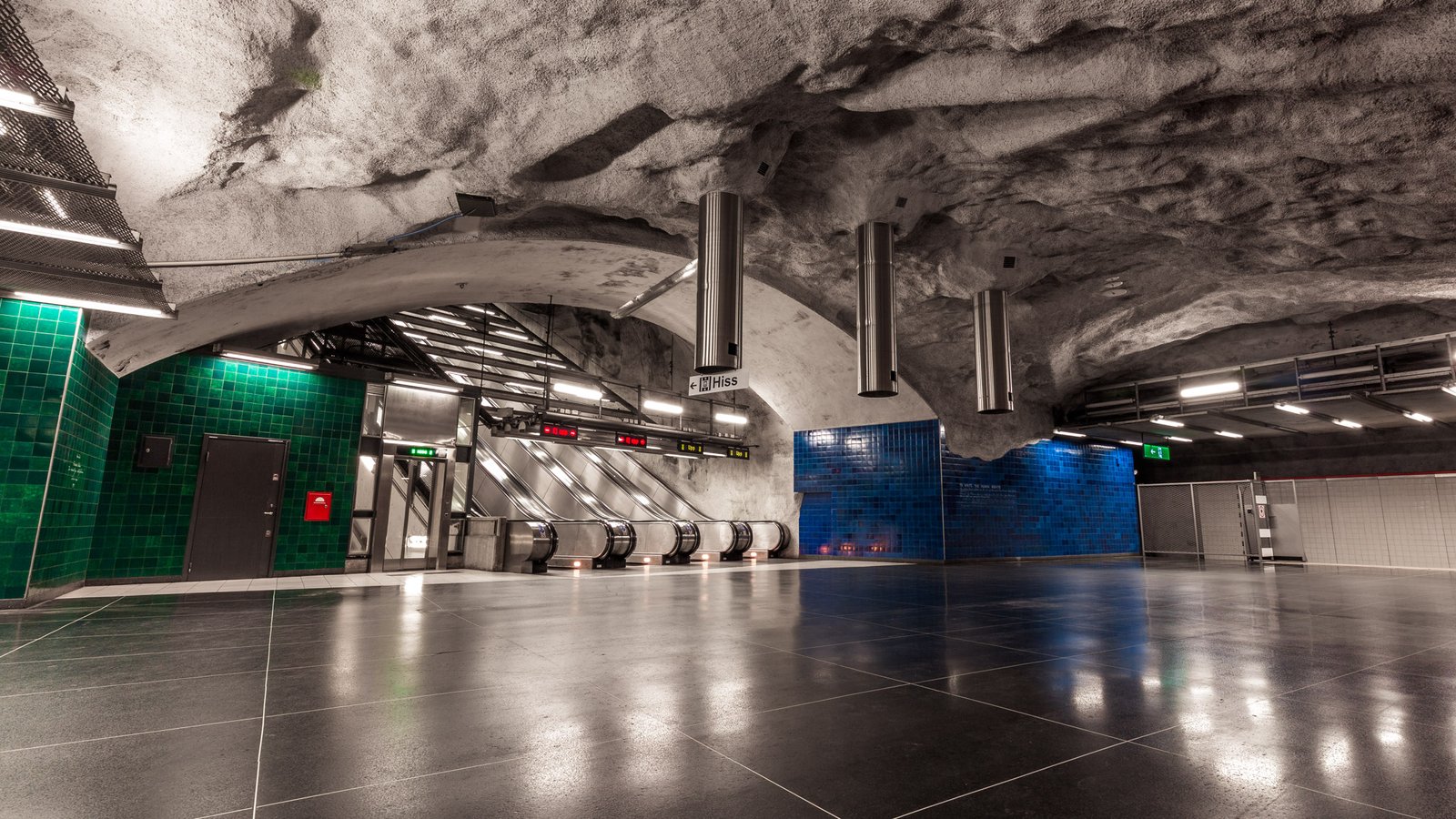
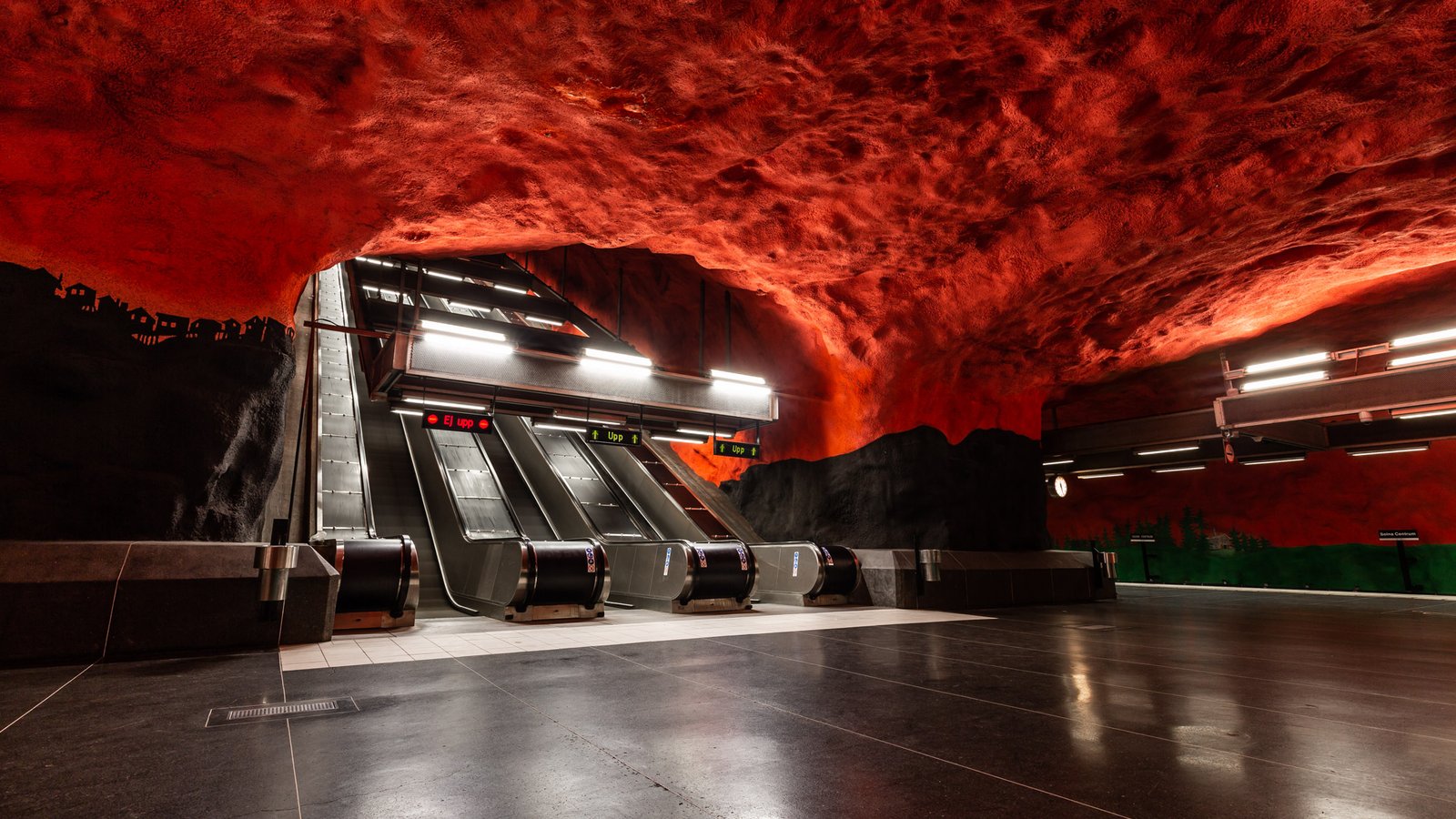
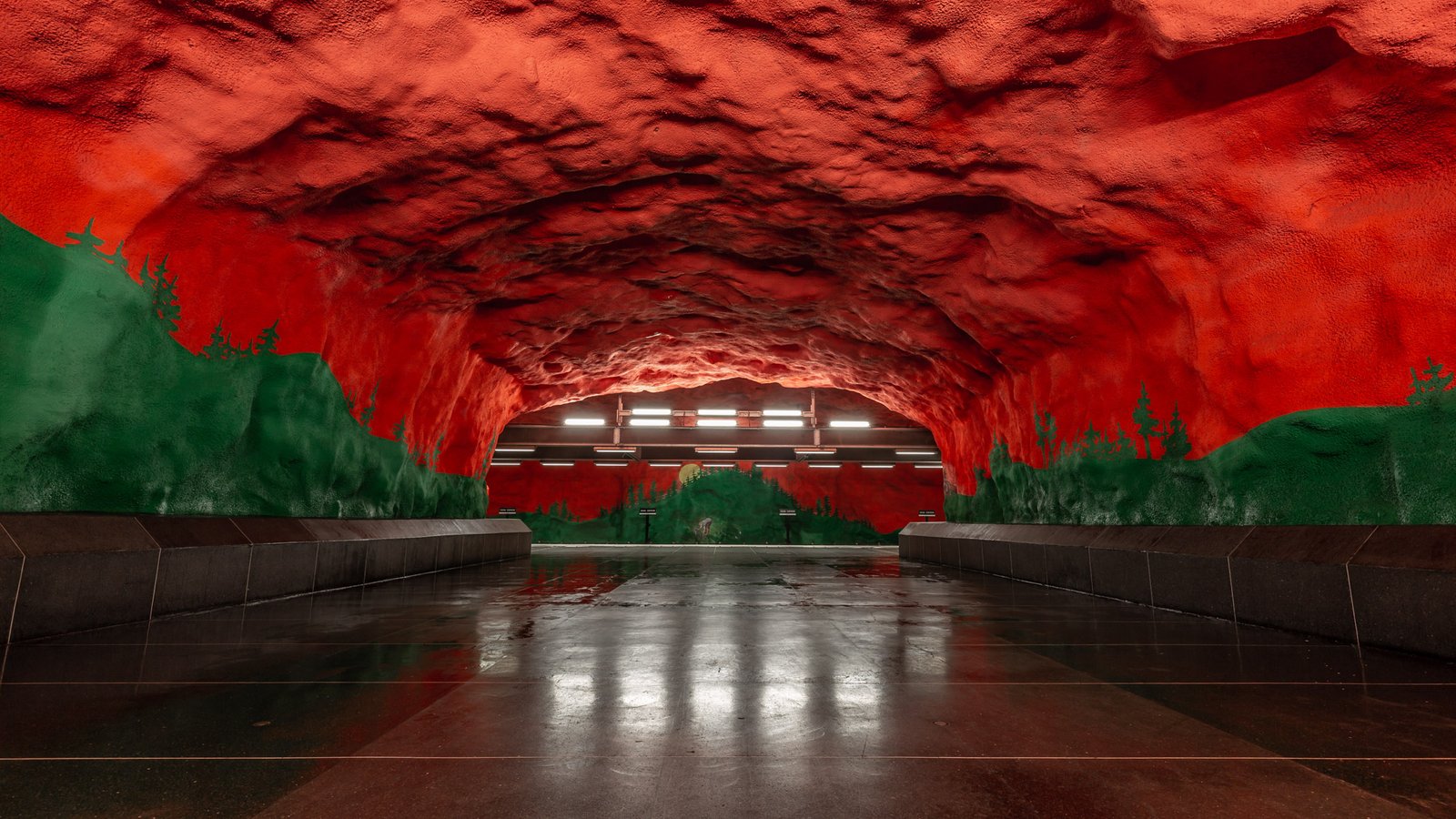
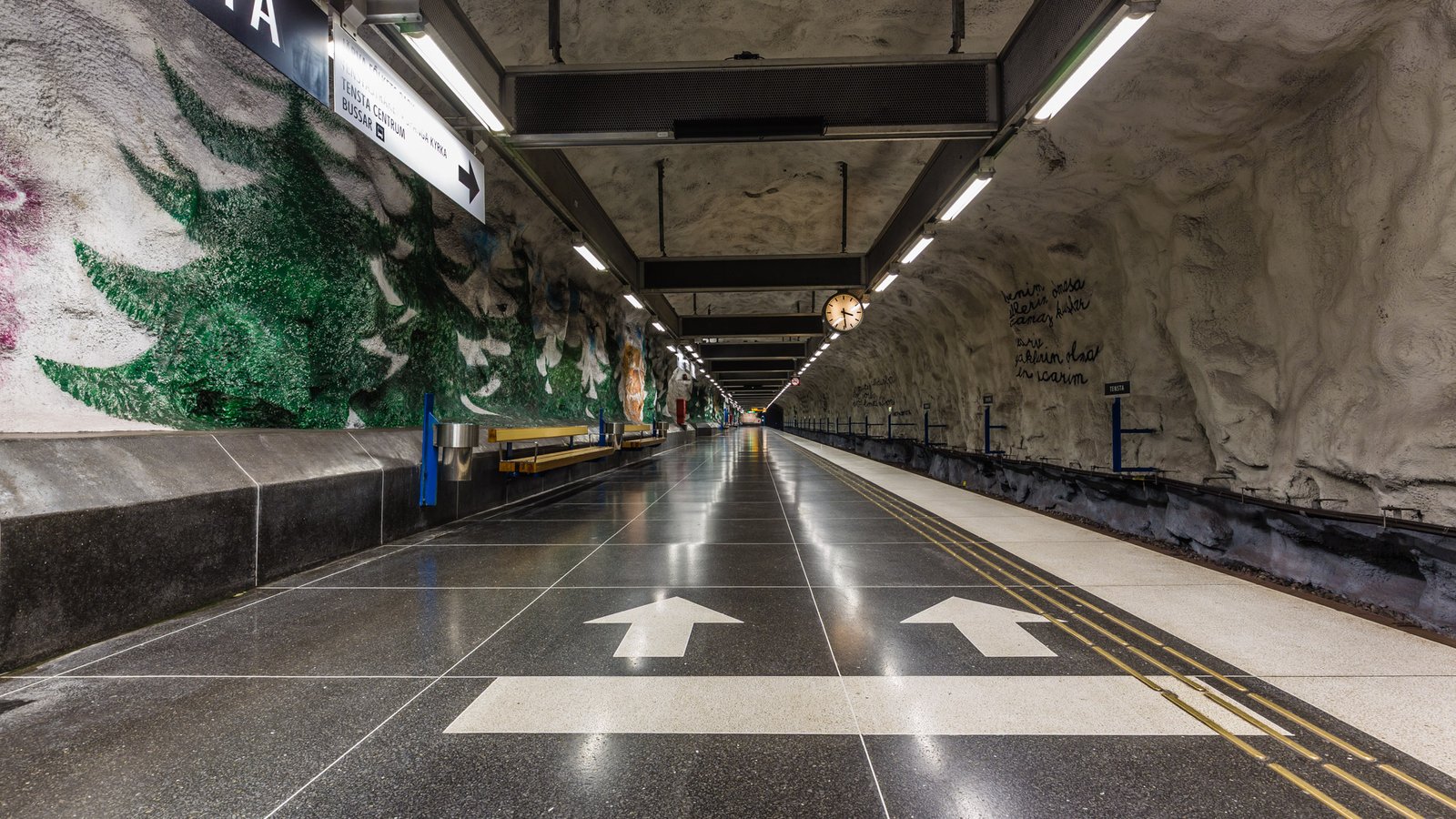
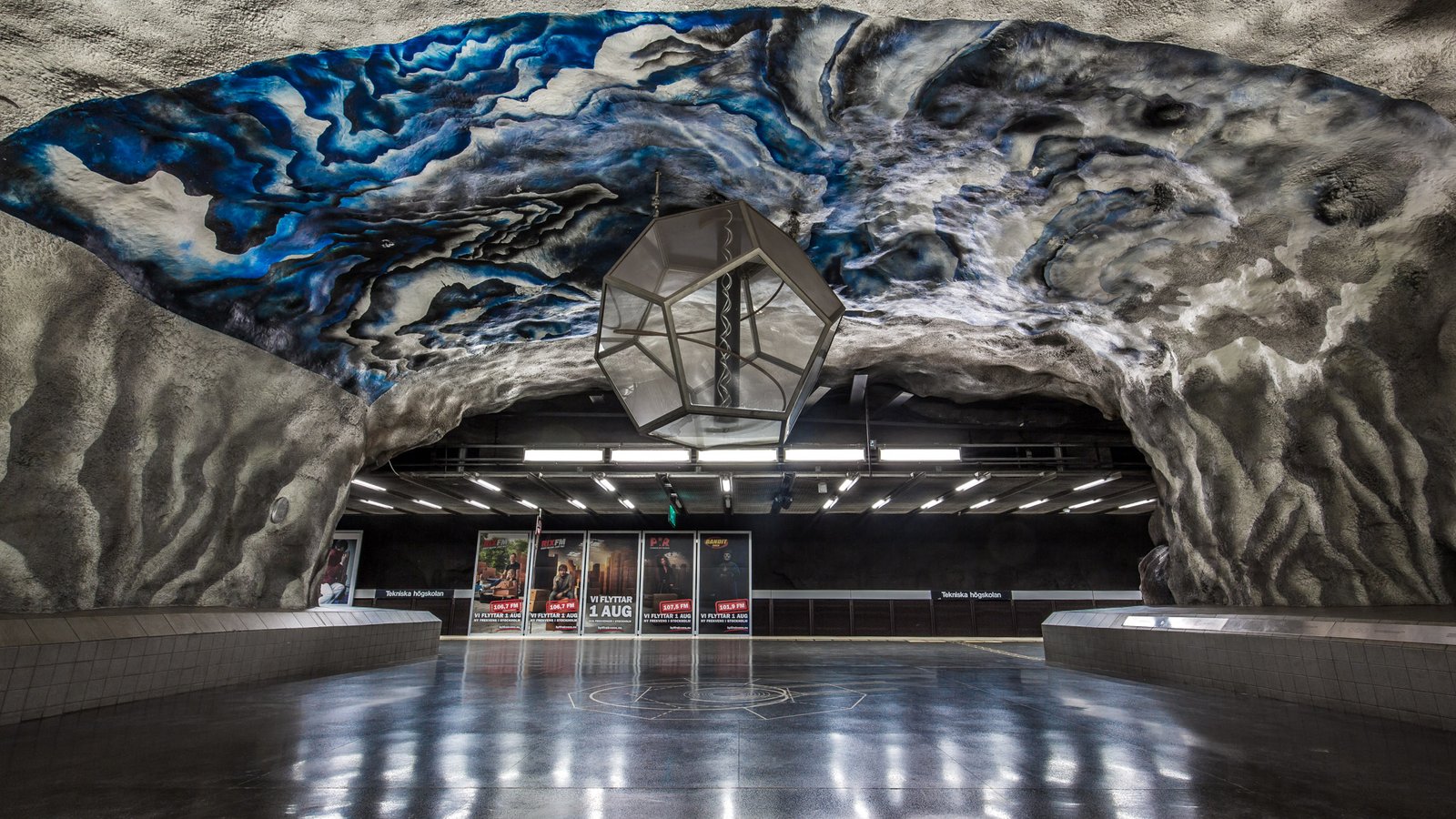
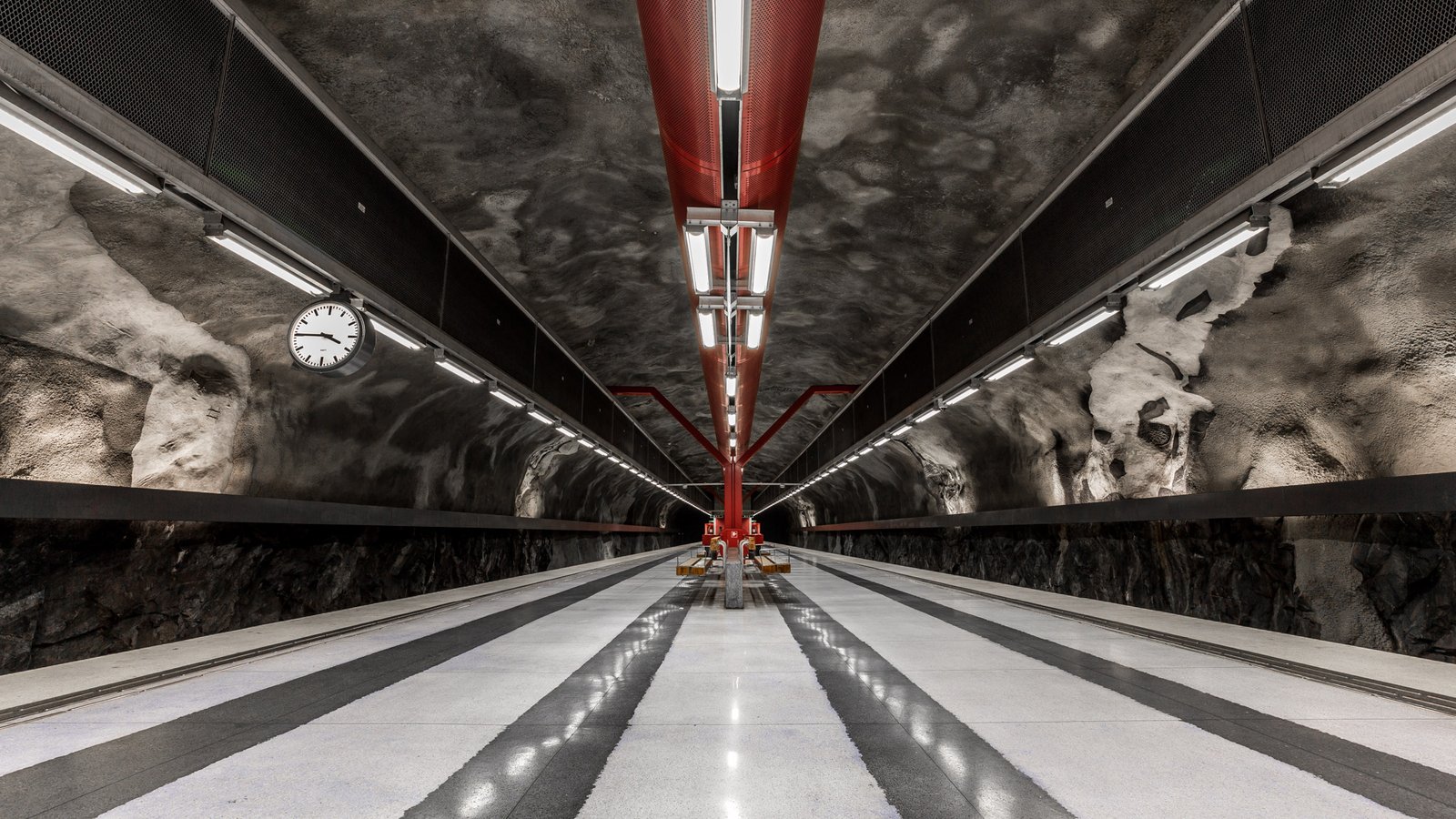
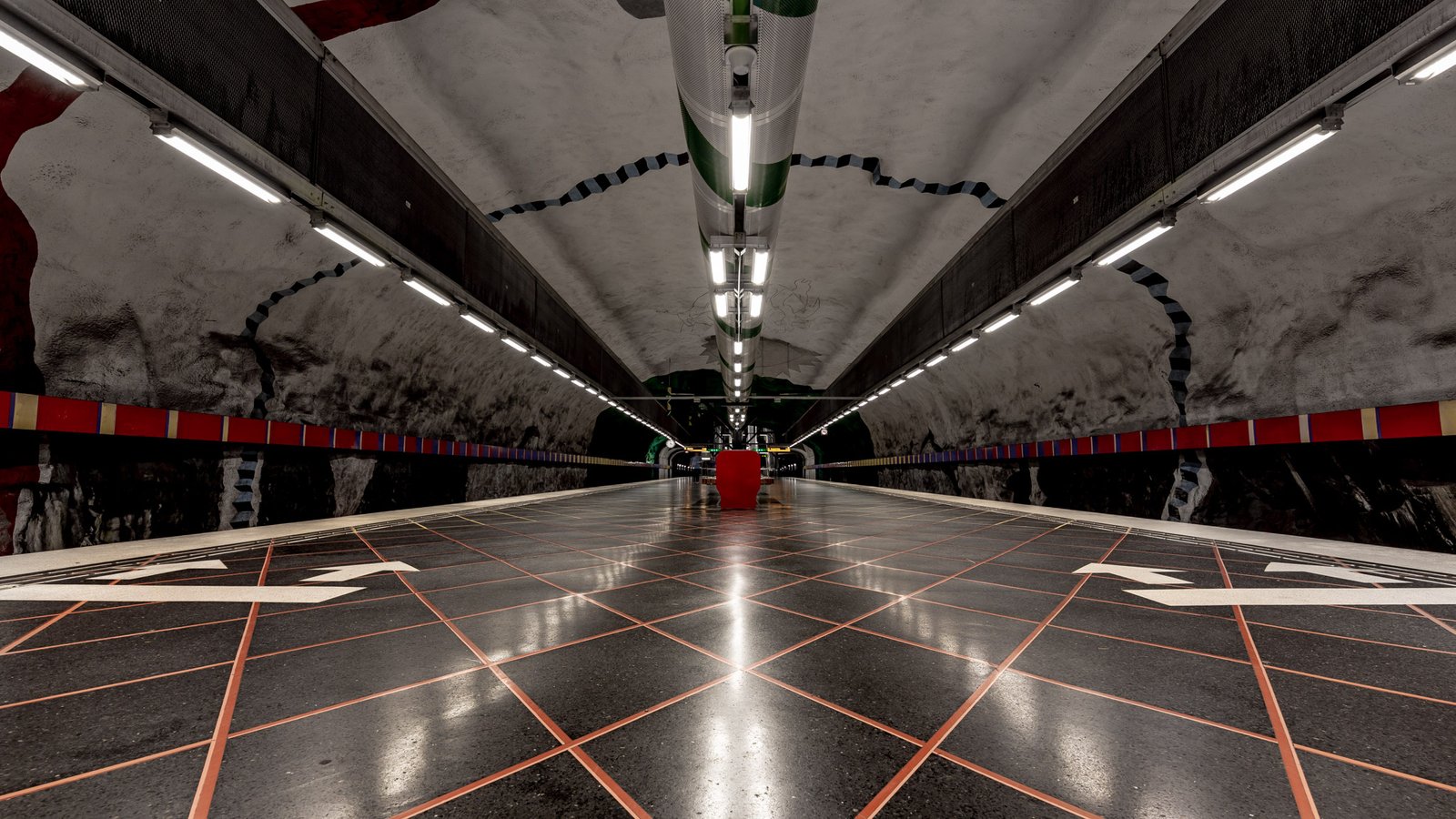
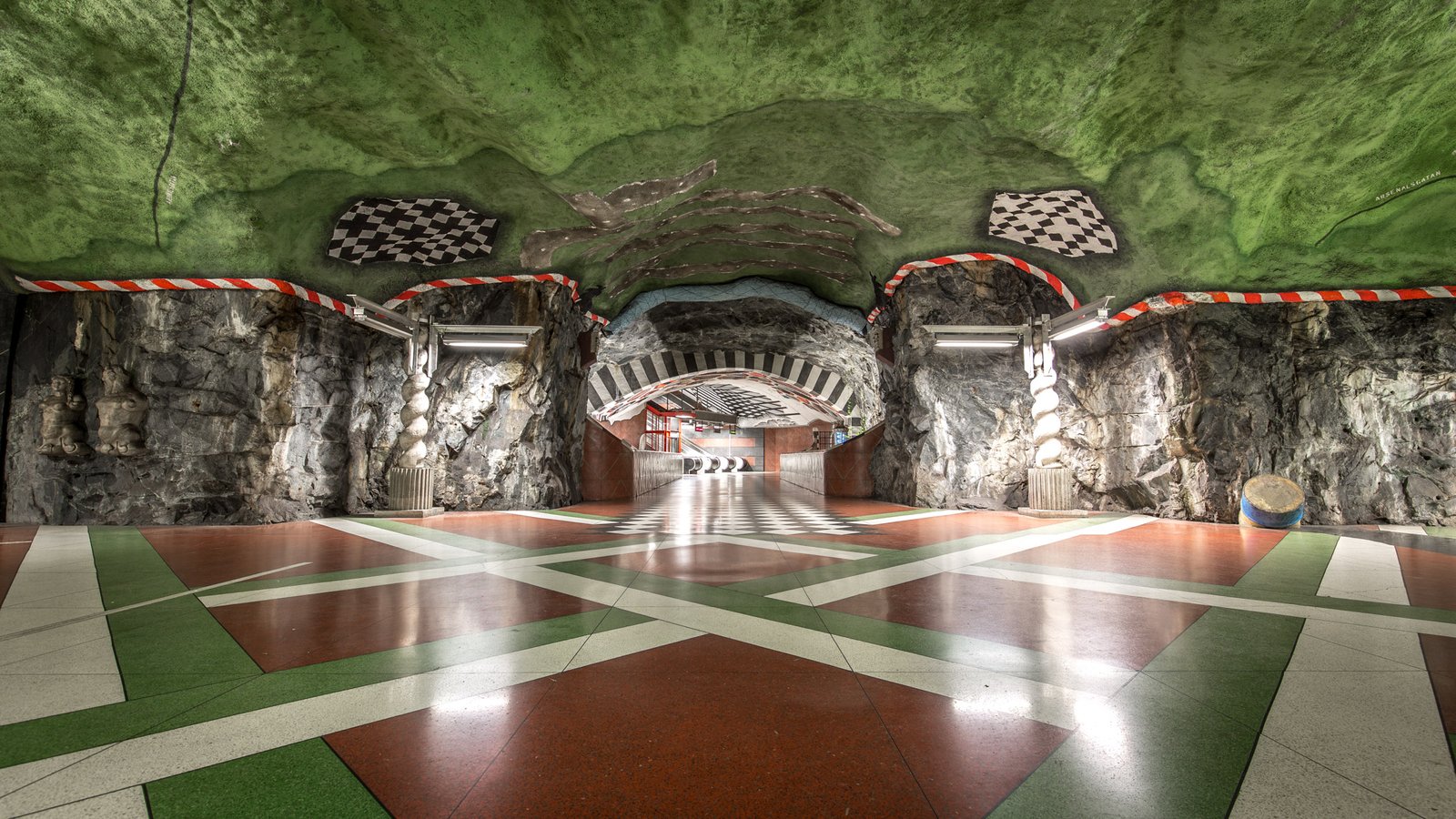
Stockholm’s metro system is made up primarily of three lines, and while there are fascinating stations throughout the network, the blue line seemed to offer the most dramatic experience. Many of its stations are essentially enormous caverns, with the rough, exposed rock forming the backdrop for colourful murals, lighting and other artistic details.
And then there was the silence.
Despite being in a busy capital city, many of these underground stations were surprisingly quiet. For a photographer, this was a dream. Between trains, there could be almost complete stillness, making it possible to compose shots without constantly having people walking through the frame. Even better, I was able to set up a tripod and experiment with long exposures—something that would be virtually impossible in the London Underground.
I started by exploring a few stations on the red line, with Universitetet and Stadion standing out in particular.
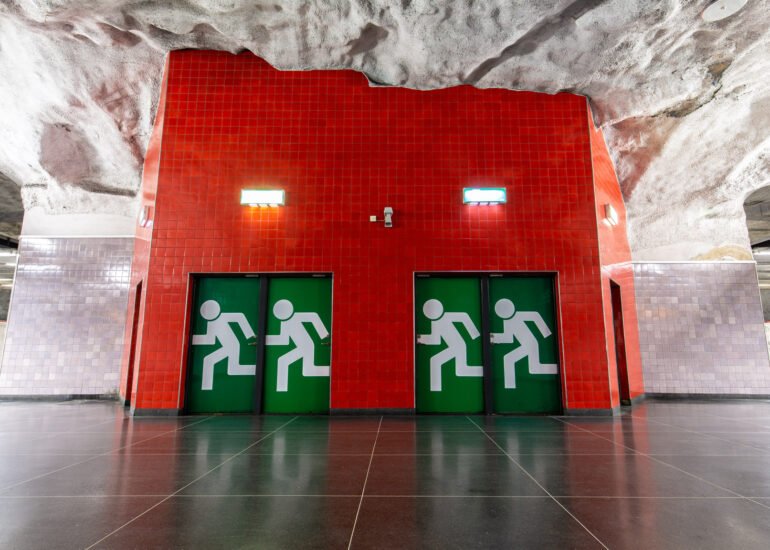
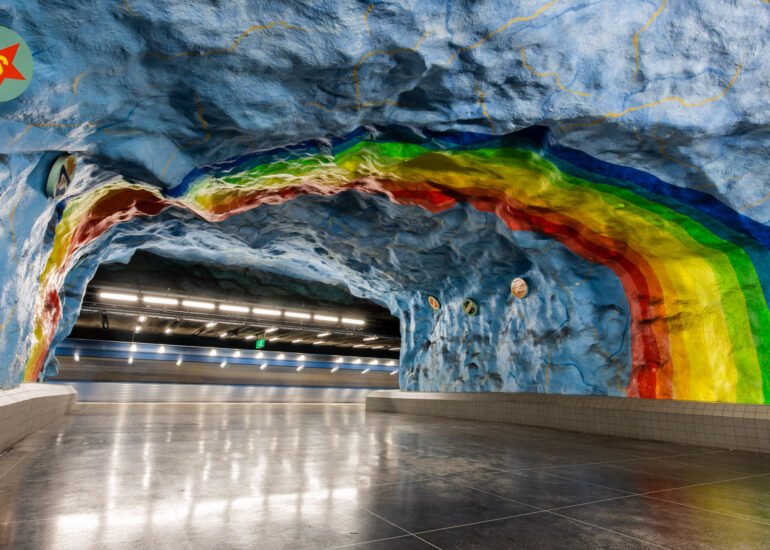
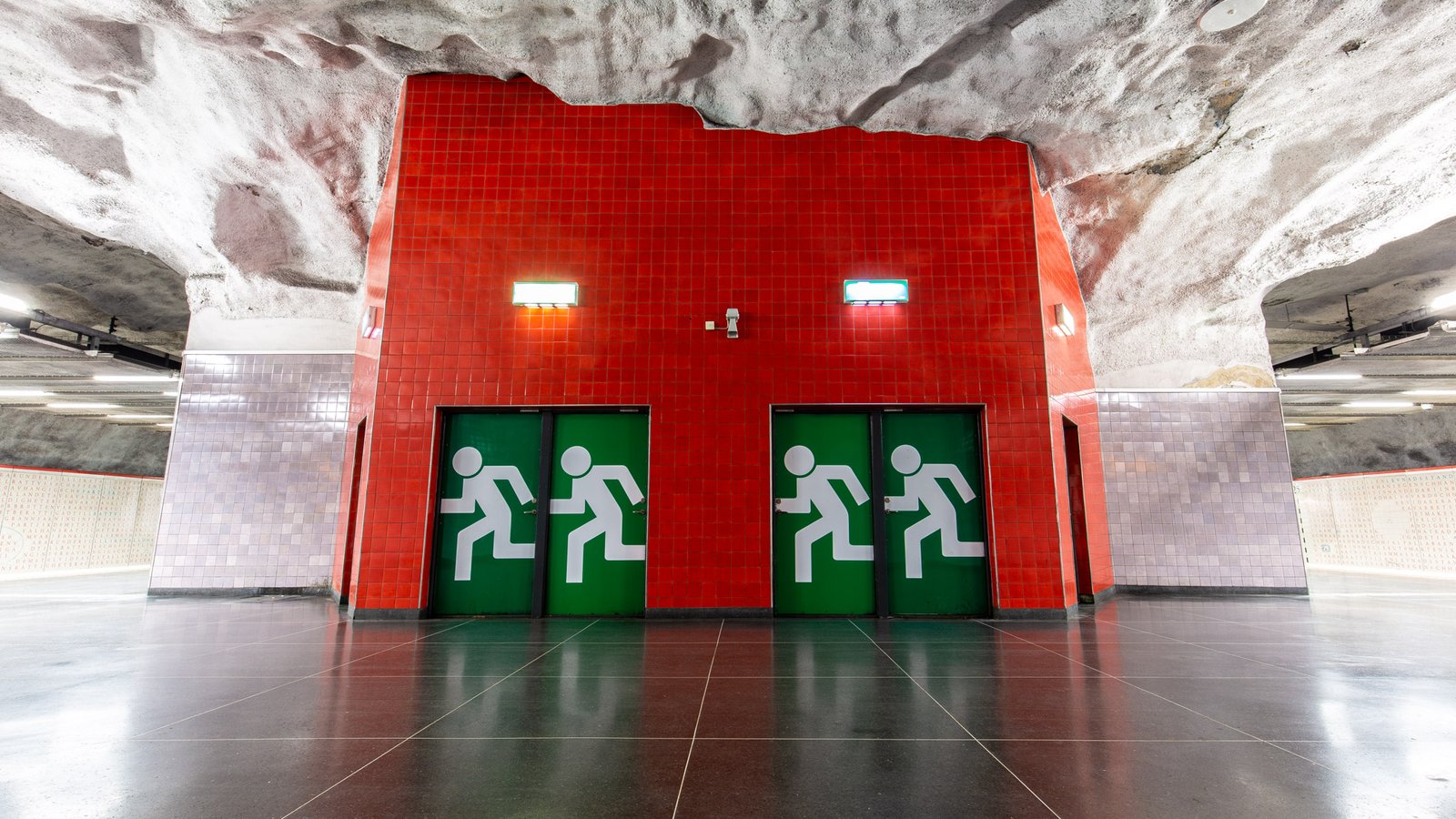
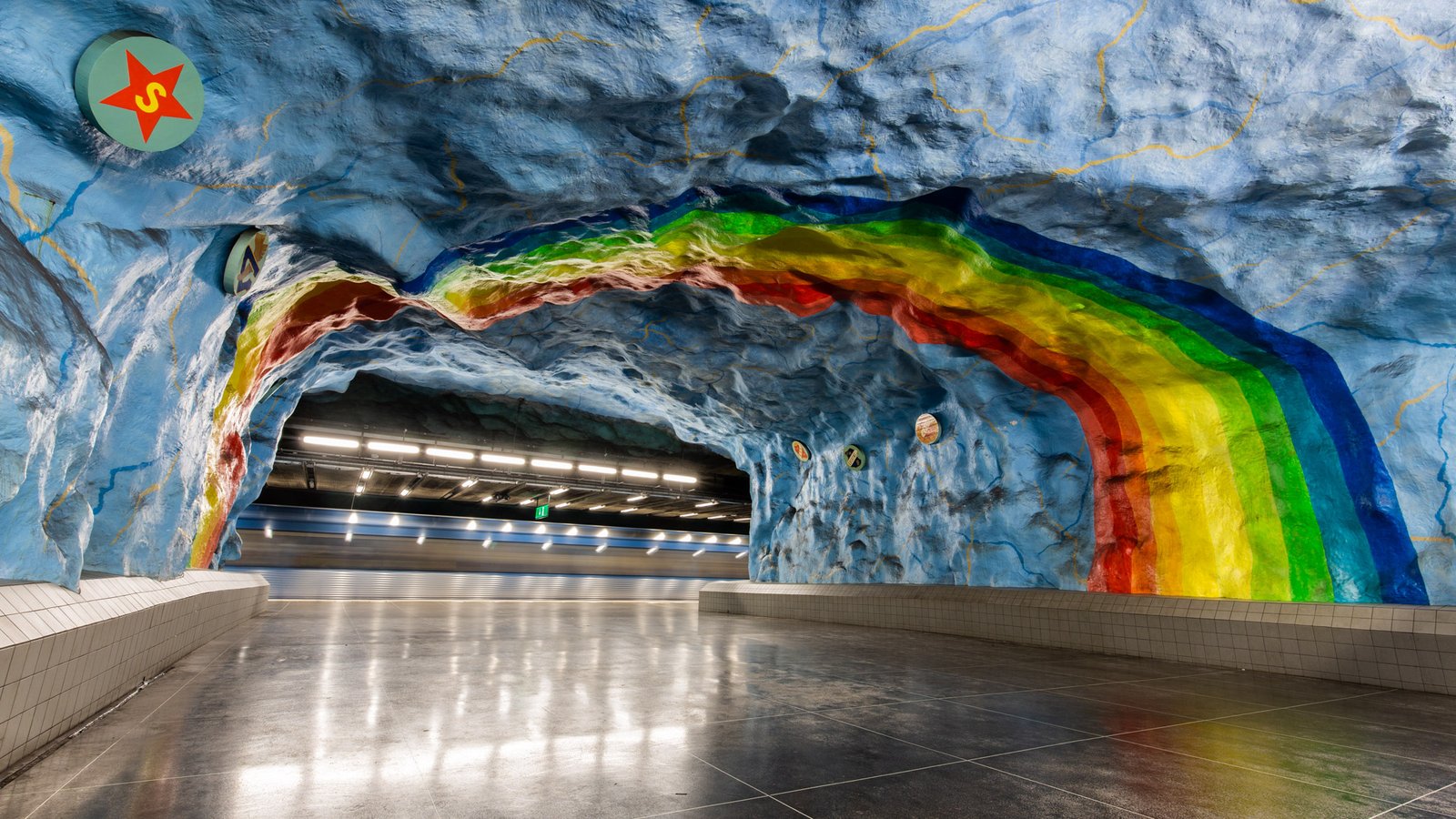
Stadion immediately catches your eye with its vibrant rainbow arch, which almost feels surreal against the raw rock surrounding it. Universitetet has a very different character, with wonderfully designed fire-exit signs incorporated into the station’s doors. It’s the kind of detail you could easily miss if you weren’t looking for it.
Then came the blue line.
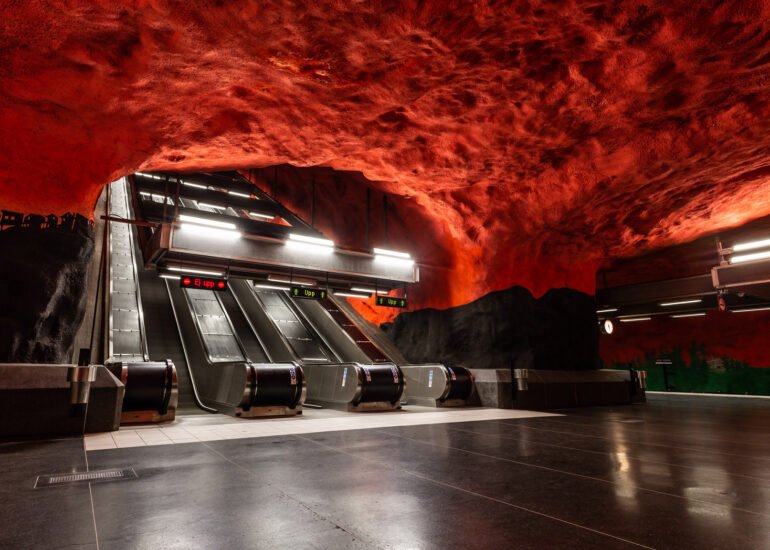
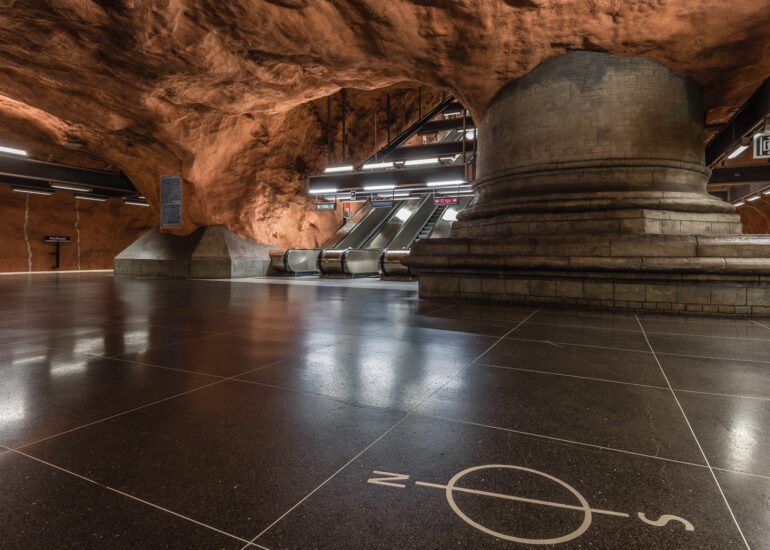
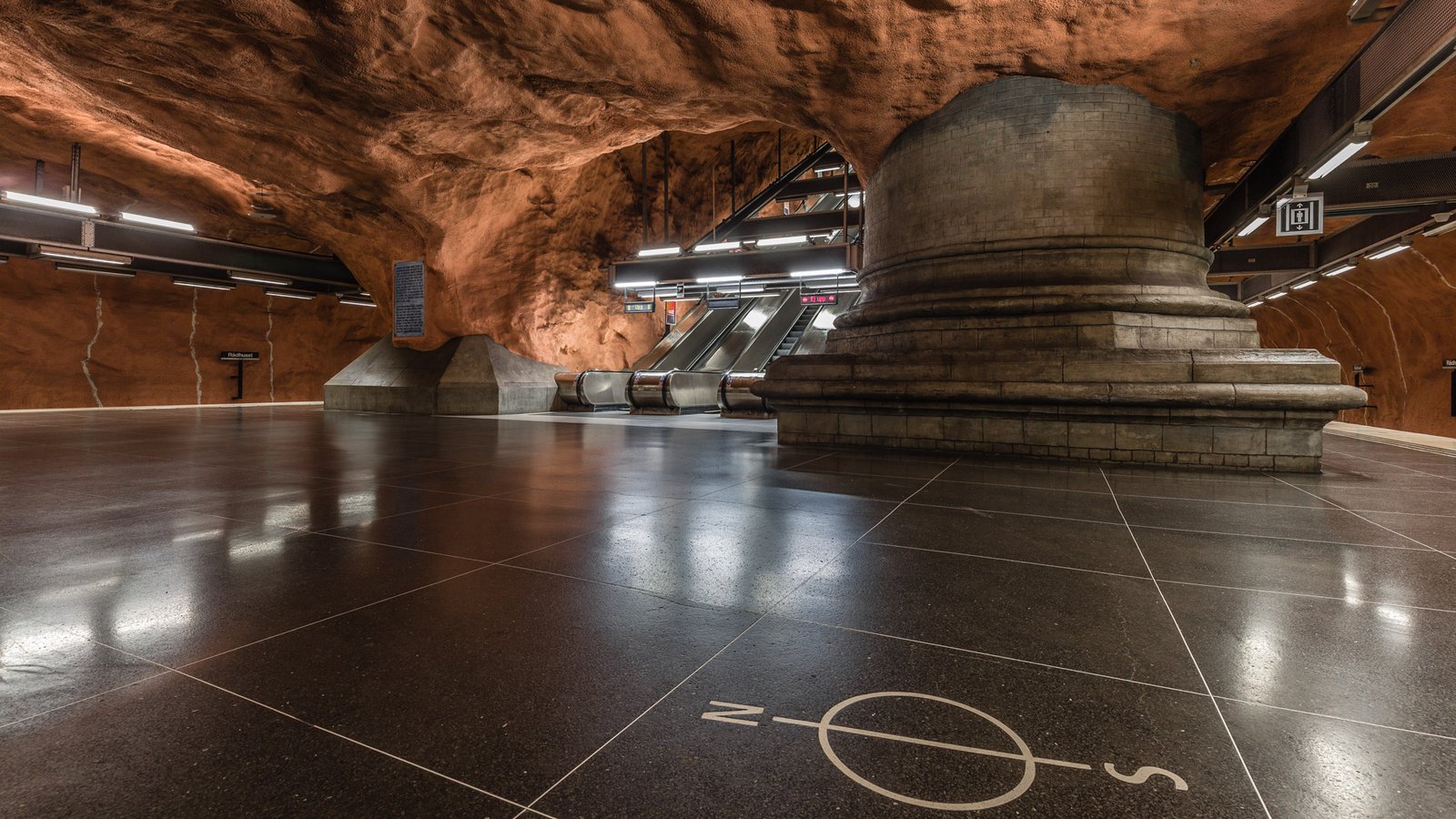
Of all the stations I visited, Rådhuset was probably my favourite. The enormous stone column rising from the platform and the fiery orange walls give the station an almost otherworldly atmosphere. It feels less like you’re waiting for a train and more like you’ve wandered into an underground cavern from another world.
Standing in these stations, I couldn’t help wondering about the sheer scale of the engineering involved. How do you even begin to carve enormous spaces like these beneath a city? And then, once you’ve created them, how do you turn them into something that is not only functional but genuinely beautiful?
That’s perhaps what makes Stockholm’s Tunnelbana so fascinating. The metro isn’t simply a way of getting from A to B. In many places, the journey itself becomes part of the experience.
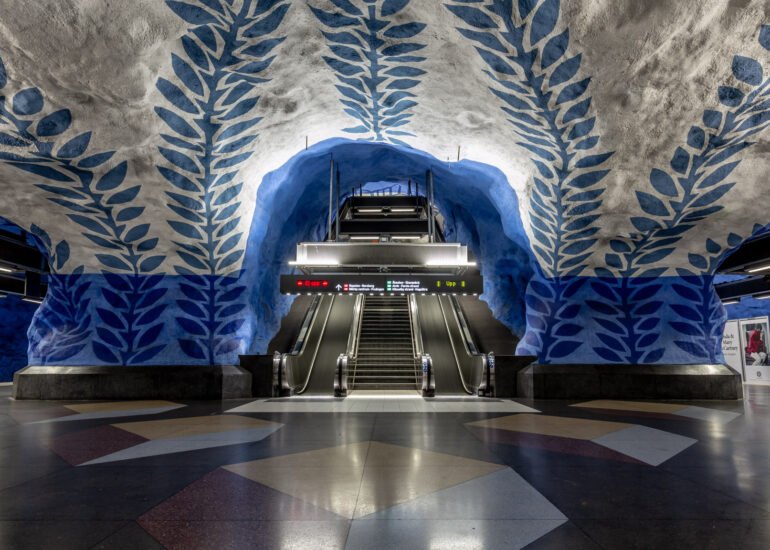
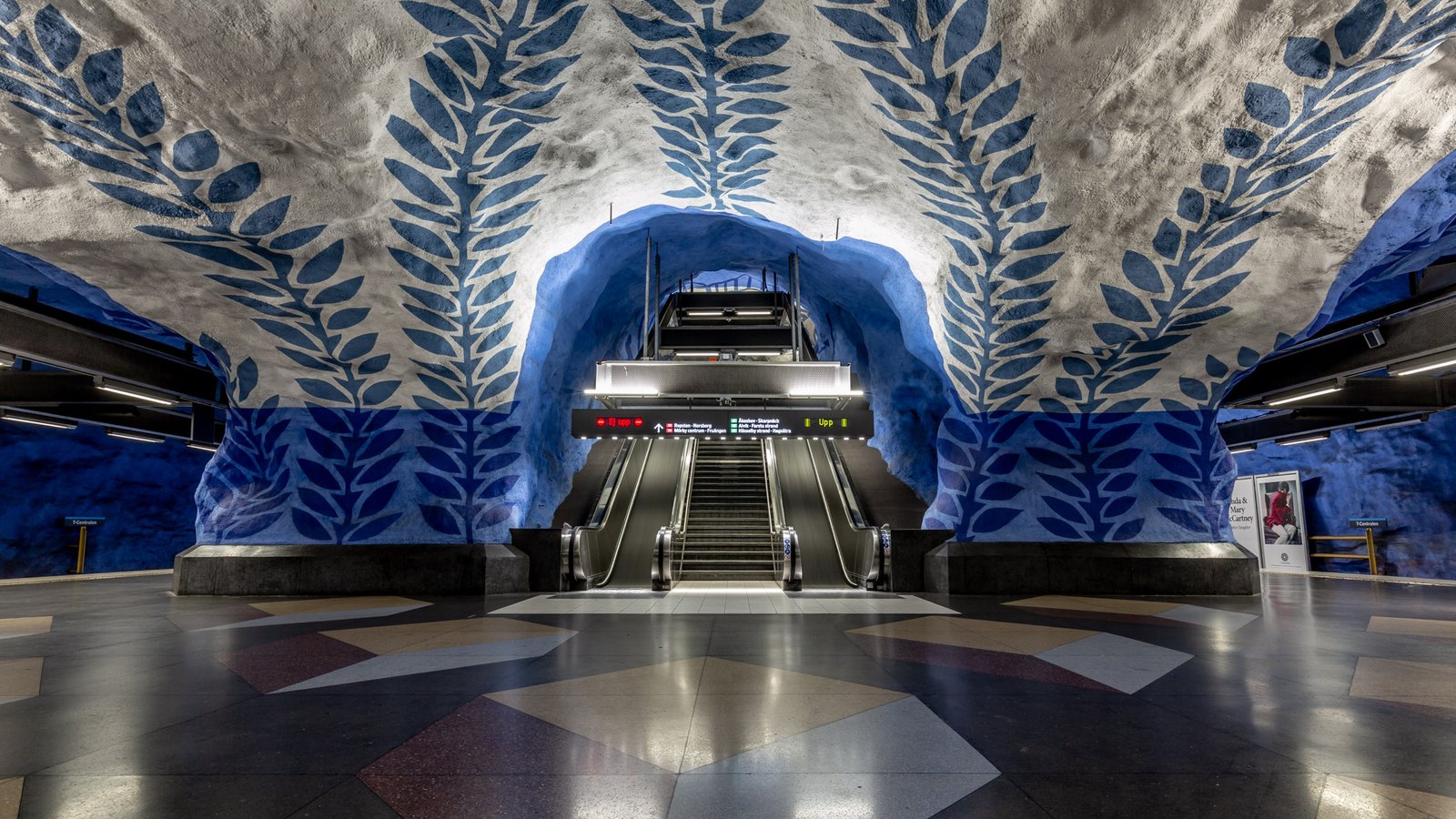
Of course, all three lines eventually converge at T-Centralen, Stockholm’s main station. Even here, there is plenty to discover, with artistic details and striking designs making what could otherwise be just another busy transport hub feel much more memorable.
For a city that can be expensive to visit, the Tunnelbana also makes for a surprisingly affordable way to spend a few hours. And during the heat of summer, heading underground into these cool, cavernous spaces was a welcome escape from the sun.
Stockholm may be impressive above ground, but for me, some of the most memorable sights were found several metres below it.
Sometimes, the best way to discover a city is to look what lies beneath.