Aldwych Ghost Station
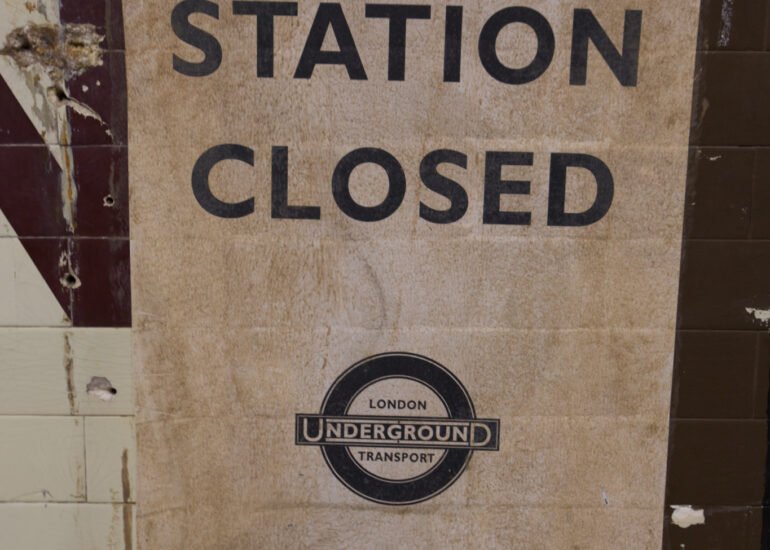
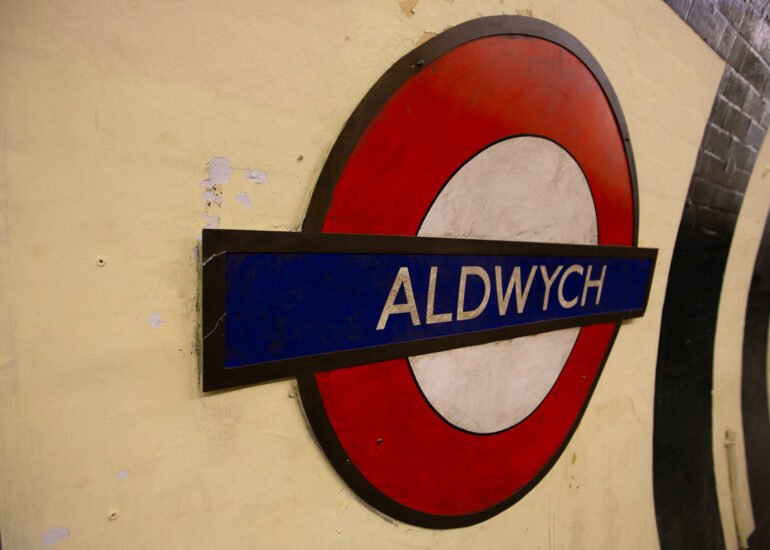
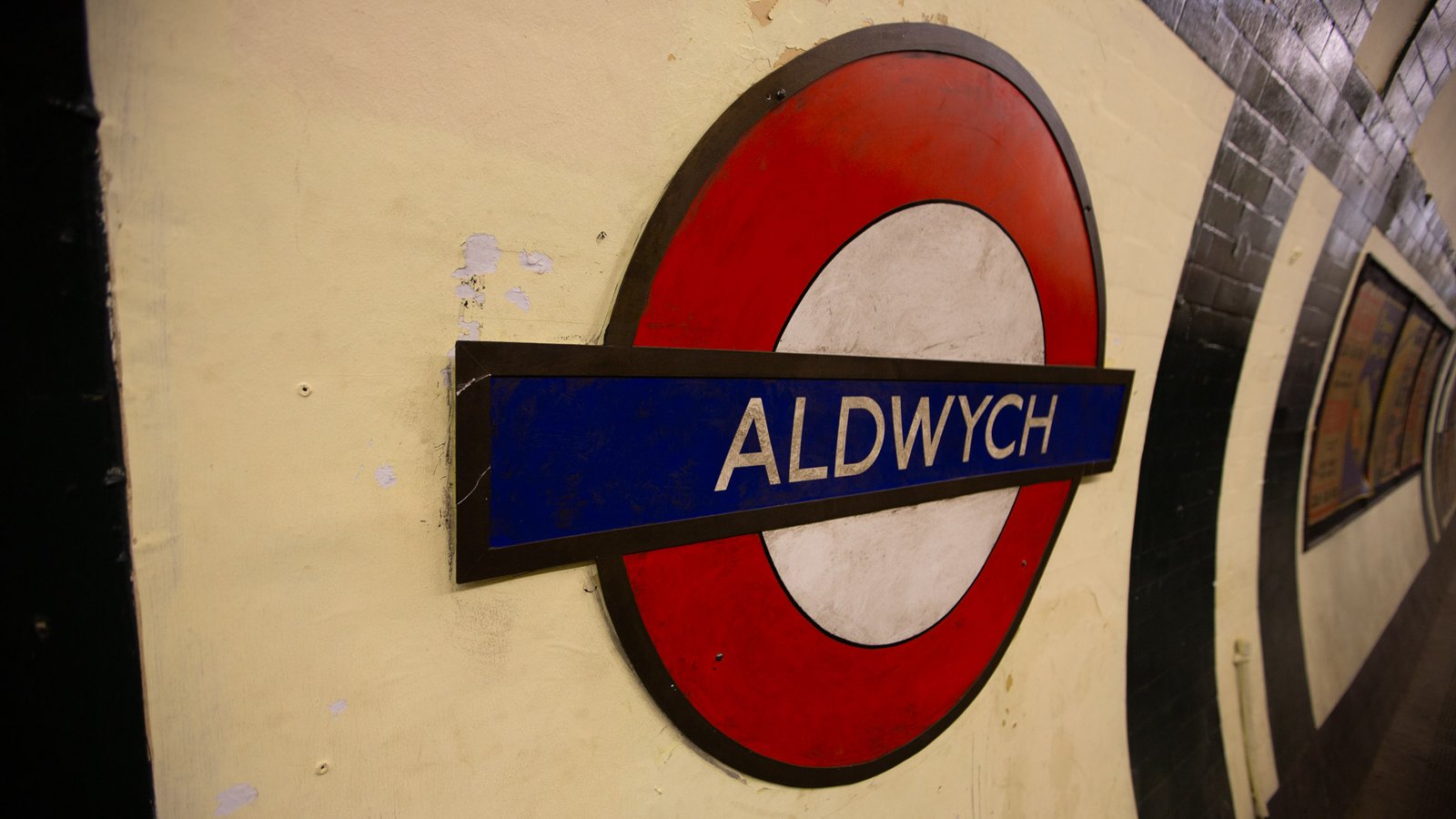
I recently had the opportunity to take a tour of Aldwych Underground Station in London—one of the capital’s most fascinating abandoned stations. Closed to the public in 1994, Aldwych has remained remarkably well preserved, offering a unique glimpse into the history of London’s Underground.
The station was originally known as Strand, after the street on which it stands, and opened in 1907. It served as the terminus of the short Piccadilly branch line from Holborn. Despite its central location and proximity to Temple station, passenger numbers were consistently low. The cost of replacing and modernising the station’s lifts was also becoming increasingly difficult to justify, and eventually the decision was made to close the station in the mid-1990s.
Our tour was organised through the London Transport Museum, and we were fortunate enough to see almost every part of the station, including areas that were never completed and have remained unfinished for more than a century.
The Ticket Hall
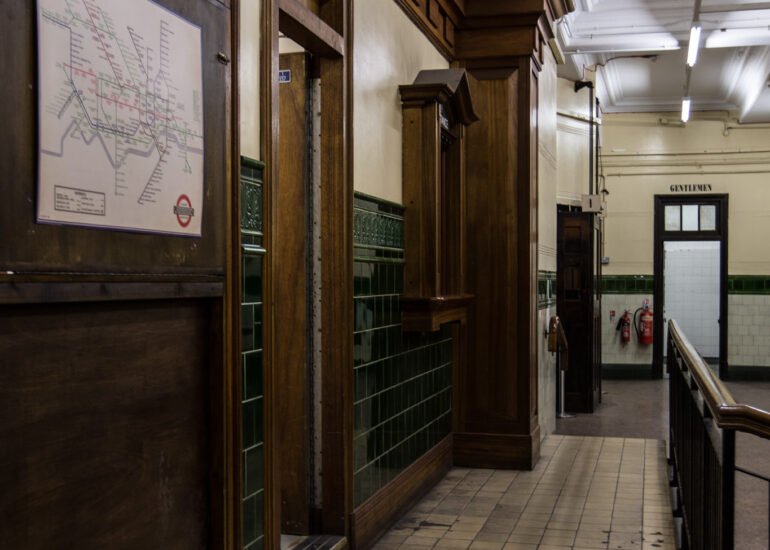
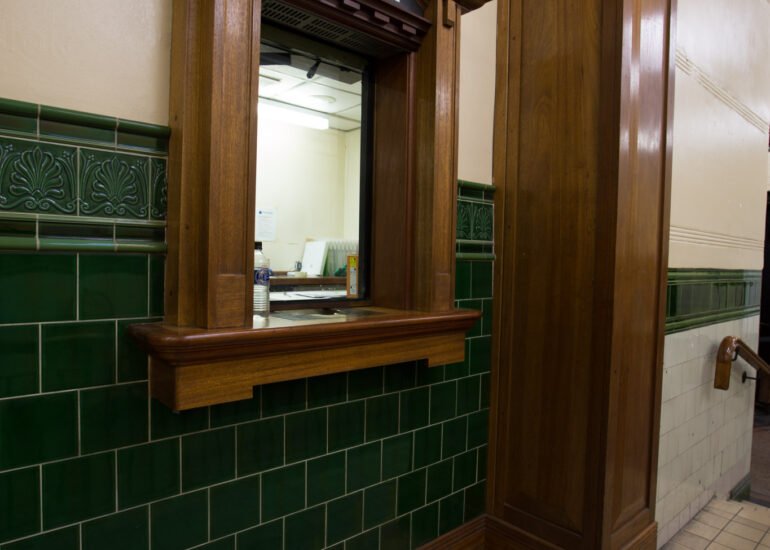
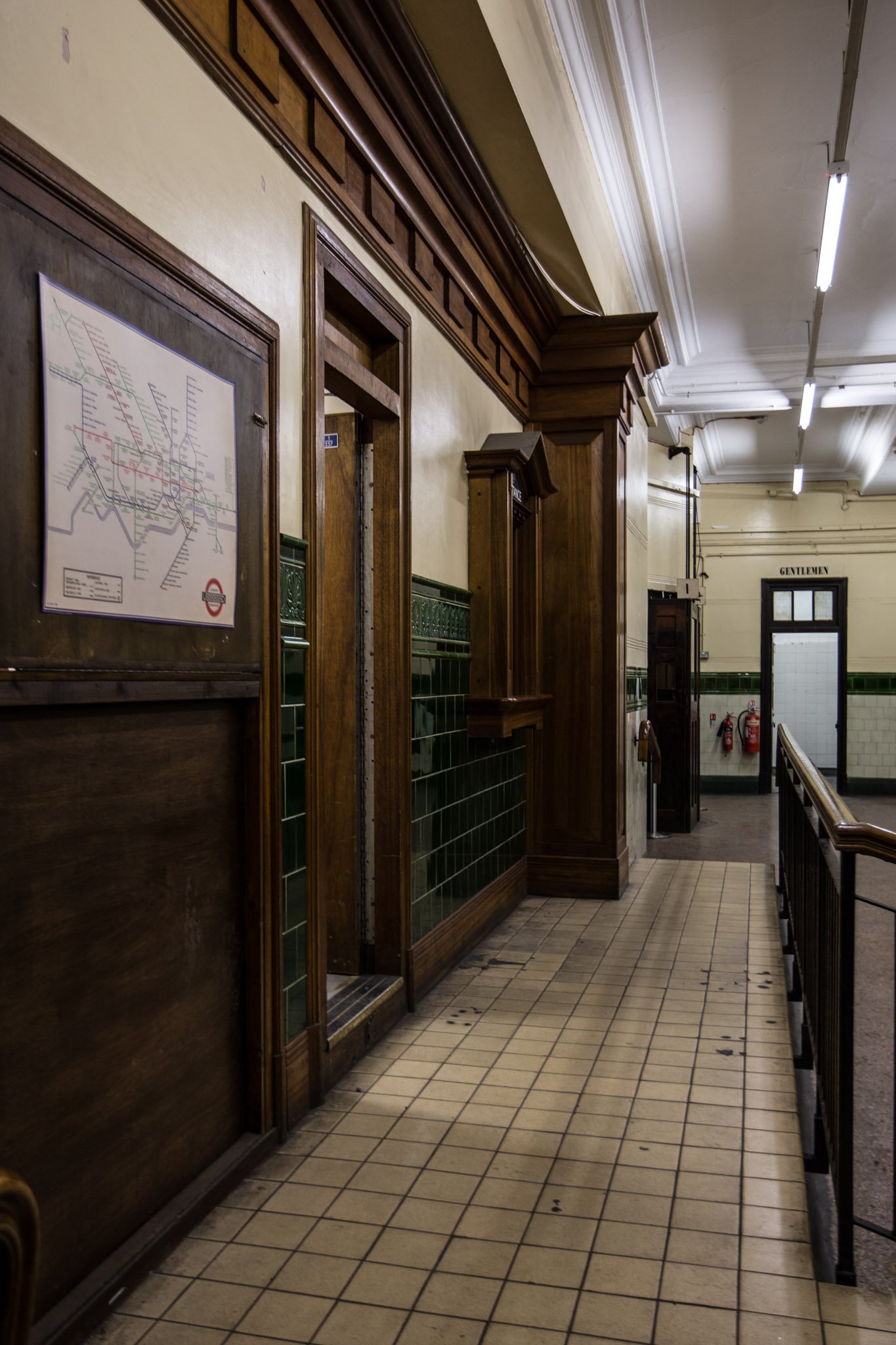
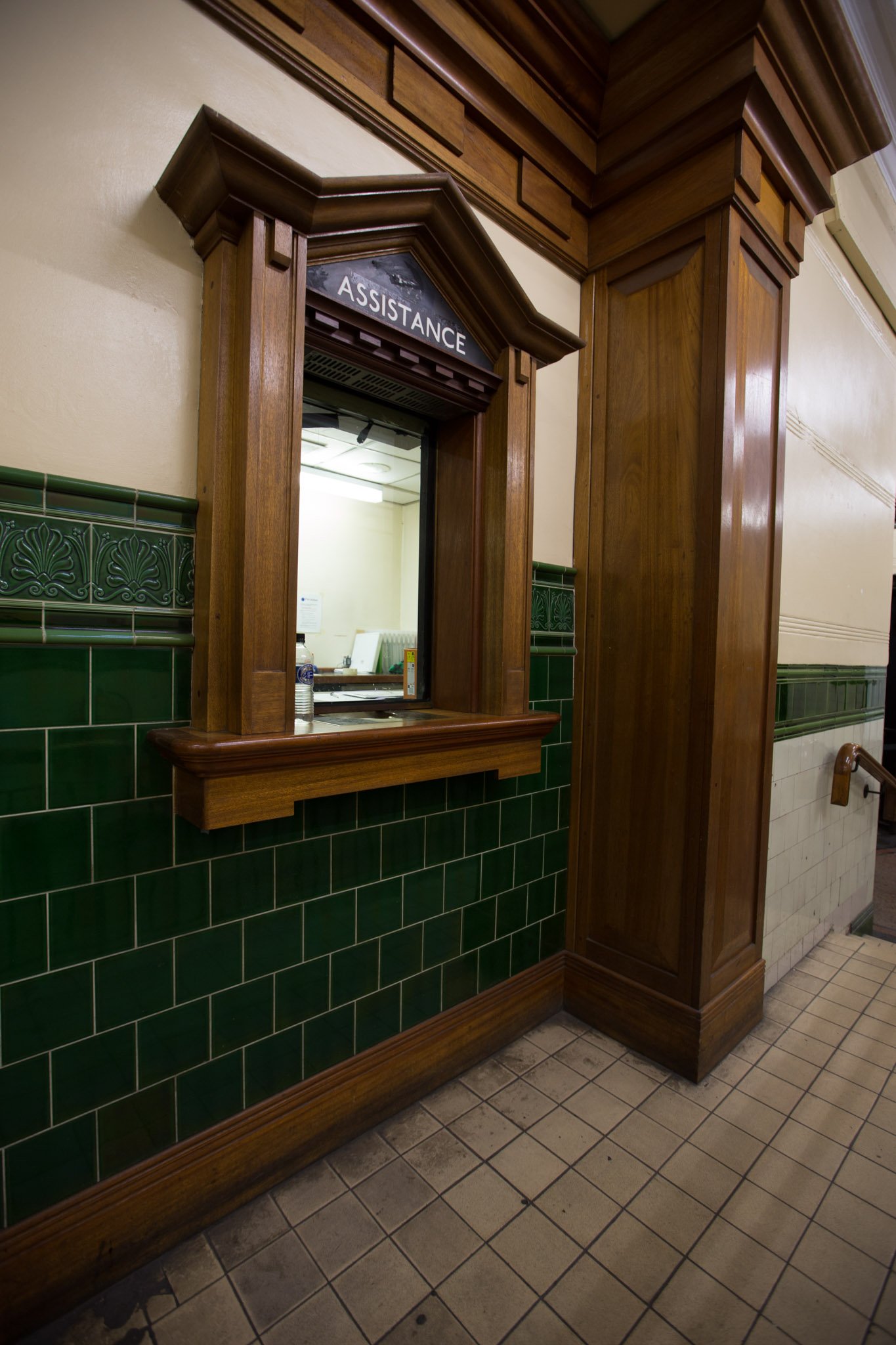
We began the tour in the ticket hall, which has an unusual L-shaped layout. A small ticket office sits roughly in the centre of the room, with the lift area to the right and a spiral staircase leading down to the platforms on the left.
Our guide explained that the original design allowed for several lift shafts to be installed, although only two lifts were ever put into service. The other shafts were never used and remain empty to this day.
The two surviving lifts are now permanently fixed at ticket-hall level. Steel girders have been installed beneath them to prevent them from moving, leaving them effectively frozen in place.
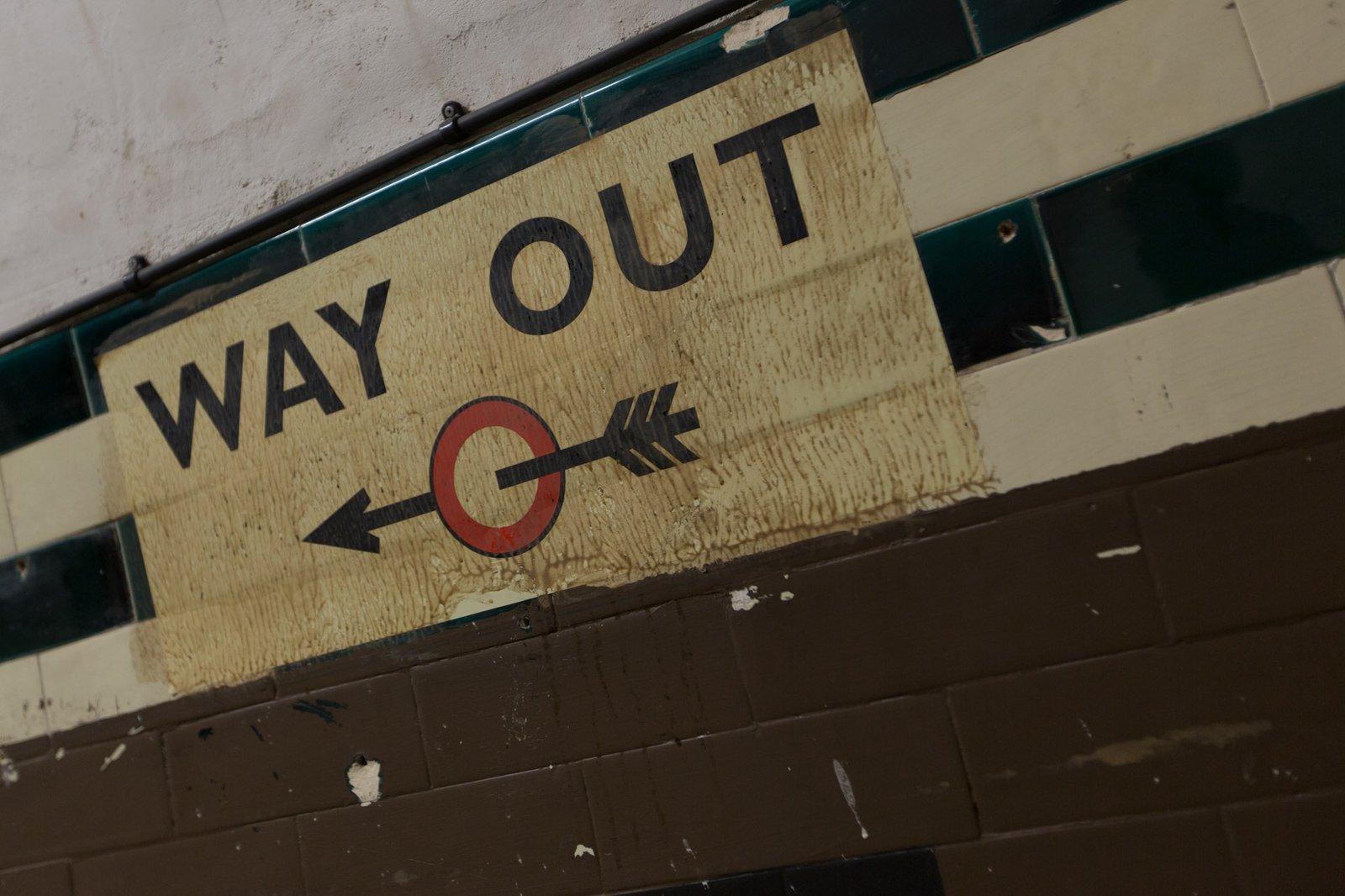
The station’s original cream and dark-green tiled colour scheme is still visible throughout much of the building. However, there is no longer any working passenger route via the lifts. The only way for visitors to reach the platforms is by using the spiral staircase—160 steps in total!
Down to the Platforms
At the bottom of the staircase is a short passage where the lifts would originally have delivered passengers from street level. The two unused lift shafts can still be seen behind metal grilles.
From here, a long corridor leads towards the platforms. Aldwych has occasionally been used to test new ideas and technology for the Underground, and our guide pointed out one particularly interesting experiment in this passageway.
Glow-in-the-dark paint had been applied along the bottom of the walls as a potential way of guiding passengers towards exits during a power failure. Although the idea was tested here, it was never adopted across the Underground network.
There was also a more recent addition that looked rather out of place: a Bakerloo line sign. This was installed for the filming of Mr Selfridge, in which Aldwych was used to represent a different Underground station. Of course, the real Bakerloo line doesn’t come anywhere near Aldwych, but the station’s preserved appearance makes it an ideal filming location.
Platform 1
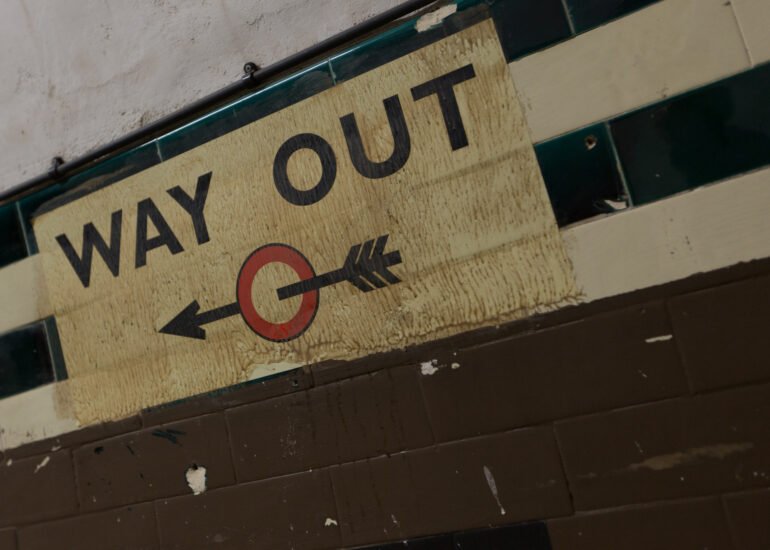
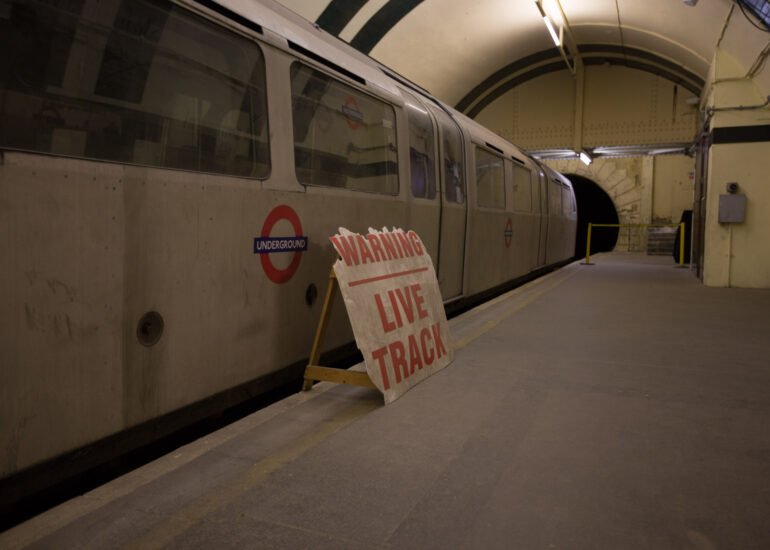
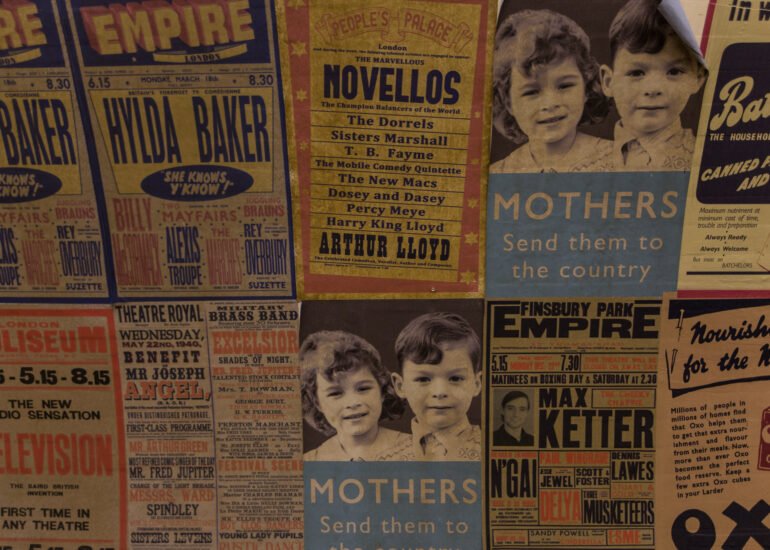
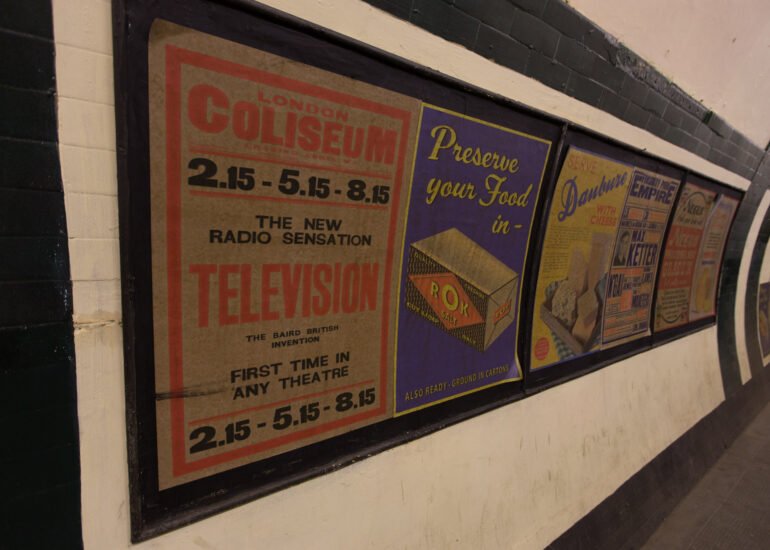
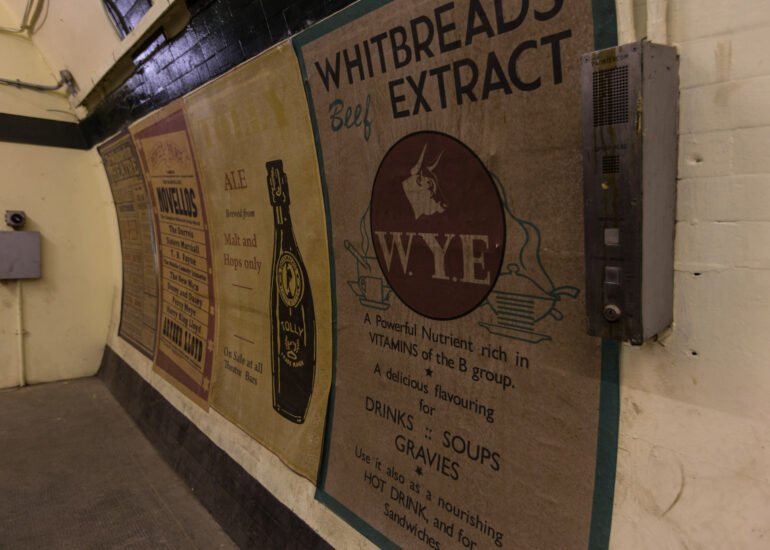
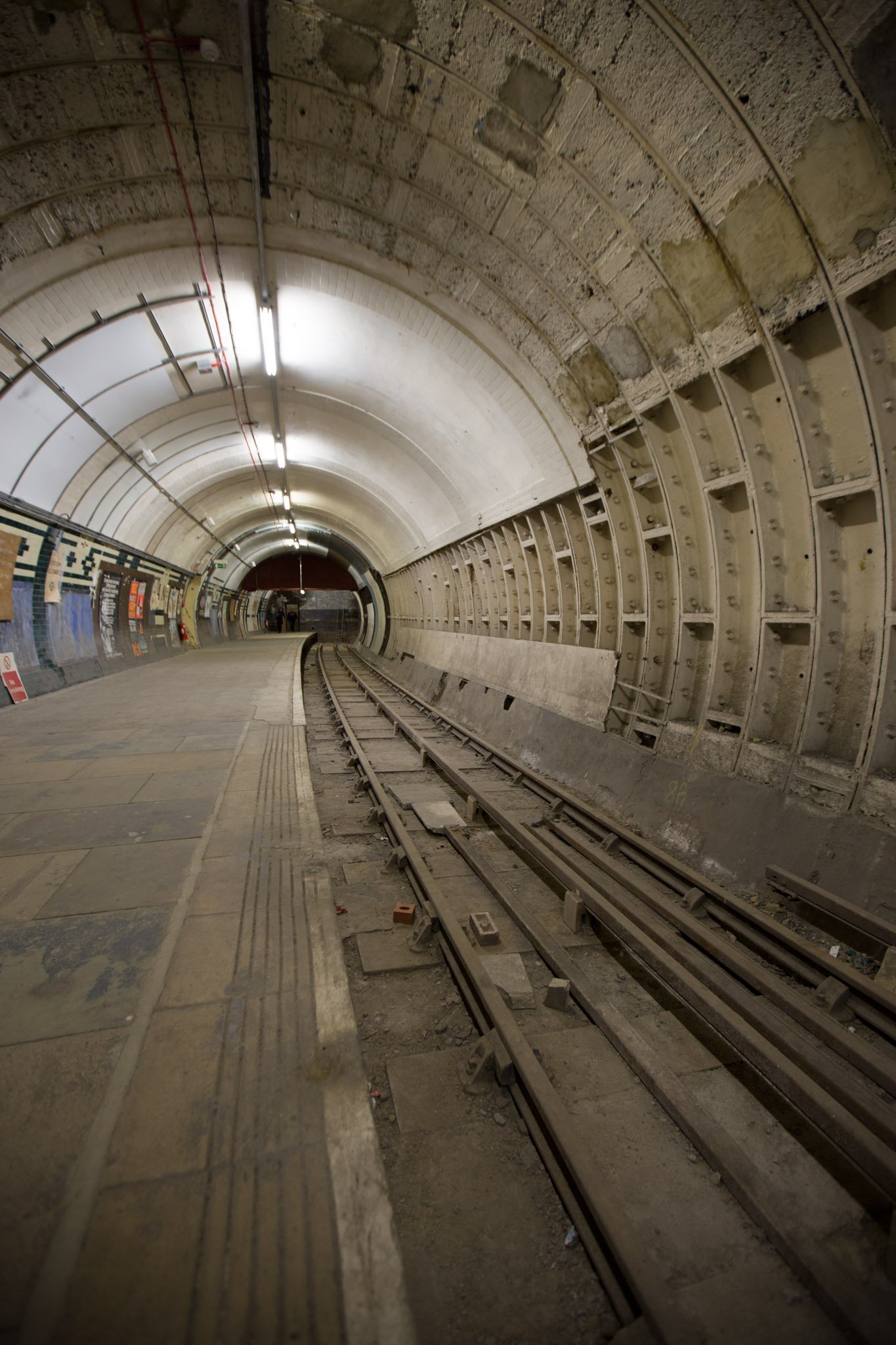
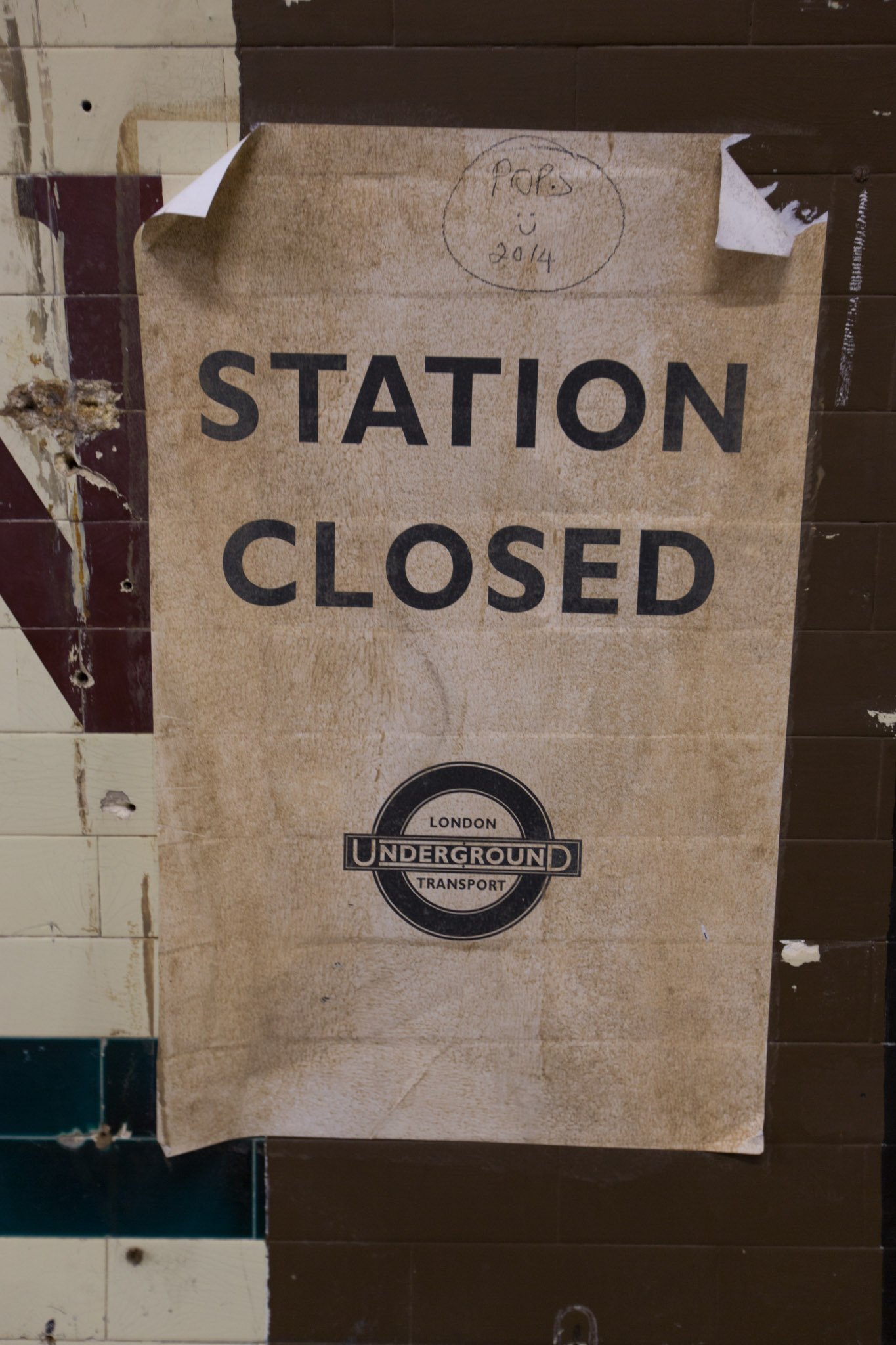
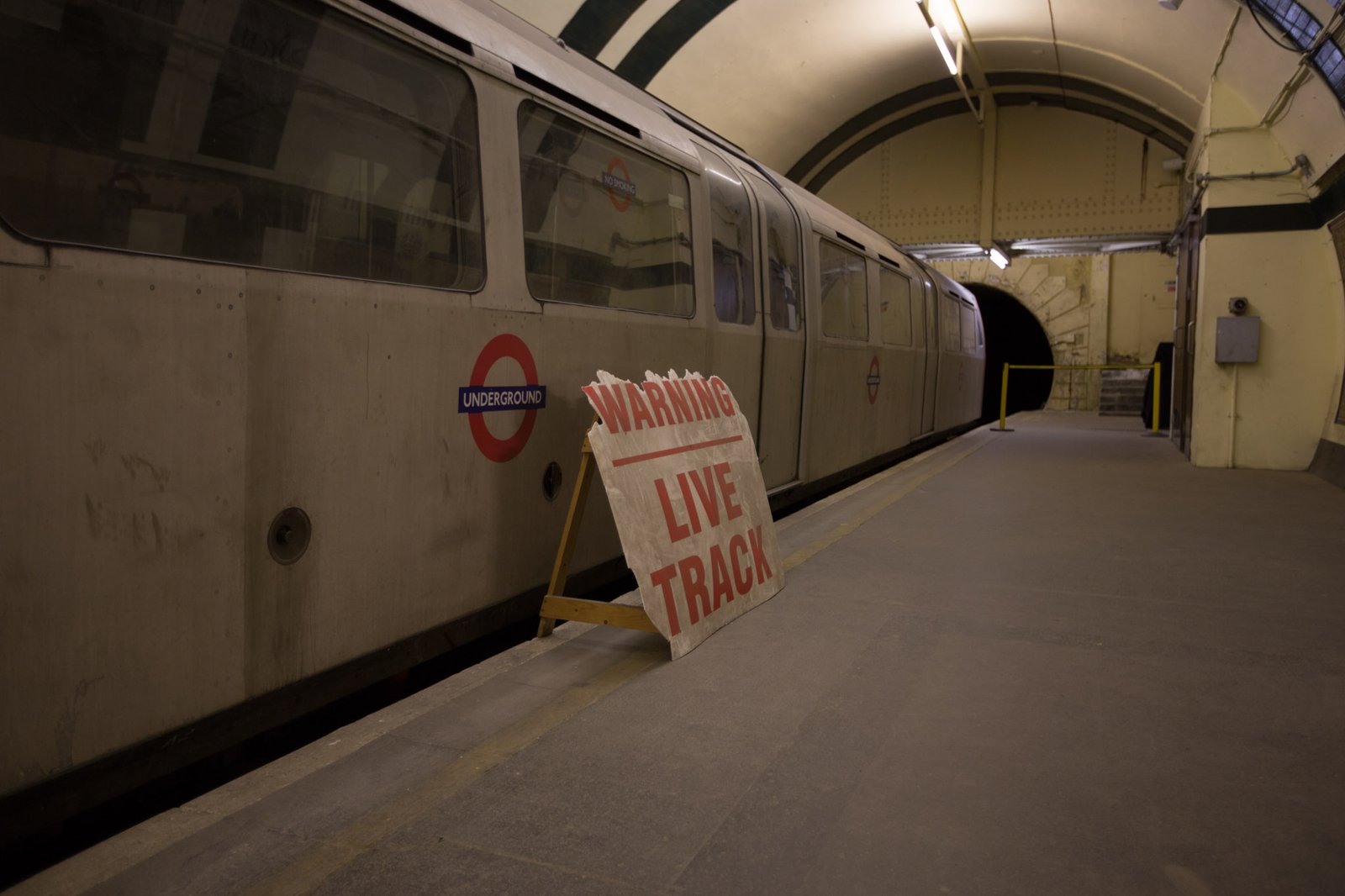
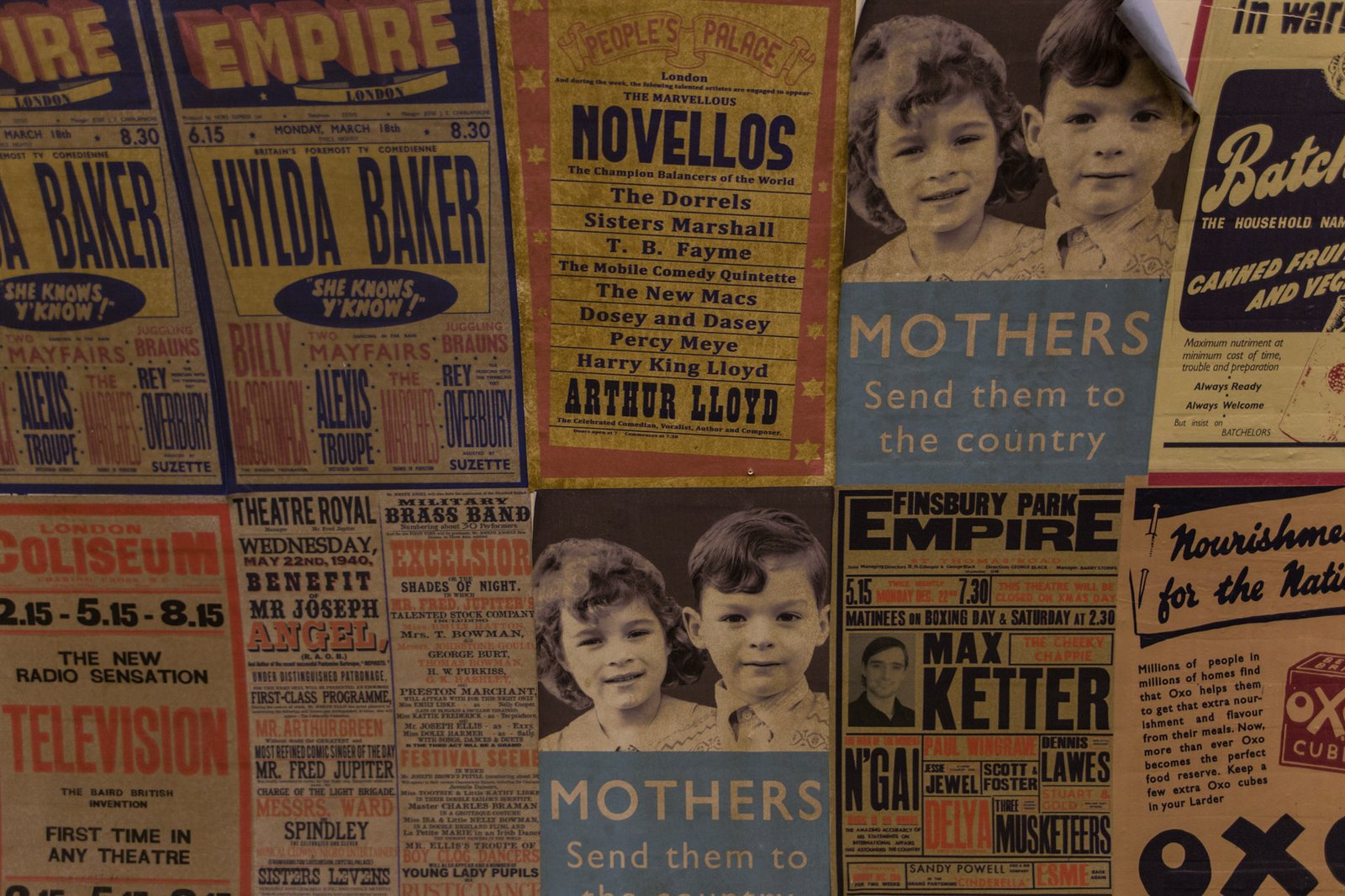
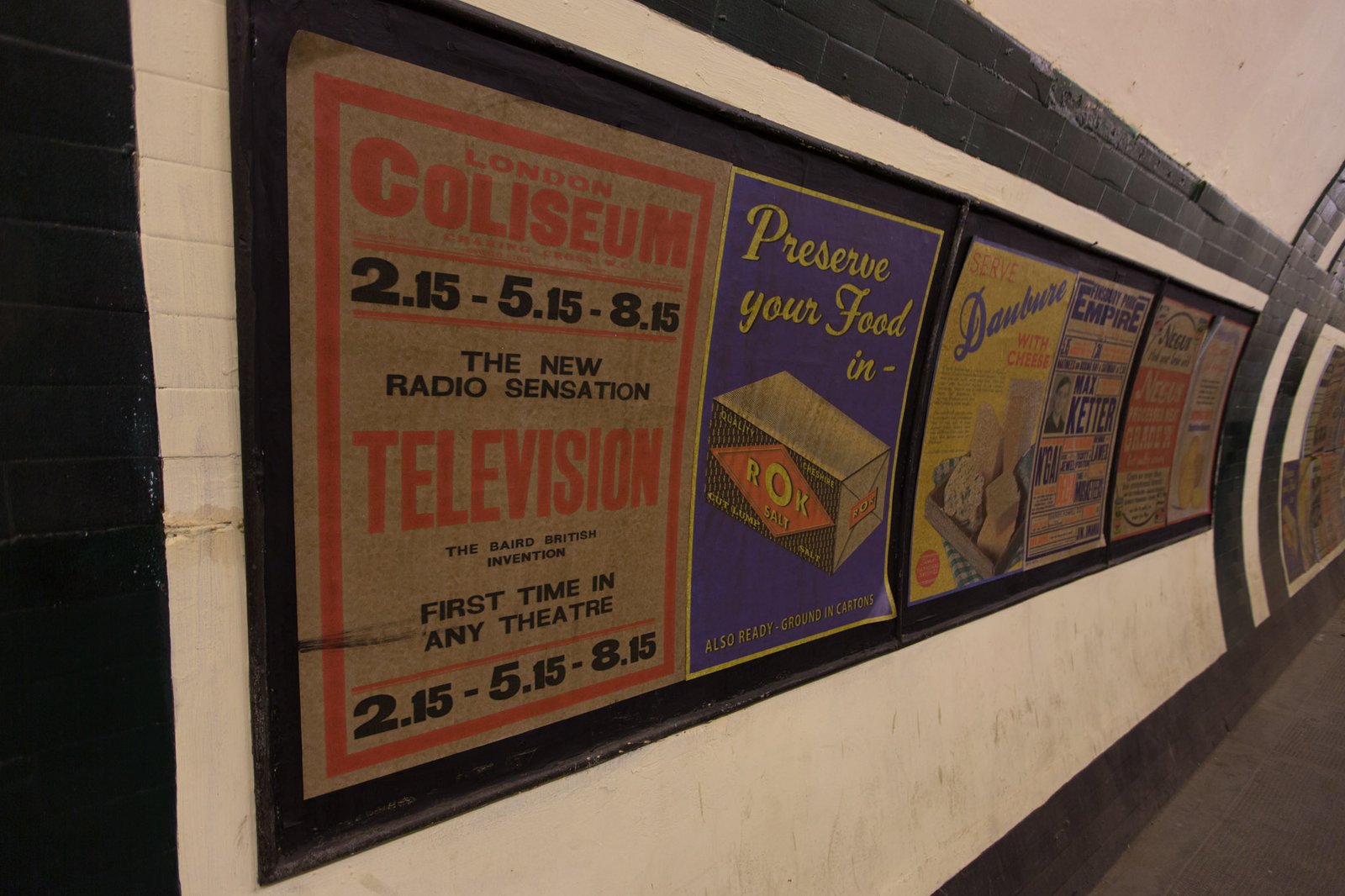
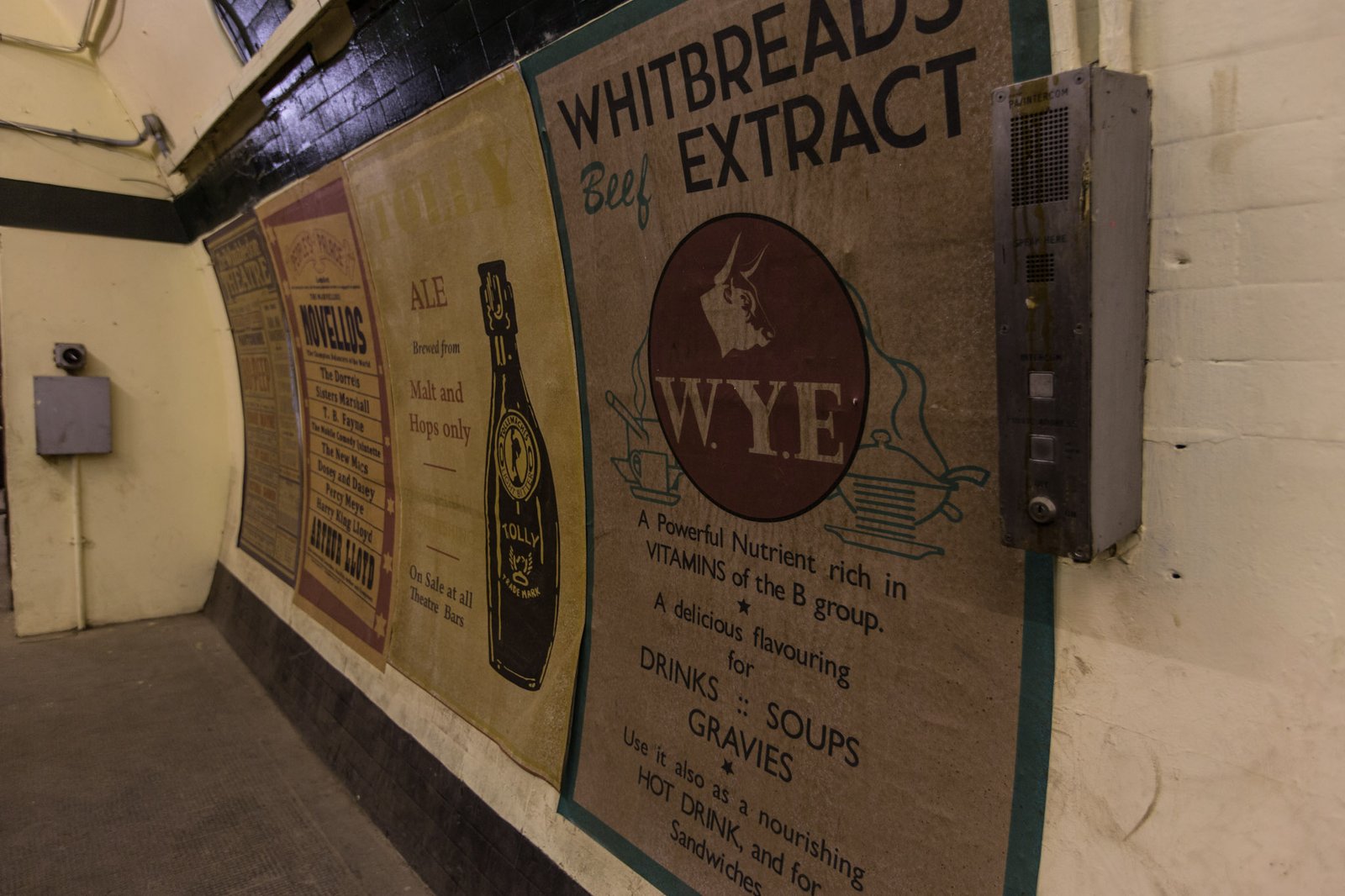
We eventually reached the first platform, where an old 1970s Tube train is permanently parked. Various vintage-looking posters decorate the walls, adding to the atmosphere.
Interestingly, many of the posters aren’t original. Because Aldwych is regularly used as a filming location, reproductions have been installed to help create the appearance of a working Underground station from different periods.
Even with the train sitting on the platform, the atmosphere was incredibly quiet. It was a stark contrast to the noise and constant movement of a working London Underground station.
Our guide explained how the station took on a completely different role during the Second World War, when the platforms and tunnels were used as an air-raid shelter. Hundreds of people would come down into the station each night to escape the bombing above ground.
The station also played another important role during the war. Some of the British Museum’s most valuable artefacts were moved underground and stored in the tunnels for protection, including the famous Elgin Marbles.
Platform 2
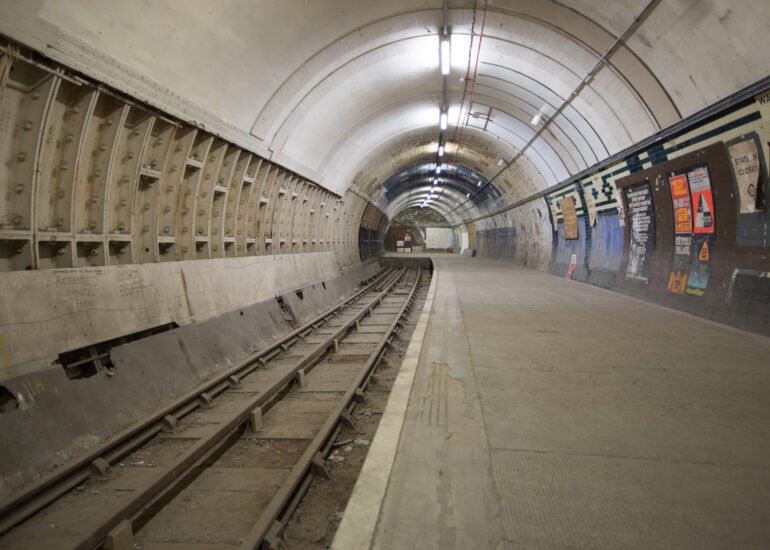
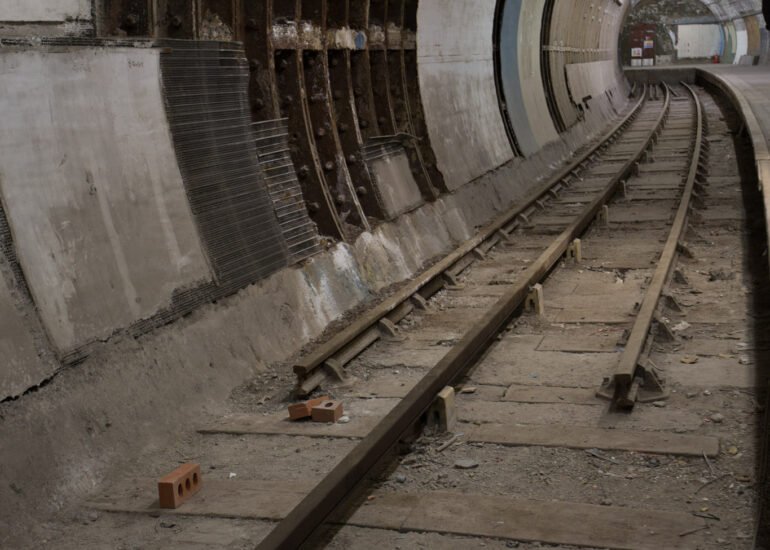
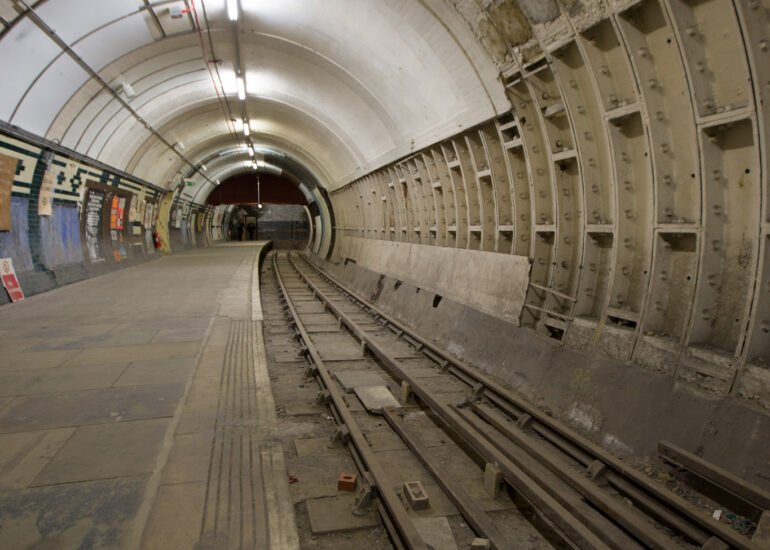
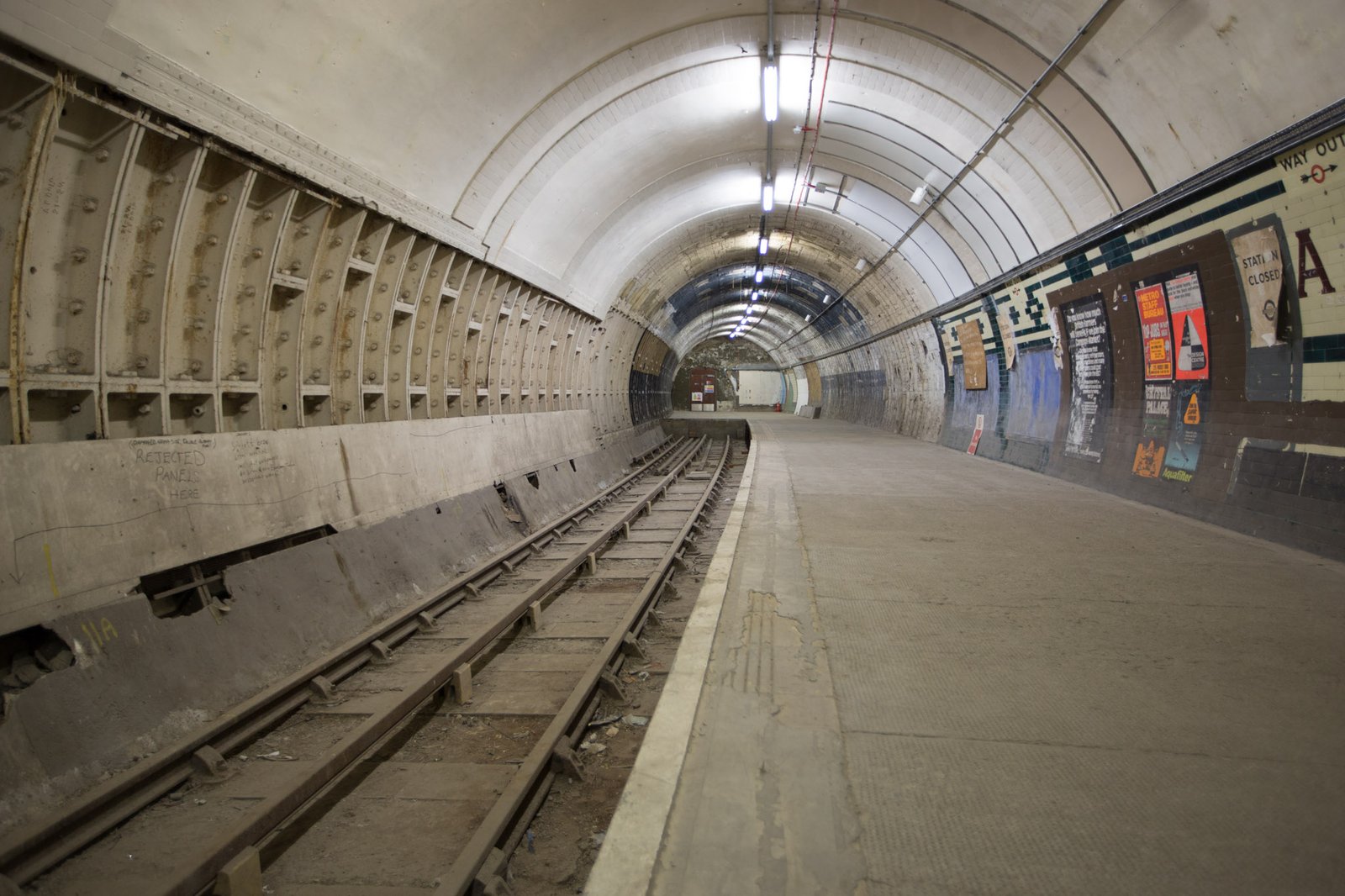
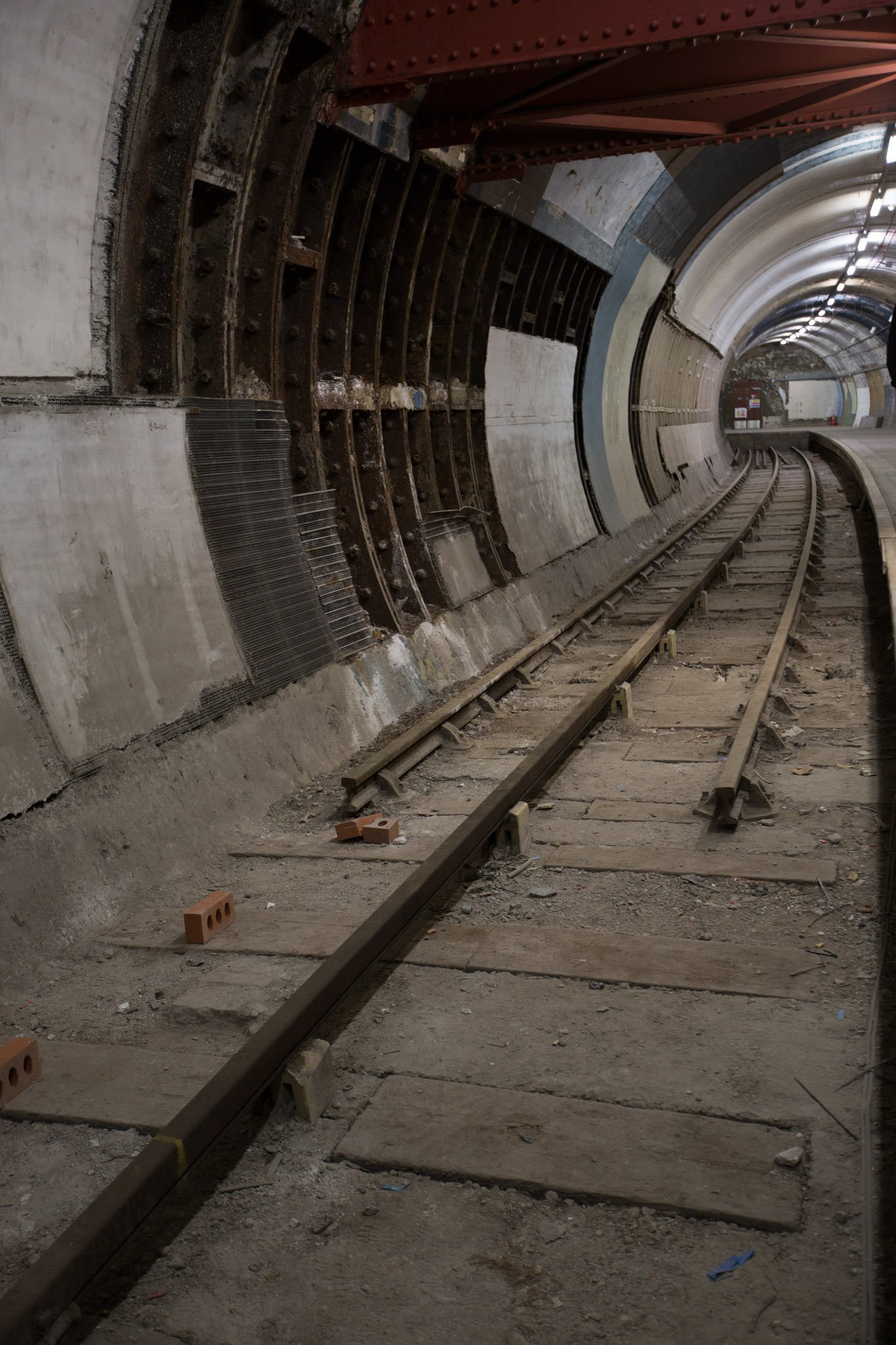
We then crossed over to the second platform, which was in a considerably more abandoned state.
At one end, the tunnel has been bricked up. During the war, this part of the station was used for facilities such as washing areas and toilets for the people sheltering underground.
Most of the track on this platform had been removed as early as 1917. What remains eventually comes to an abrupt stop roughly two-thirds of the way along the platform, giving the whole area an even more unfinished appearance.
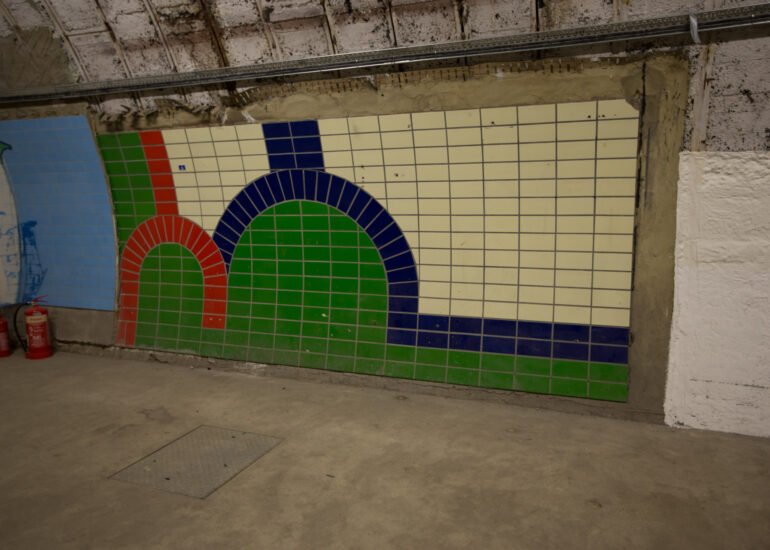
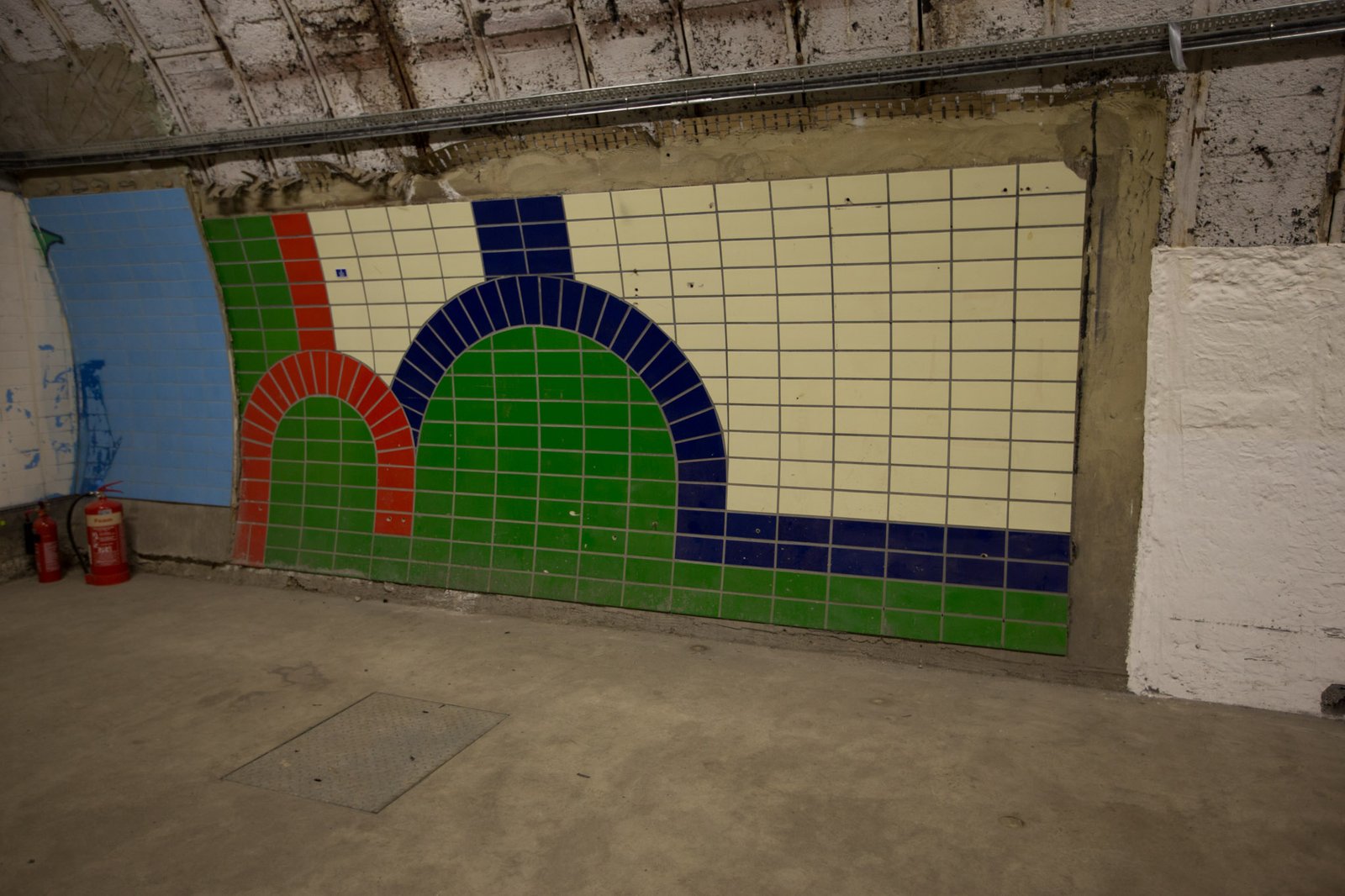
The far end of the tunnel is particularly interesting. It appears to have been used for experimenting with different tiling patterns, and one of the designs is remarkably similar to the tiling later used at Piccadilly Circus station.
The Unfinished Areas
Perhaps the most fascinating part of the tour came next, when we were shown areas of Aldwych that had been started during the station’s original construction but were never completed.
These areas have remained largely untouched ever since.
Bare concrete steps lead into unfinished sections of the station, while parts of the tunnel walls still show their incomplete lining. Standing in these spaces feels less like visiting an abandoned Underground station and more like stepping onto a construction site that was suddenly frozen in time.
It’s unusual to see somewhere in London where construction work was started more than a century ago and simply never finished.
Plans That Never Happened
Towards the end of the tour, our guide explained more about how Aldwych operated during its working life and some of the plans that were drawn up to expand the line.
There were numerous proposals to extend the branch to other parts of London, but none progressed beyond the planning stage. As a result, Aldwych remained a short and somewhat isolated branch of the Piccadilly line throughout its operational life.
Eventually, declining passenger numbers and the increasing cost of maintaining the station brought its Underground career to an end.
Today, however, Aldwych has found a new purpose. Its unique combination of preserved Underground architecture, abandoned tunnels, vintage equipment and unfinished spaces has made it an incredibly popular location for film and television productions.
For me, that was what made the tour so fascinating. Aldwych isn’t simply an abandoned Tube station. It’s a time capsule containing more than a century of London’s transport history—from its original construction and wartime use to experimental Underground technology and its modern life as a filming location.
The eerie silence, peeling tiles, abandoned platforms and unfinished tunnels make it unlike anywhere else on the London Underground. If you ever get the chance to visit Aldwych, I would highly recommend taking it. It’s a rare opportunity to see a side of London’s Underground that most passengers will never experience.