Down Street: Photographing a Forgotten Tube Station
There are places in London that you walk past hundreds of times without ever realising what lies behind the walls.
If you have ever looked out of the window of a Piccadilly line train between Green Park and Hyde Park Corner, you may have noticed a glimpse of what appears to be little more than a brick wall and a metal grille door. Hidden behind it, however, is the entrance to one of London’s forgotten Underground stations: Down Street in Mayfair.
Closed in 1932 after just 25 years of service, Down Street has since had a second life as a wartime bunker, sheltering railway executives during some of the darkest days of the Second World War.
I recently had the opportunity to step behind that unassuming door and photograph what remains of the station as part of a Hidden London tour organised by the London Transport Museum.
And from a photographer’s perspective, it was a fascinating place to explore.
A Station That Time Forgot
Down Street opened in 1907, arriving slightly later than much of the surrounding Underground network. Its location in one of London’s wealthier neighbourhoods was ultimately its downfall. Many potential passengers had other ways of getting around, while the nearby stations at Green Park and Hyde Park Corner were within easy walking distance.
Passenger numbers remained low and, in May 1932, Down Street closed its doors to the travelling public.
But that wasn’t the end of the story.
As war approached, the abandoned station was given a completely different purpose. From 1939, it was converted into a secure bunker for the Railway Executive Committee, allowing the railway network to be managed from underground during the bombing of London.
The platforms were sealed off and the station was transformed into a maze of offices, dormitories, dining areas and a telephone exchange.
Walking through it nearly a century later, it is strangely easy to imagine the people who once worked here, surrounded by the constant rumble of trains and the uncertainty of wartime London.
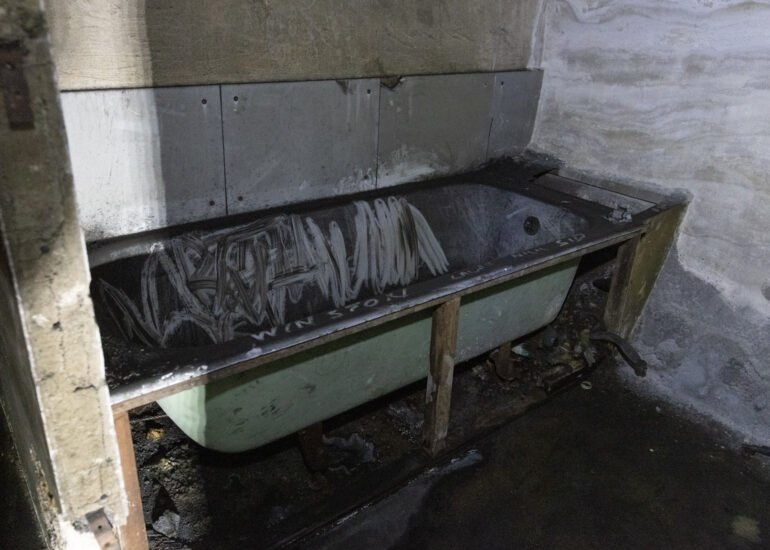
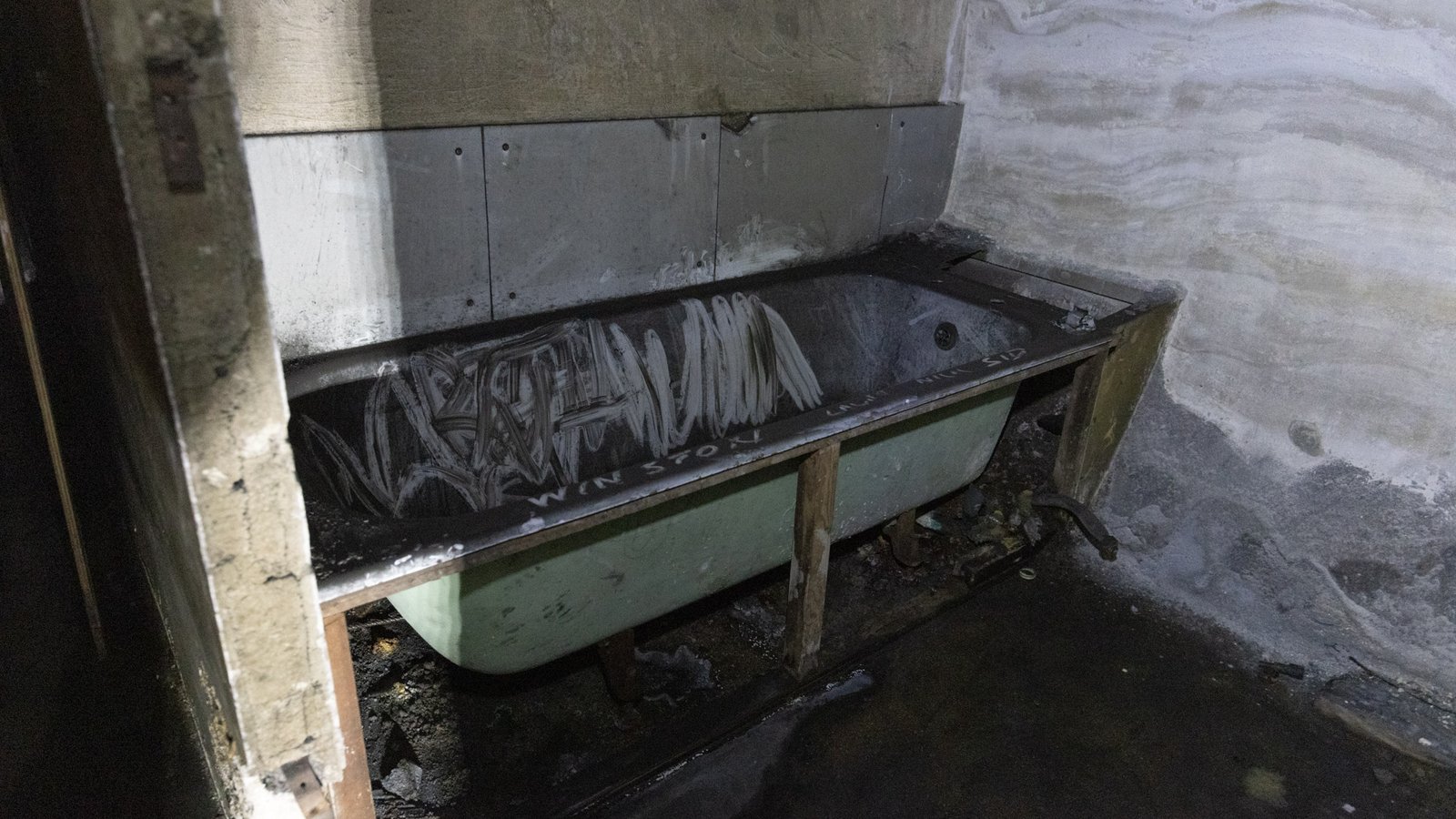
There are also stories that Winston Churchill visited the bunker and used it as a place of refuge during the Blitz.
Photographing the Entrance to the Underground
Above ground, remarkably little gives away what is hidden beneath Down Street.
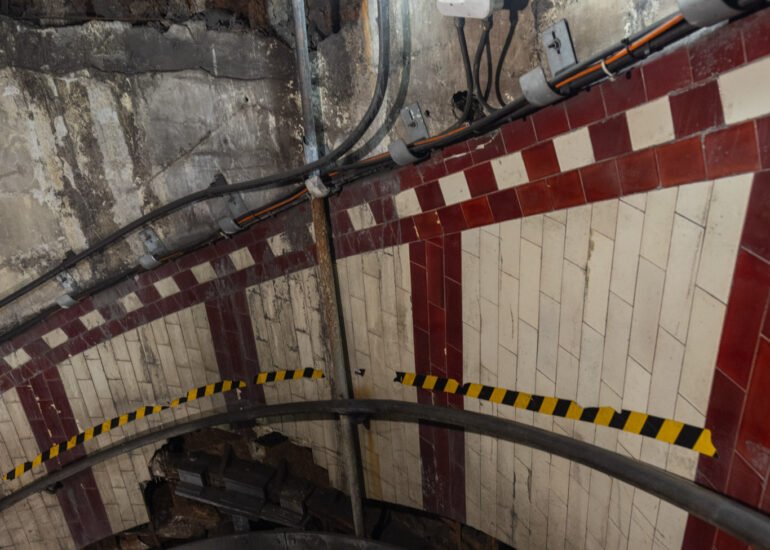
The original station façade survives, complete with its distinctive oxblood-red tiles. The old ticket hall, however, has long since disappeared beneath the more modern surroundings of Mayfair.
Today, access is through a much less impressive metal door beside the shop.
Behind it, the character of London changes almost immediately.
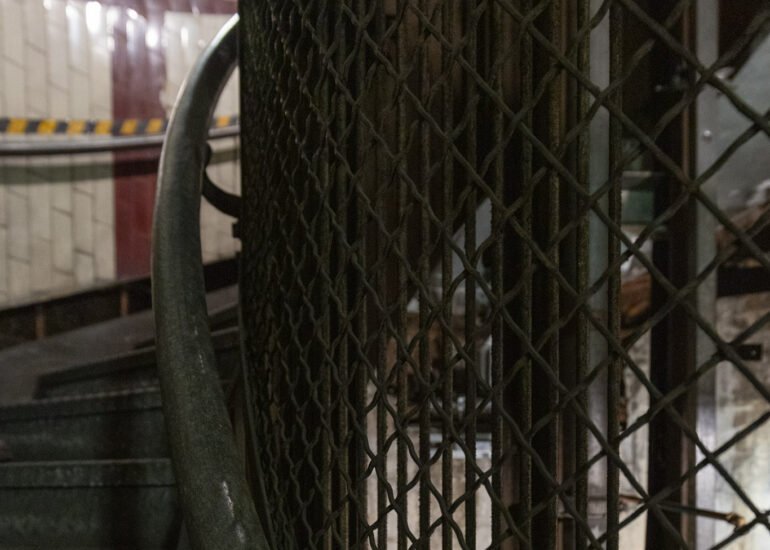
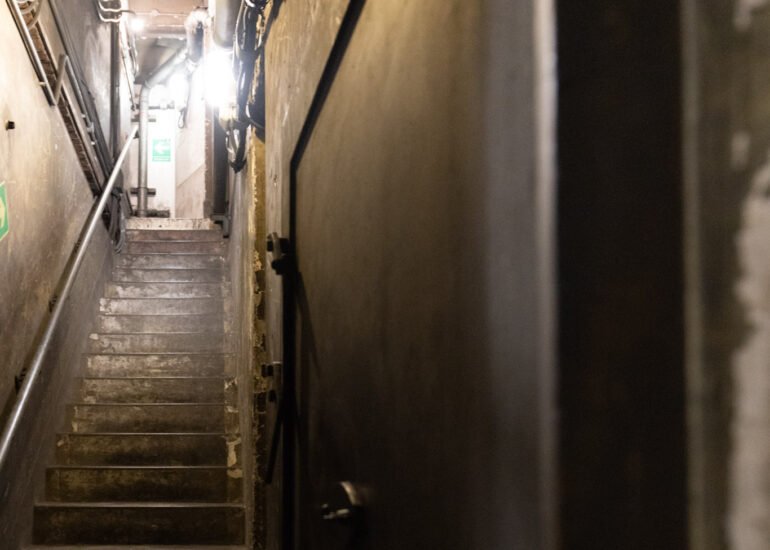
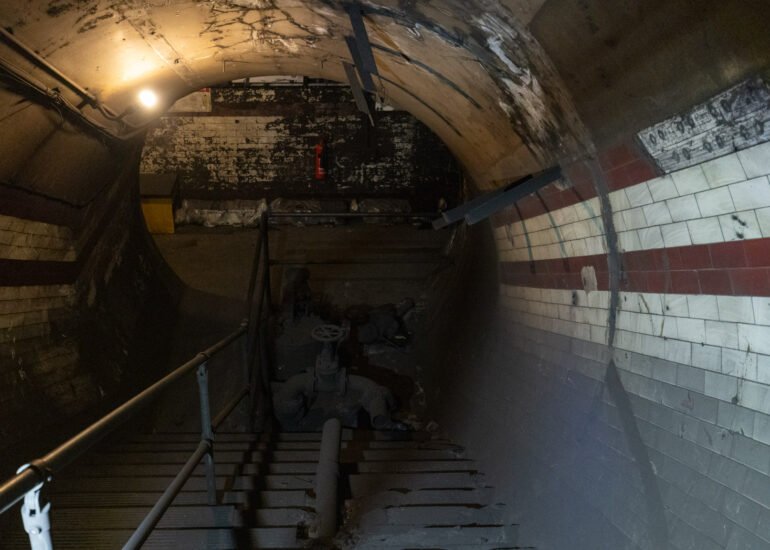
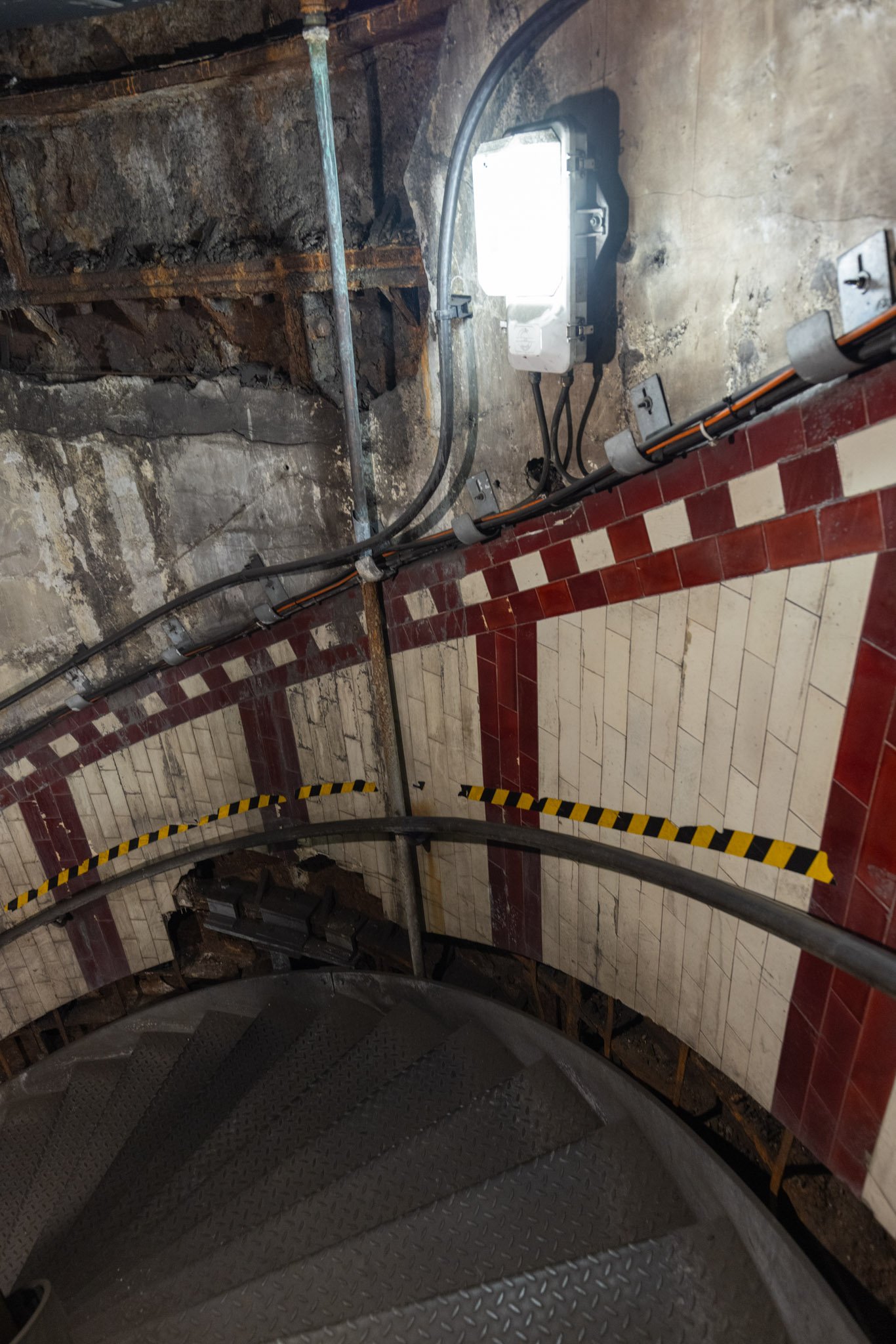
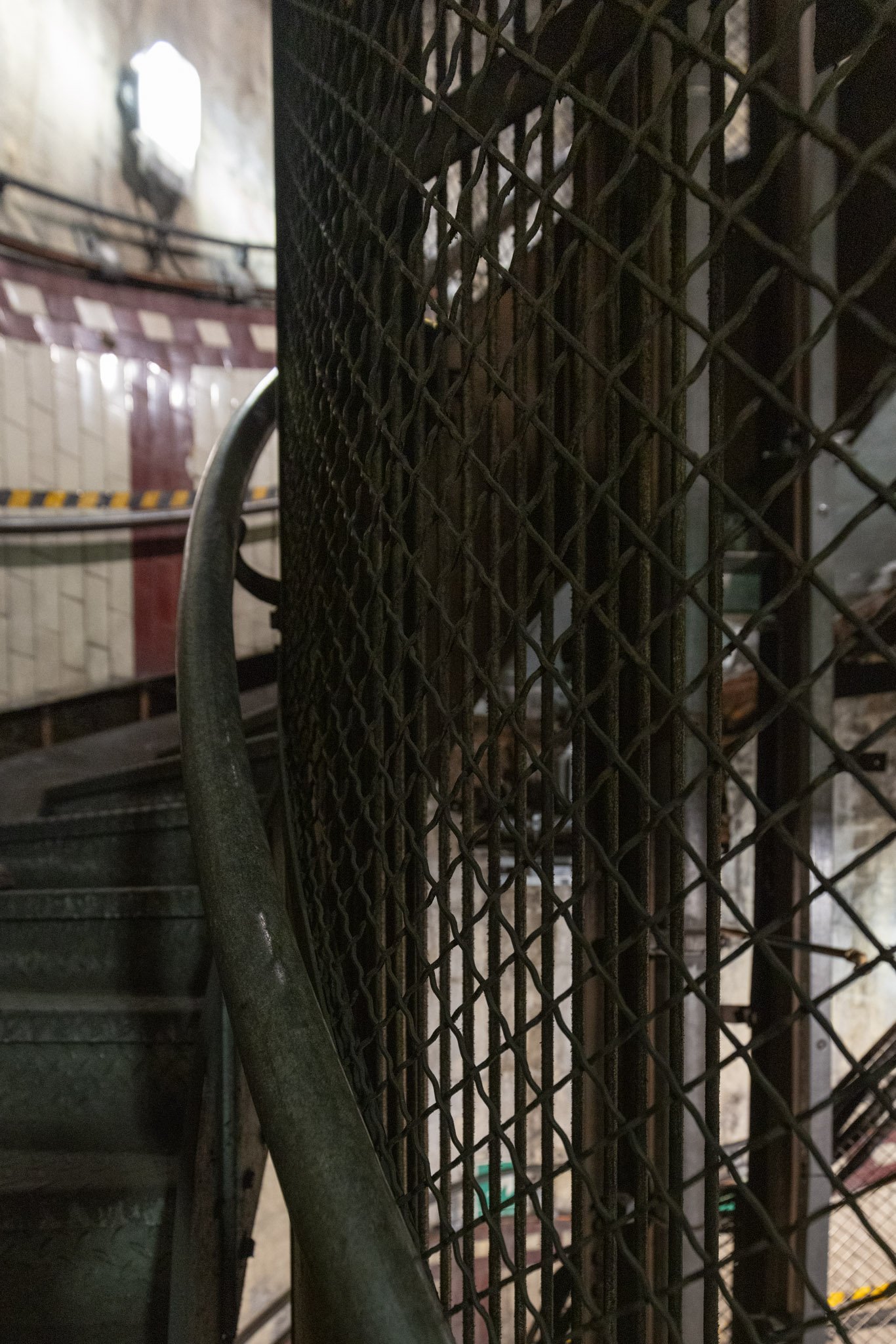
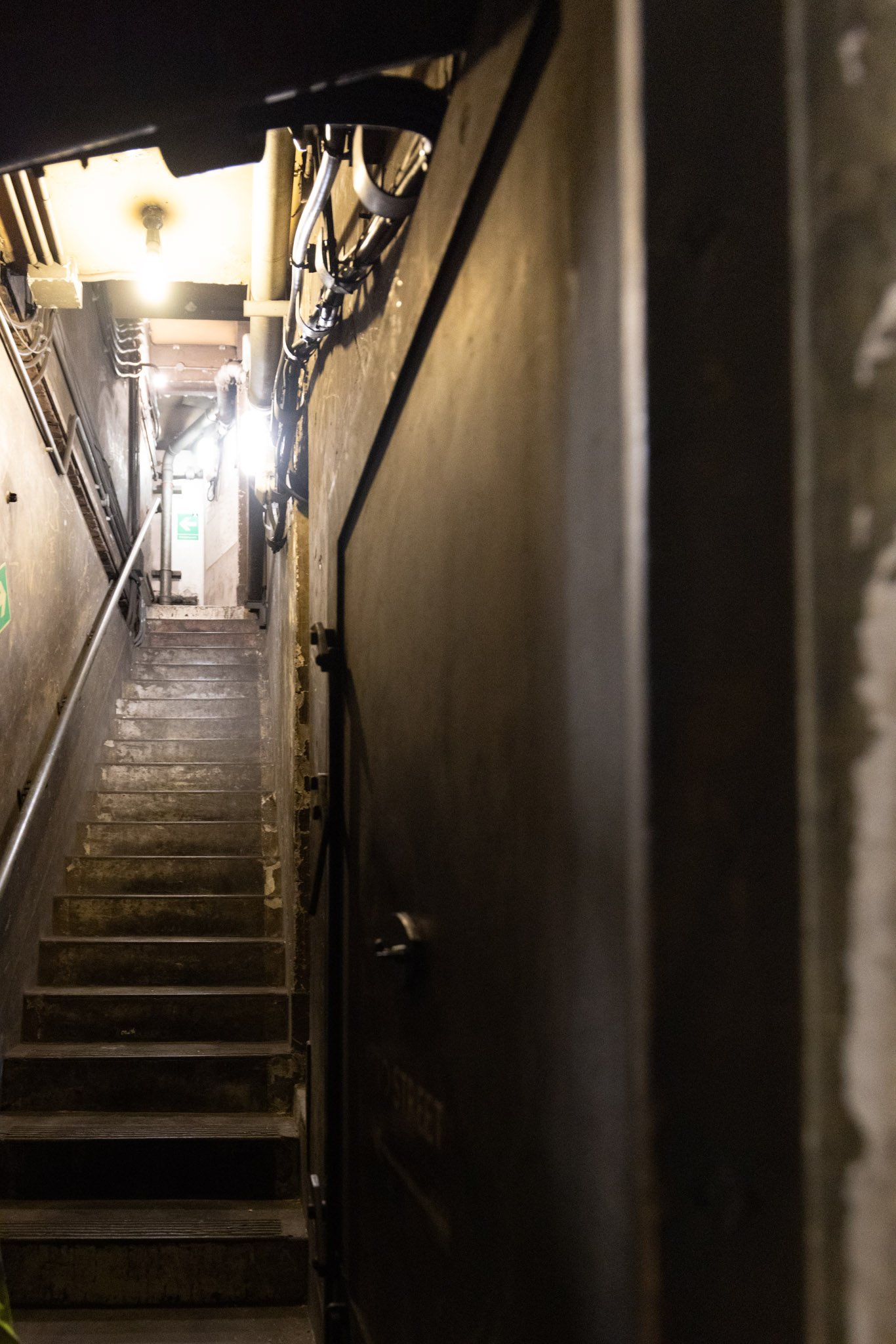
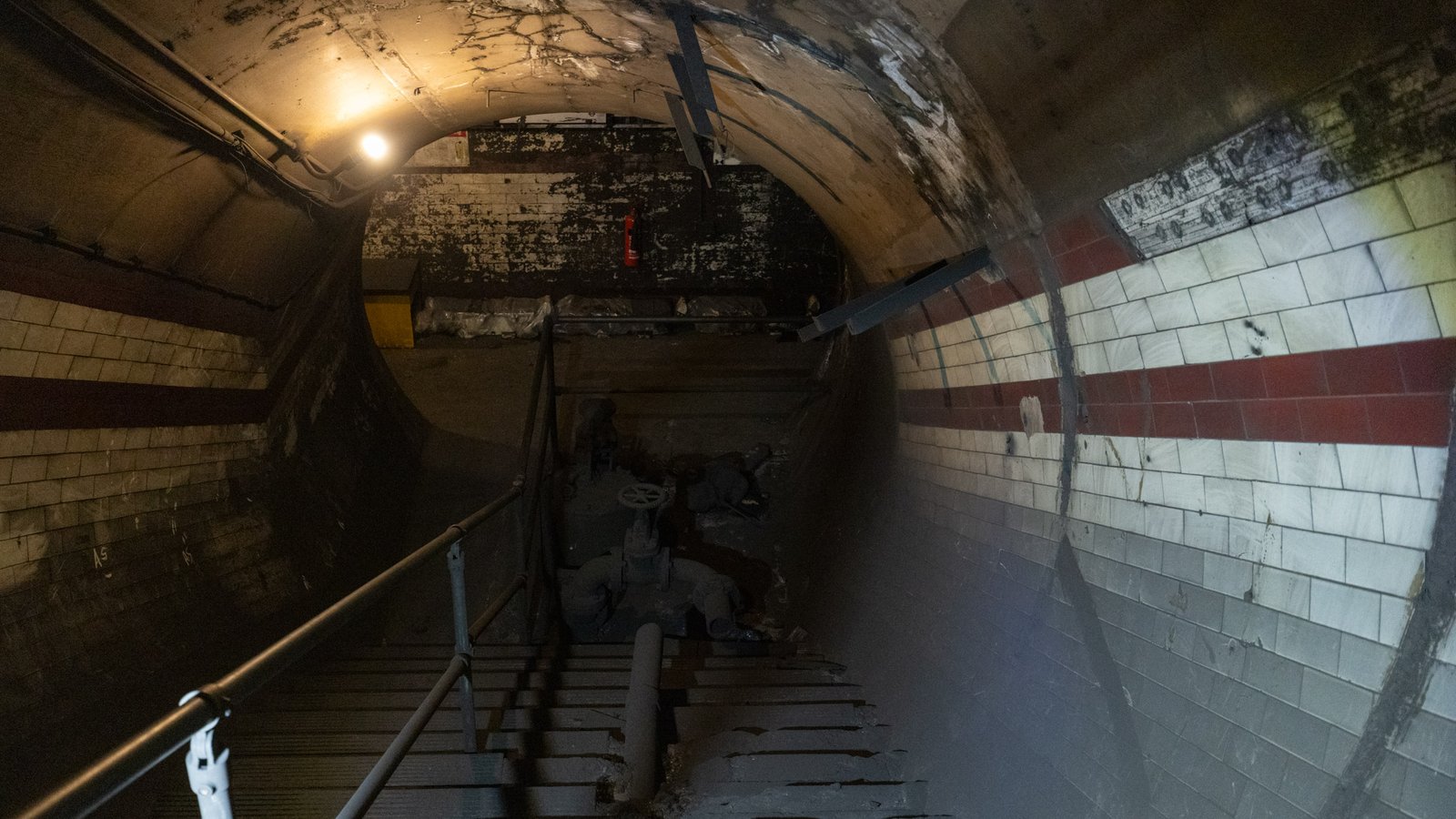
A flight of stairs leads down into darkness, eventually reaching the top of the station’s spiral staircase and the network of tunnels below.
For a photographer, this was where the fun really started.
Working With Almost No Light
One of the first things you notice underground is just how dark it is.
We were issued with torches and hard hats before beginning the tour, but the limited light was actually one of the things that made Down Street so interesting photographically.
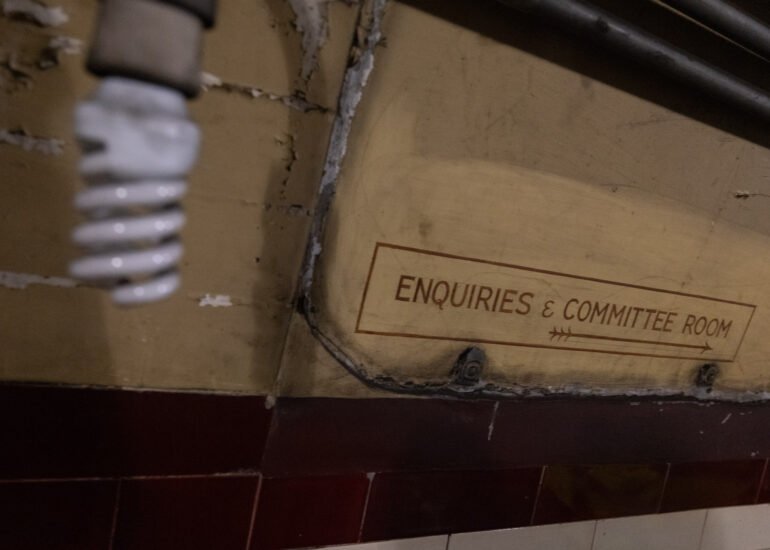
There was no bright, even illumination to make things easy. Instead, the torches picked out fragments of the environment: a doorway here, a piece of faded signage there, a corridor disappearing into darkness.
It became less about simply recording what was there and more about looking for shapes, textures and small details within the shadows.
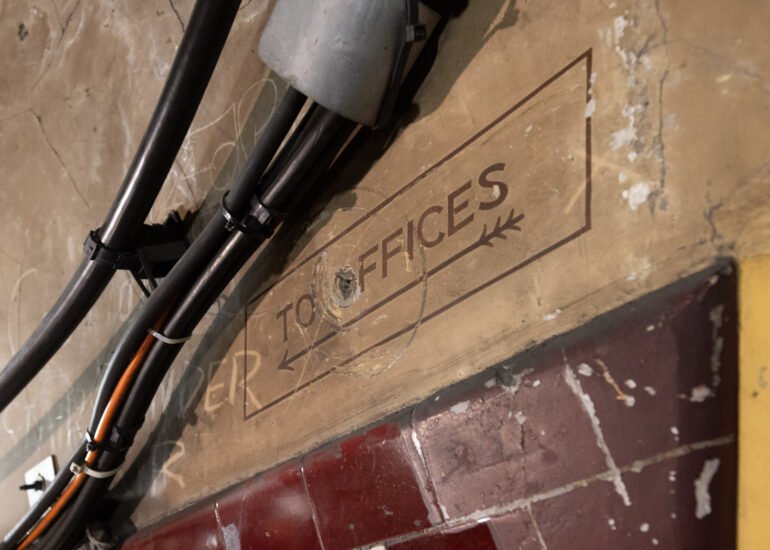
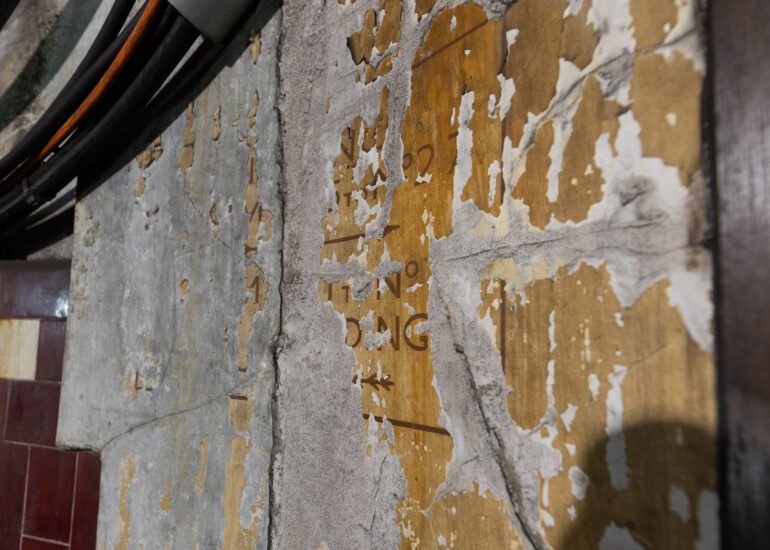
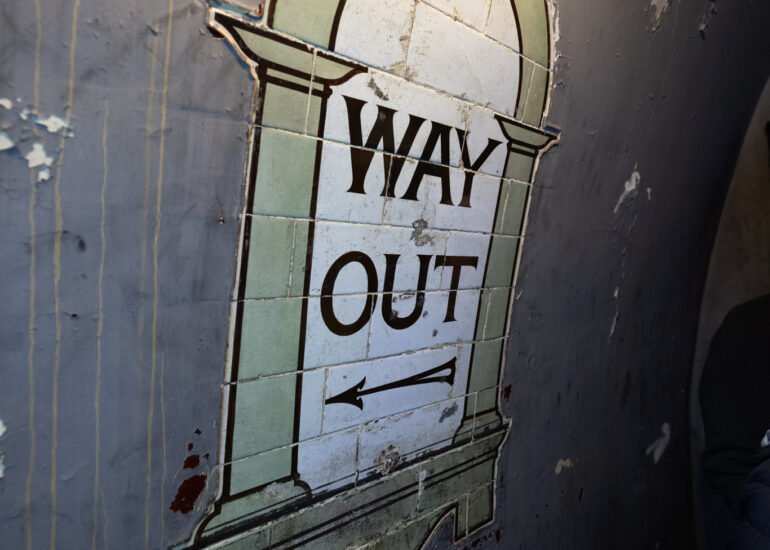
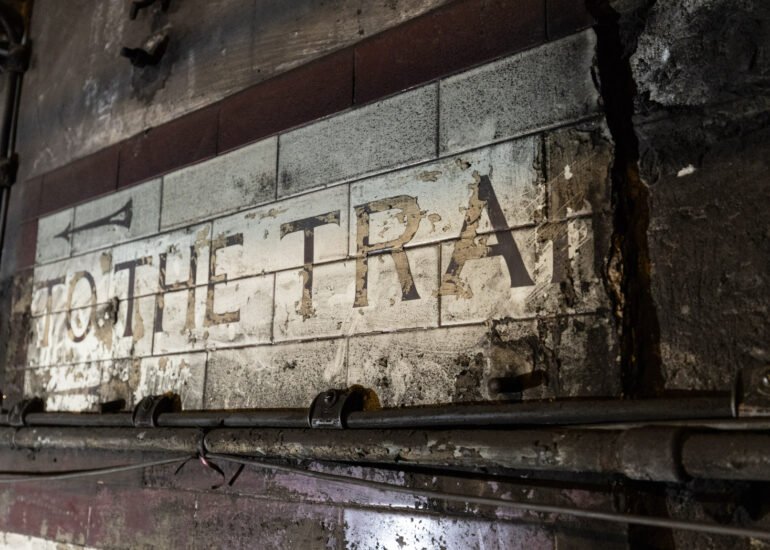
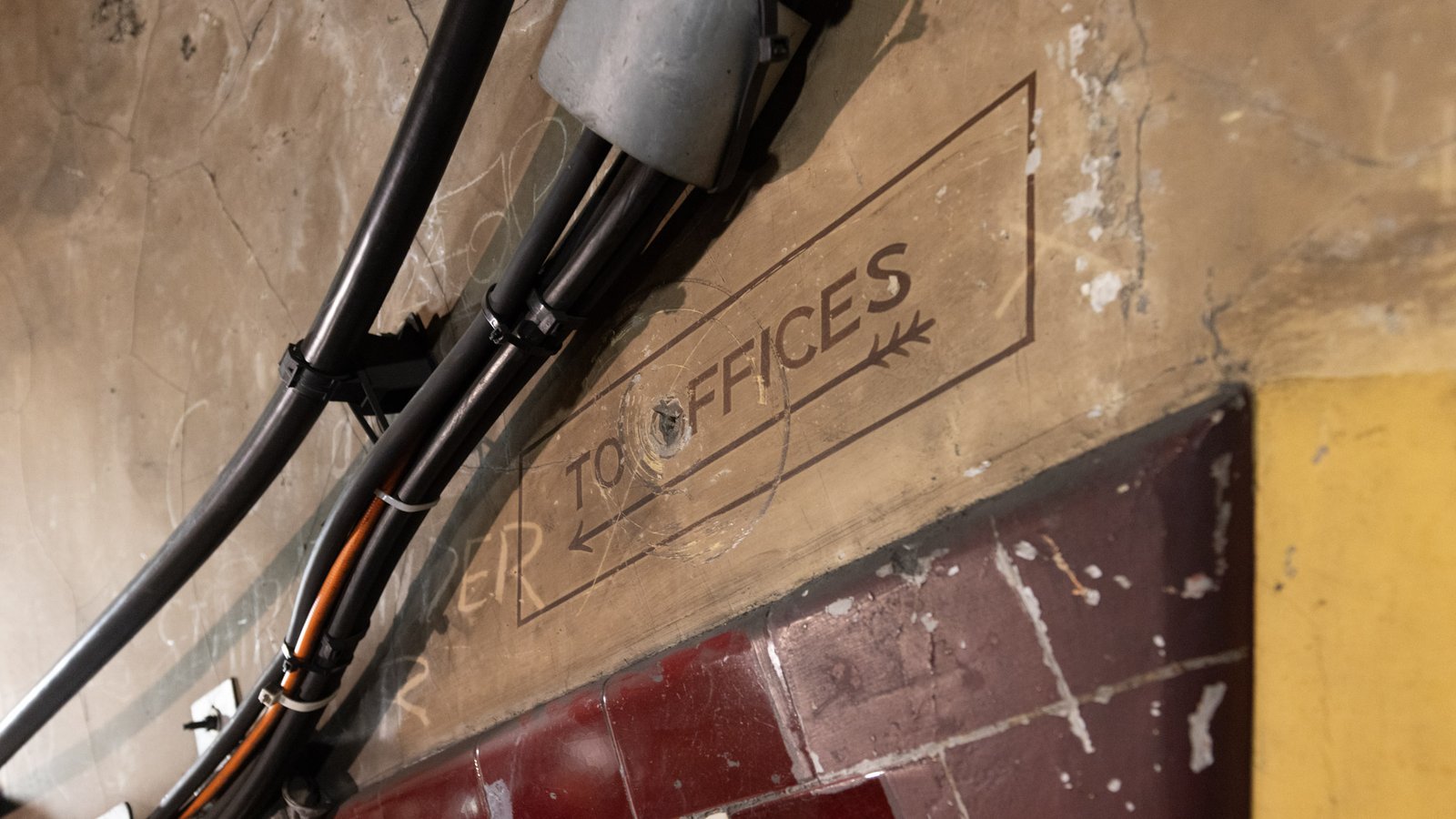
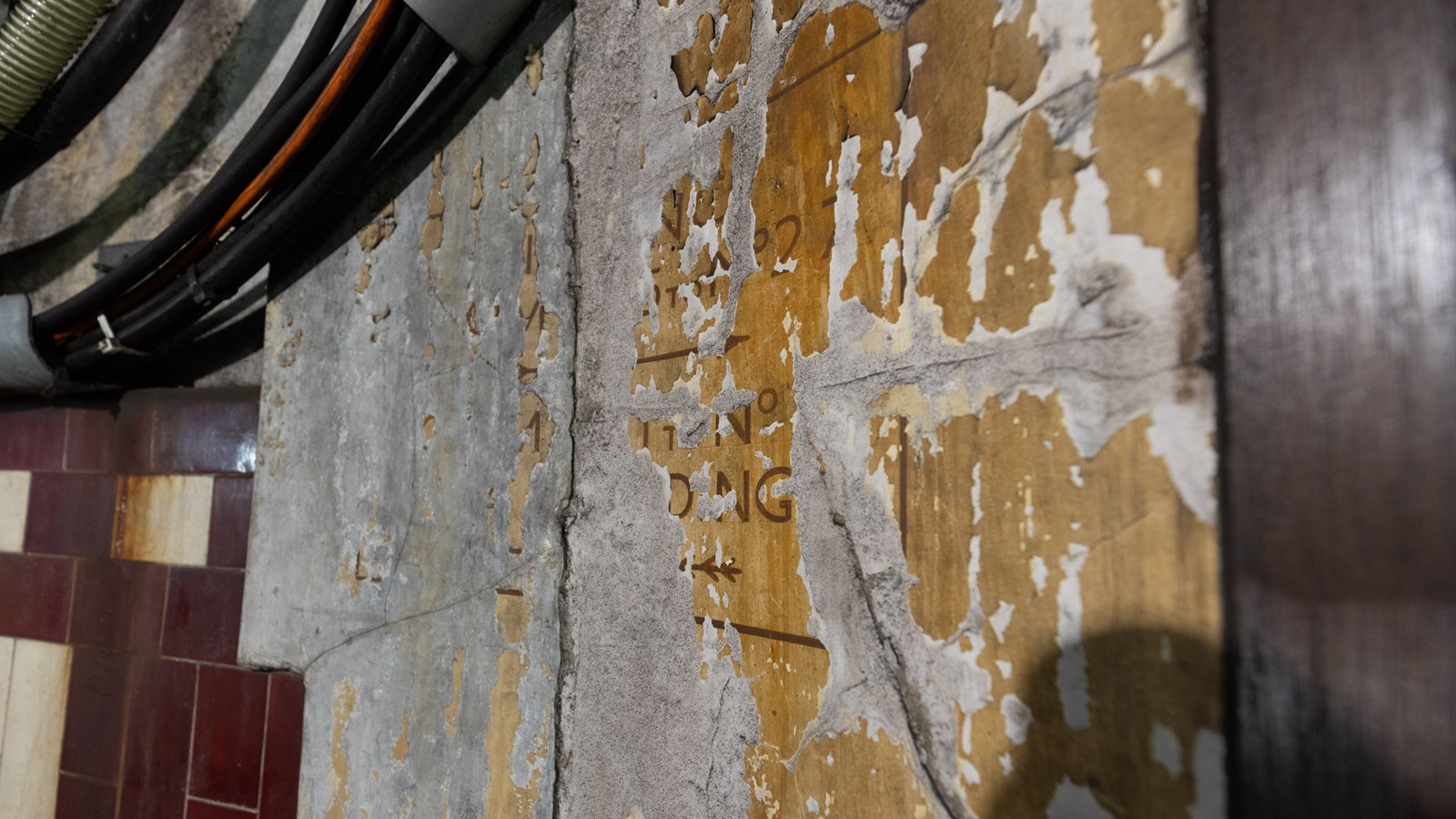
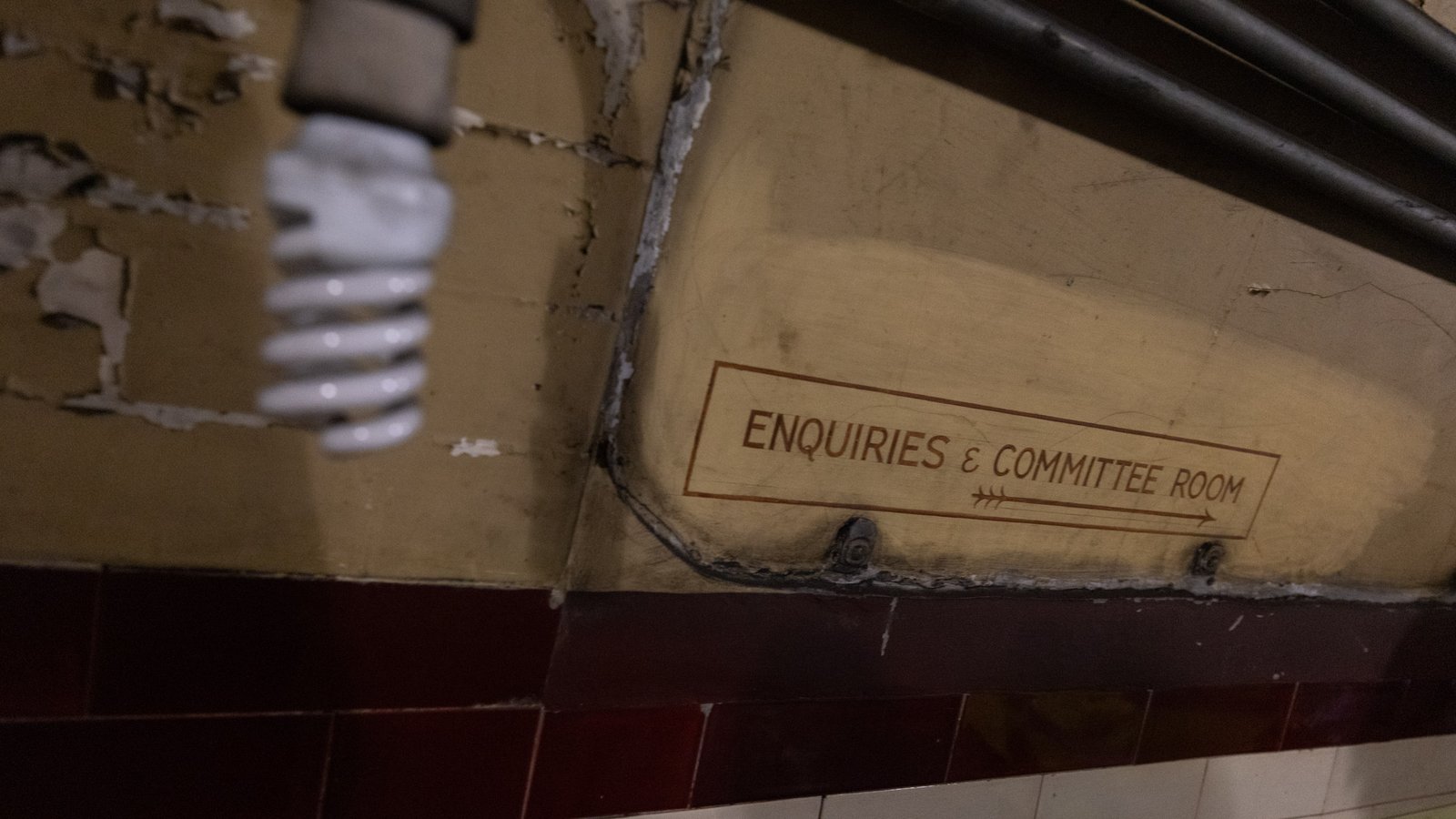
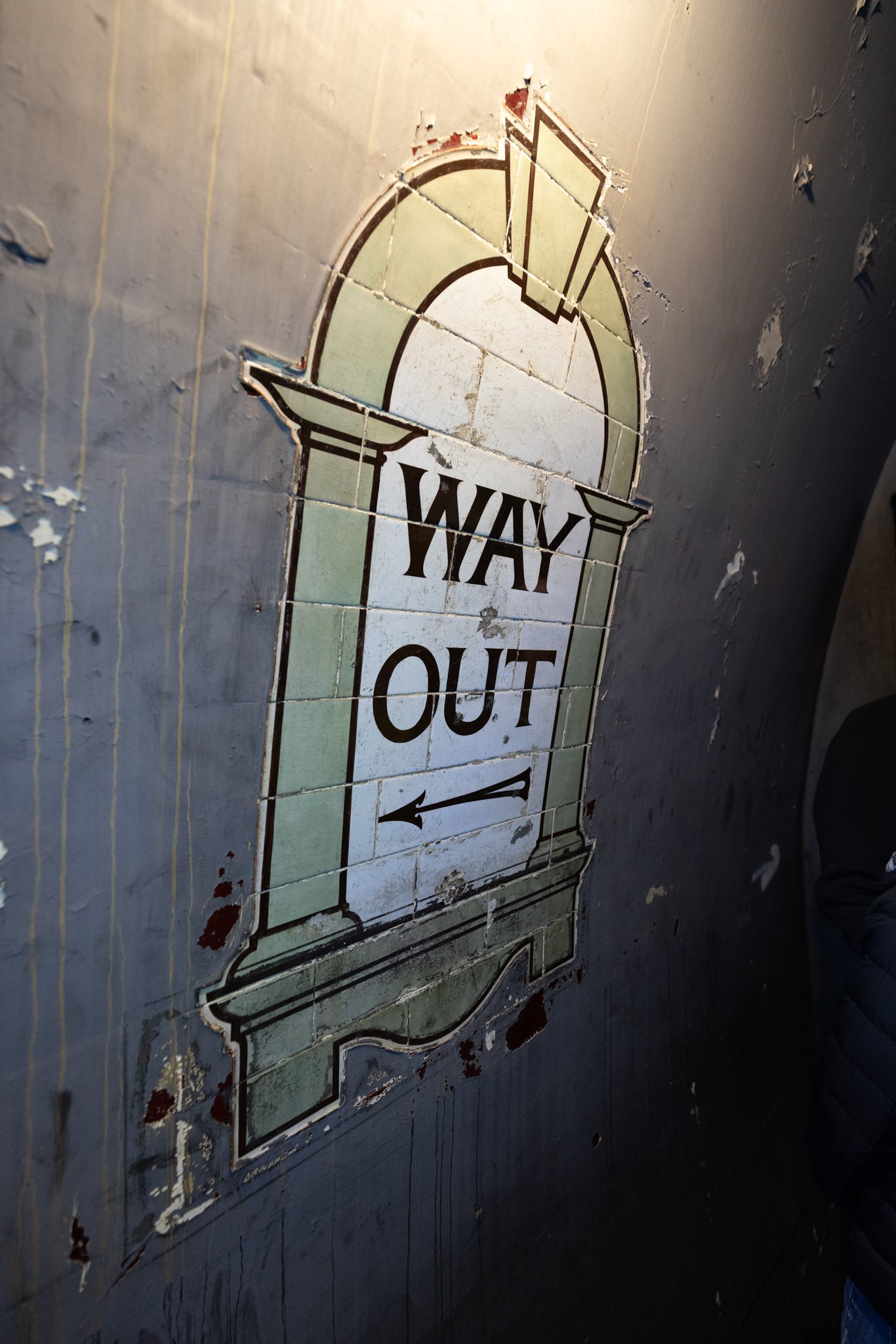
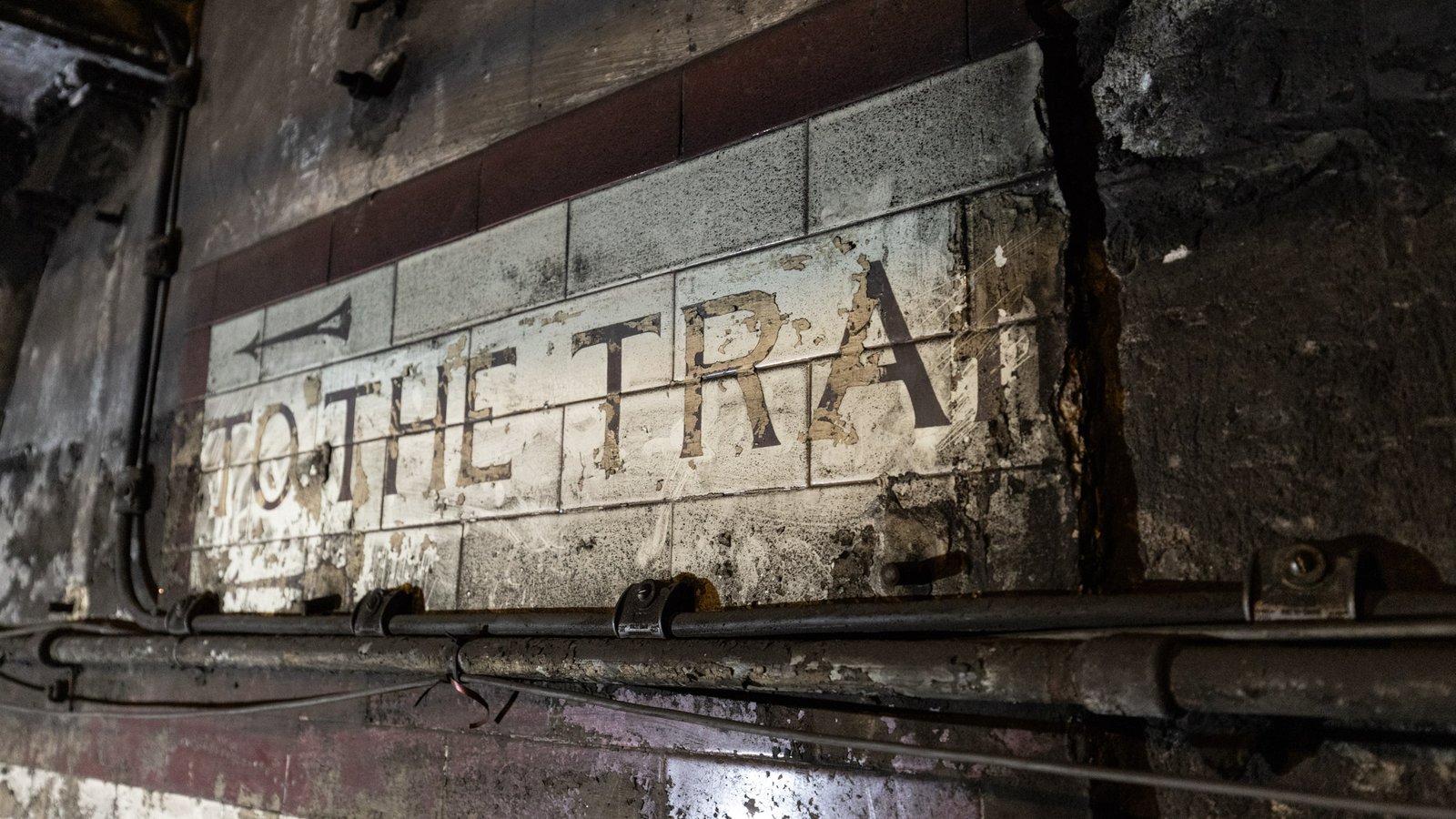
At the bottom of the first staircase was a blast-proof door, with fragments of what appeared to be hand-painted signage still visible nearby.
These small remnants were particularly appealing to photograph. They felt authentic in a way that a perfectly preserved museum display never could.
The paint was faded. The walls were dusty. Nothing looked new.
And that was precisely the point.
A Wartime Office Beneath Mayfair
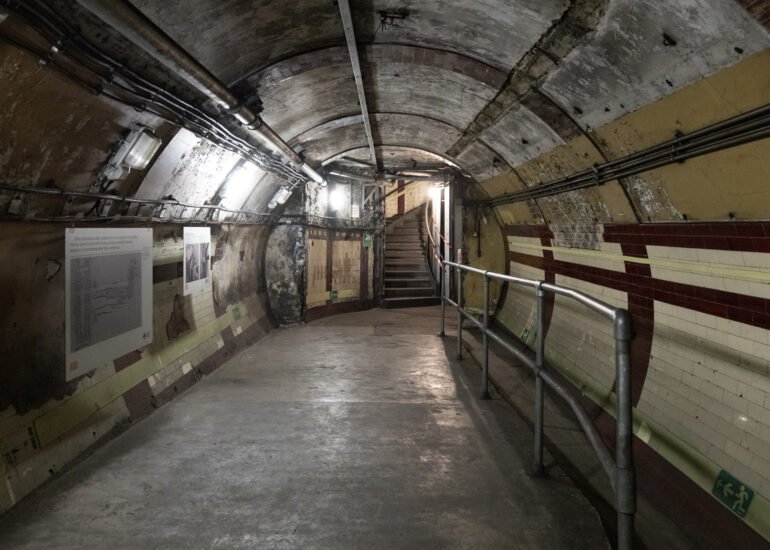
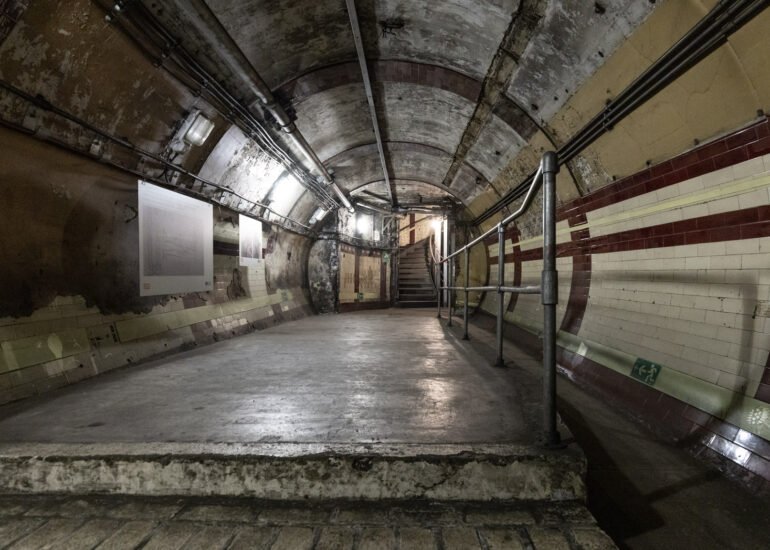
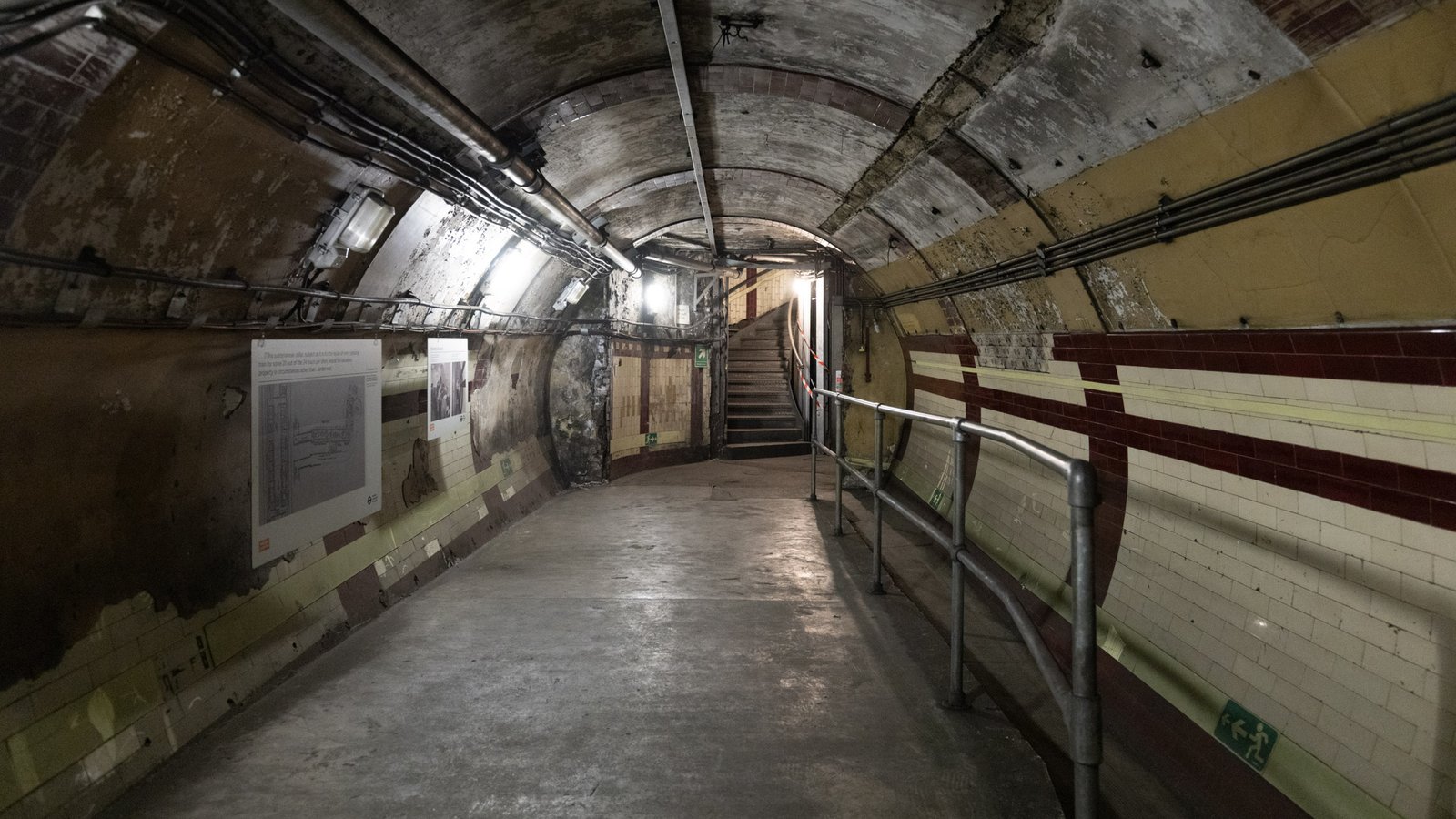
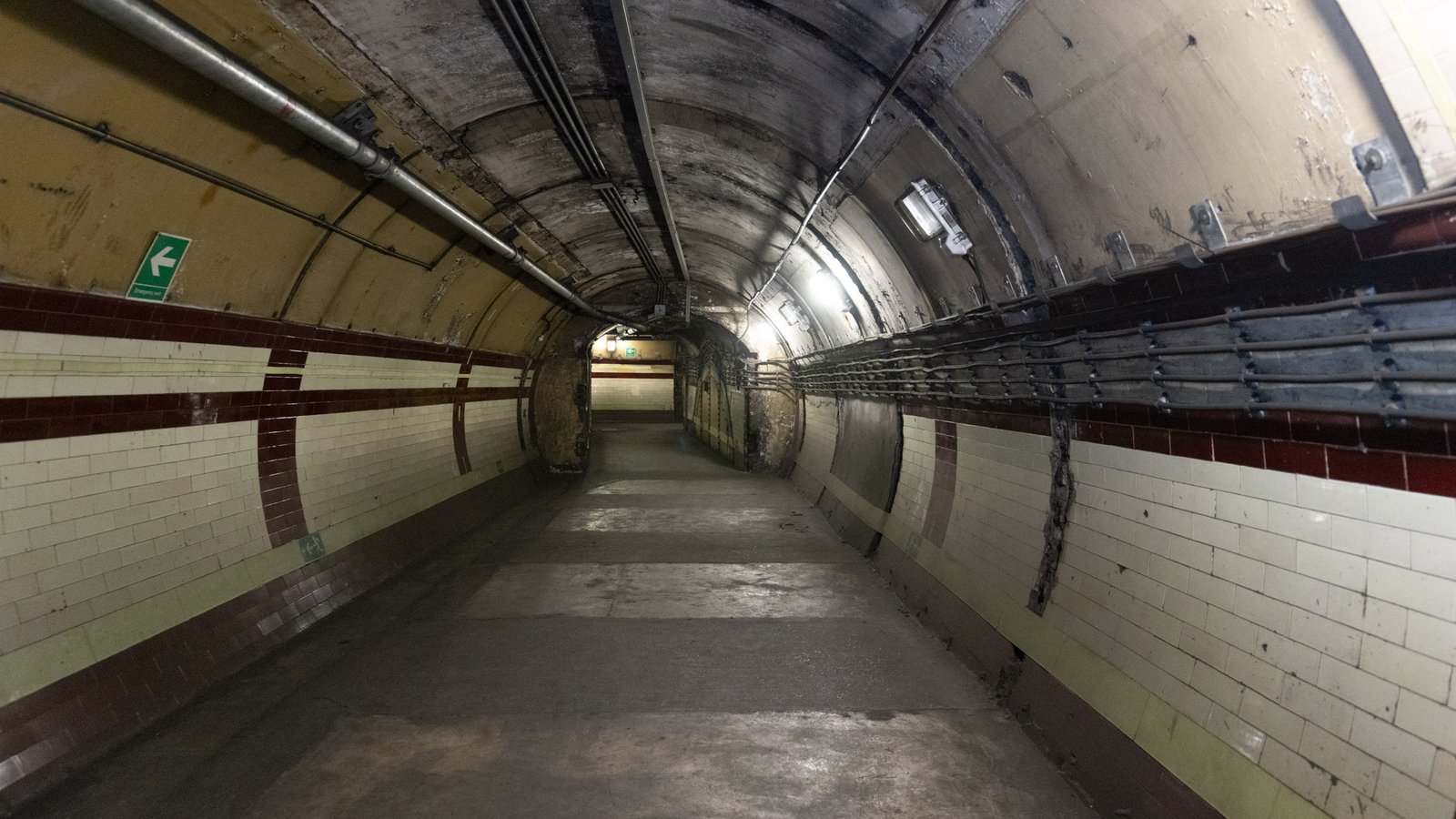
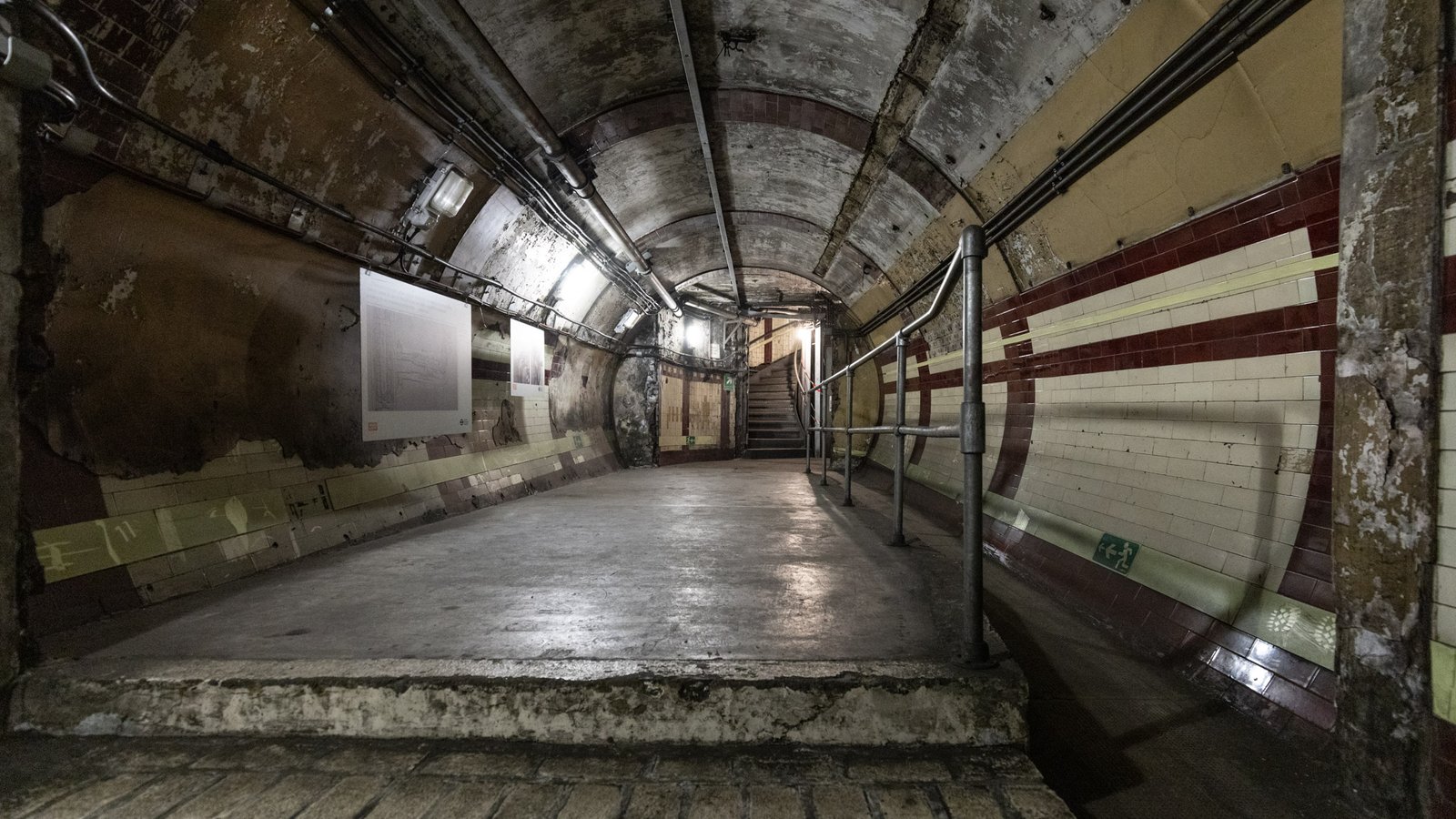
Further underground, the station opens into a series of rooms and corridors.
One area had been converted into a typing pool, with a narrow passage leading off to one side. We were told that it was just wide enough for a tea trolley.
It’s these little details that make a place like Down Street come alive.
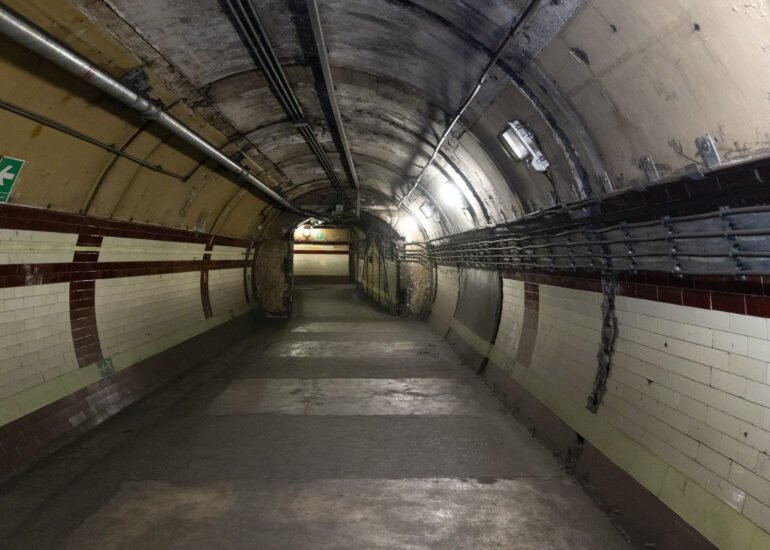
The main corridor turns 90 degrees before opening into a longer passage that once contained a meeting room for Railway Executive Committee members, along with a number of smaller offices.
Many of the original partitions have disappeared, but enough remains to give a sense of how the space was organised.
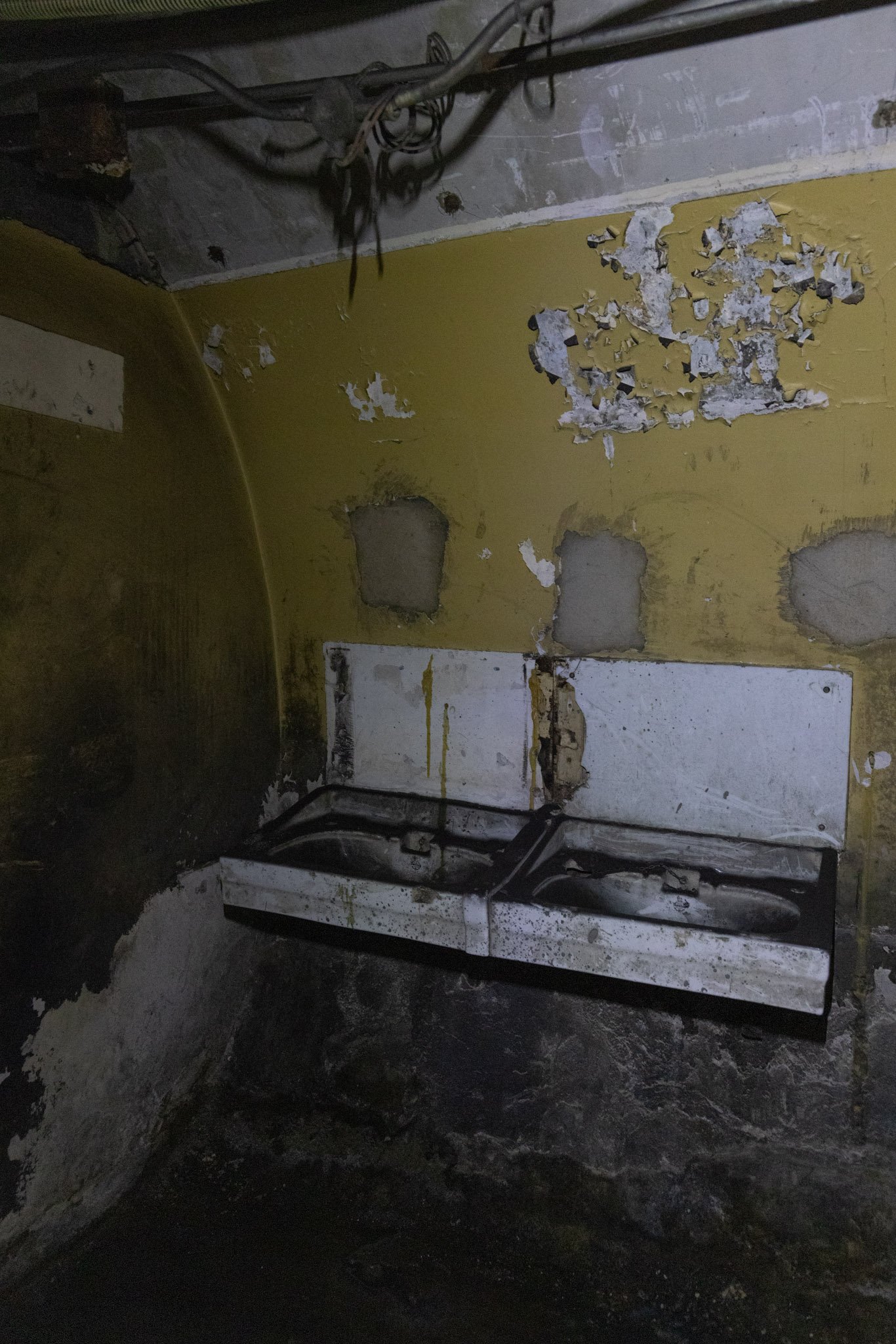
Along the former platforms, rooms had been created for dormitories, dining areas and a kitchen.
Standing there with a camera, I found myself looking beyond the obvious architectural shots and trying to imagine the people who had occupied these spaces during the war.
The challenge was to photograph not just an abandoned Underground station, but a place that had once been busy with people, conversations, paperwork and decisions.
Dust, Decay and the Telephone Exchange
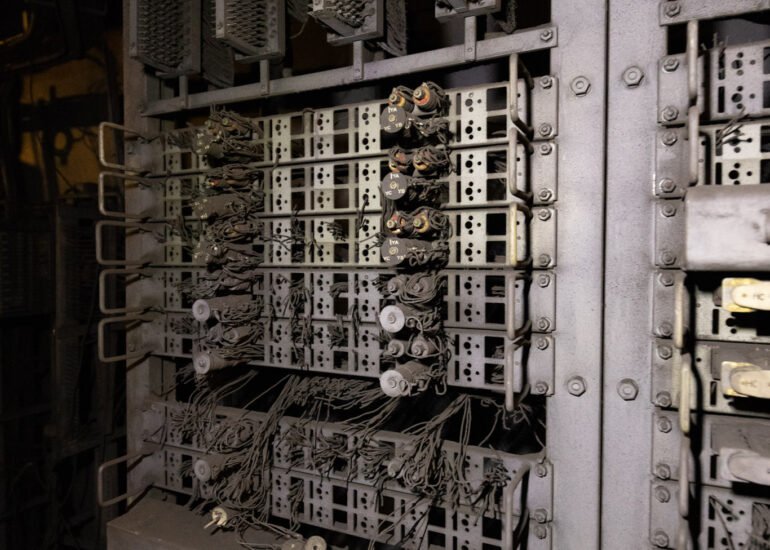
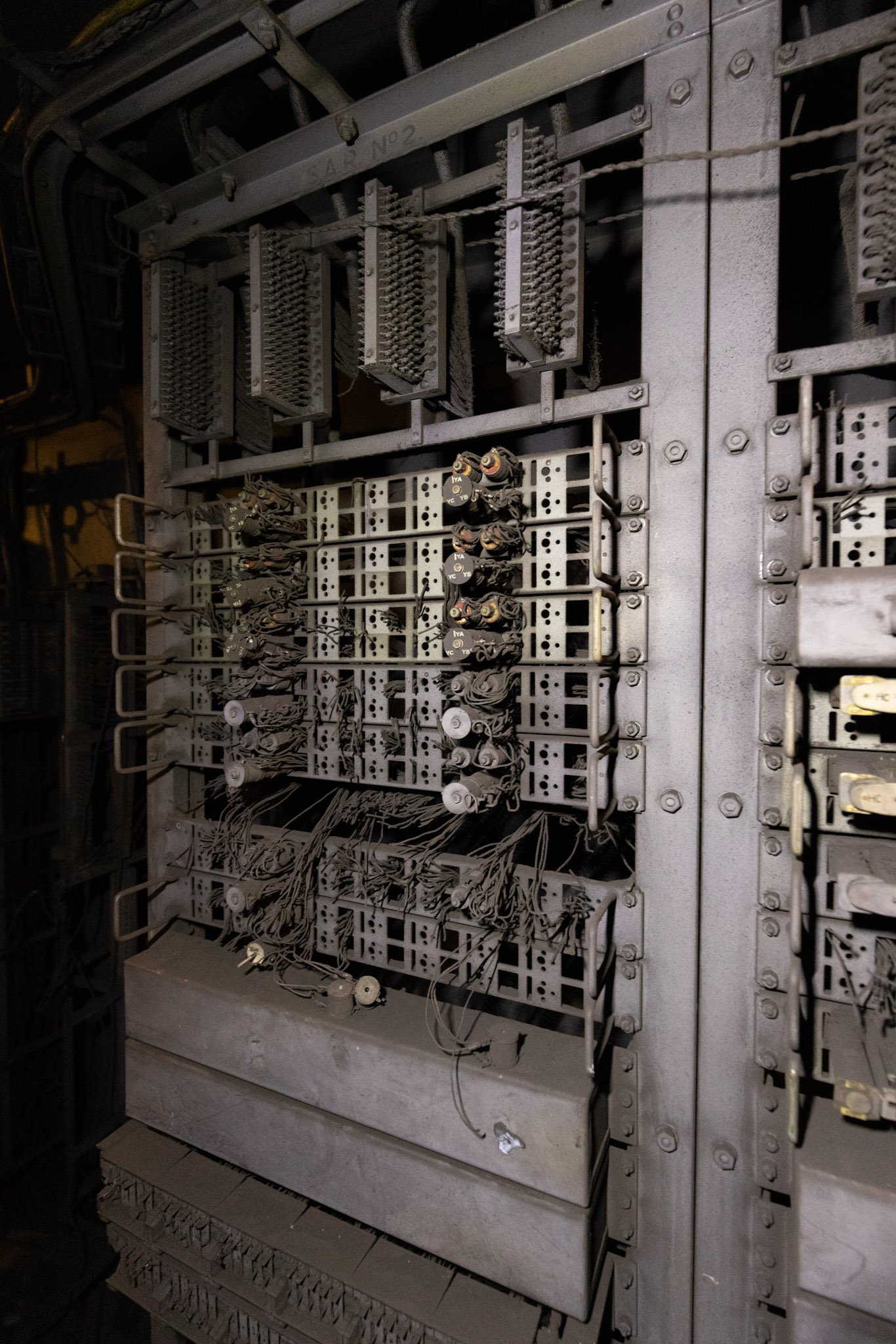
One of the most striking remnants was the old telephone exchange.
Still hanging in place, it looked incredibly fragile, almost as though it might collapse under the weight of the decades of dust that had accumulated around it.
For photography, it was a gift.
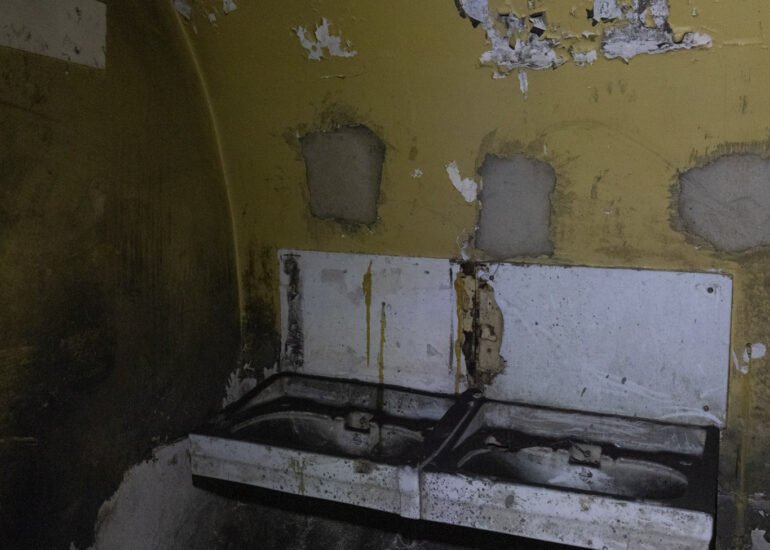
The combination of cables, metalwork, peeling surfaces and accumulated dust created exactly the kind of textures that make abandoned places so compelling to photograph.
There is something about photographing objects that have simply been left behind. They tell a story without needing to be restored or presented.
You can almost feel the passage of time in them.
When the Trains Come Through
But the most memorable part of Down Street isn’t something you can see.
It’s something you hear.
Every so often, the distant rumble of a Piccadilly line train grows louder. Then comes the breeze as it rushes through the tunnels.
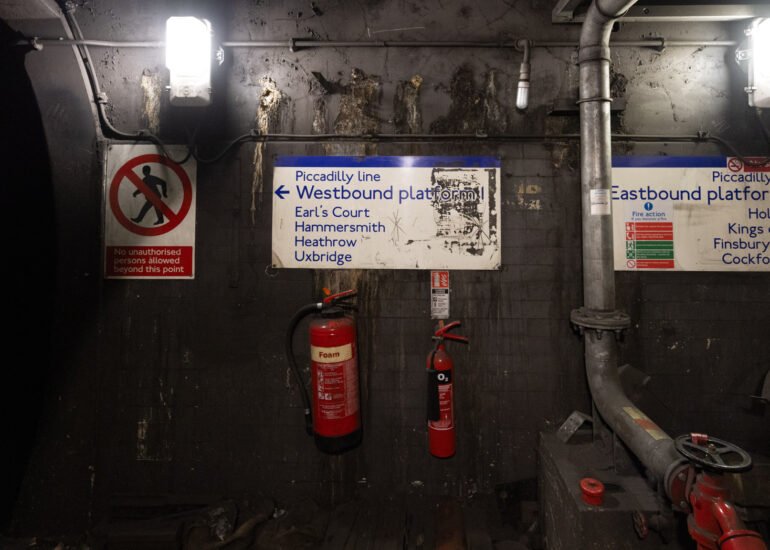
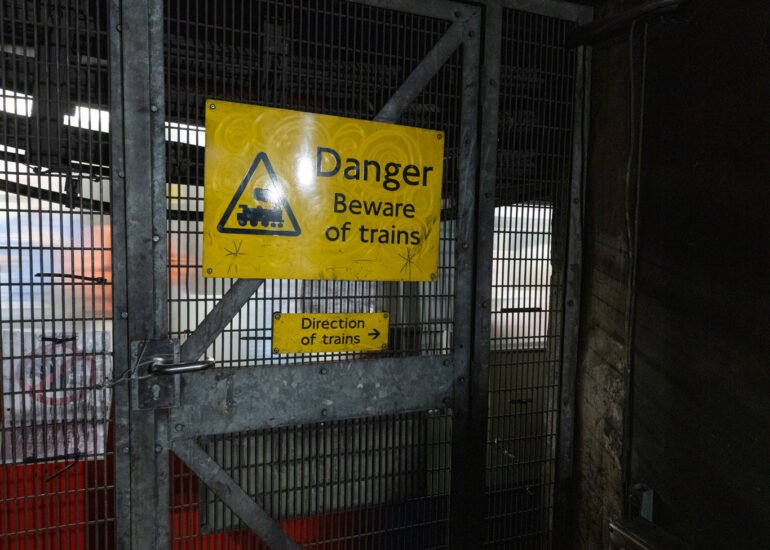
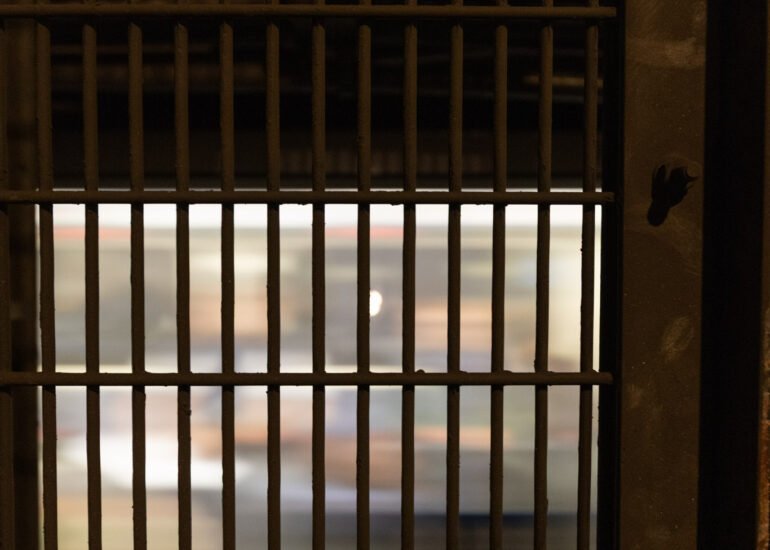
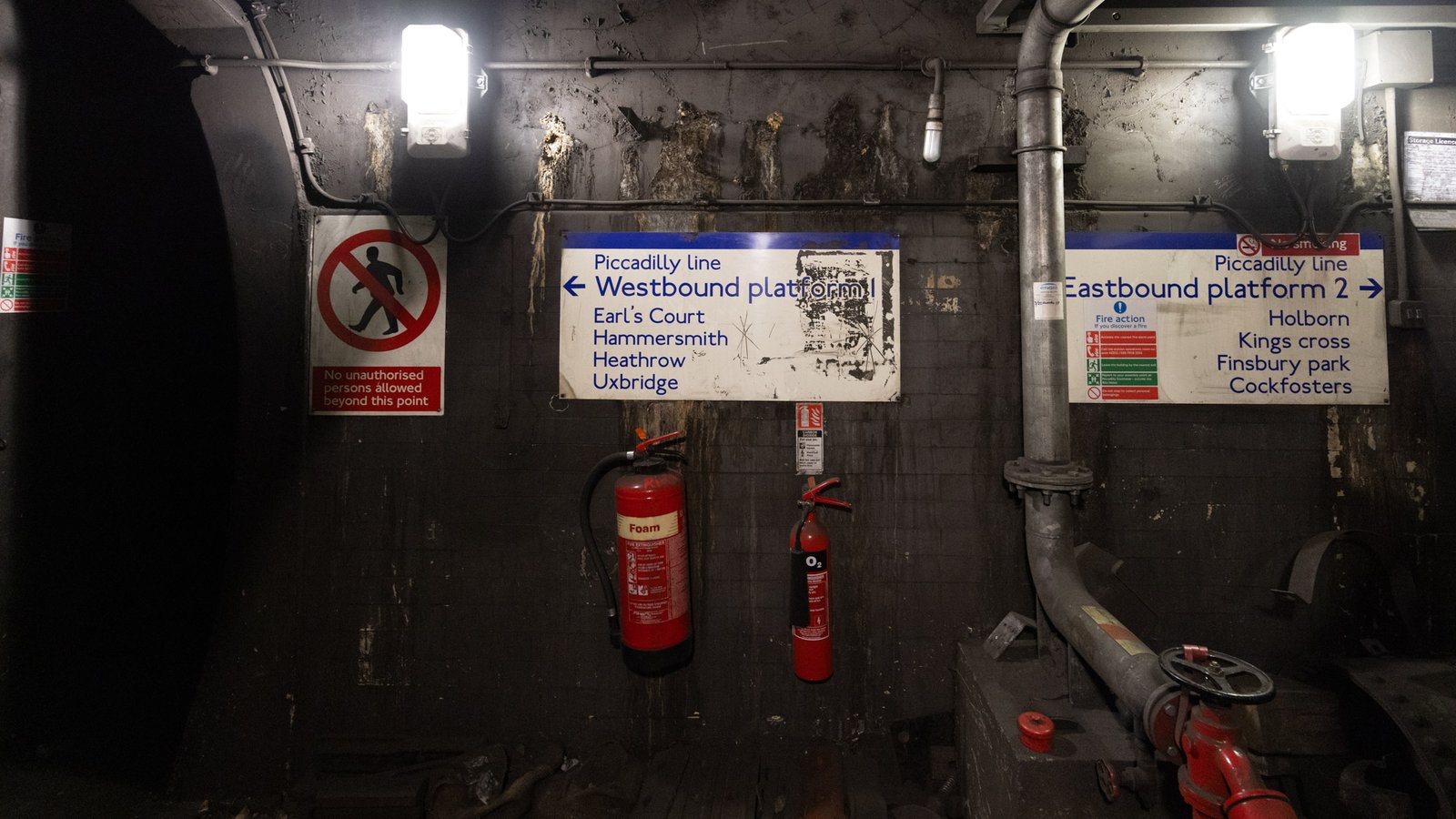
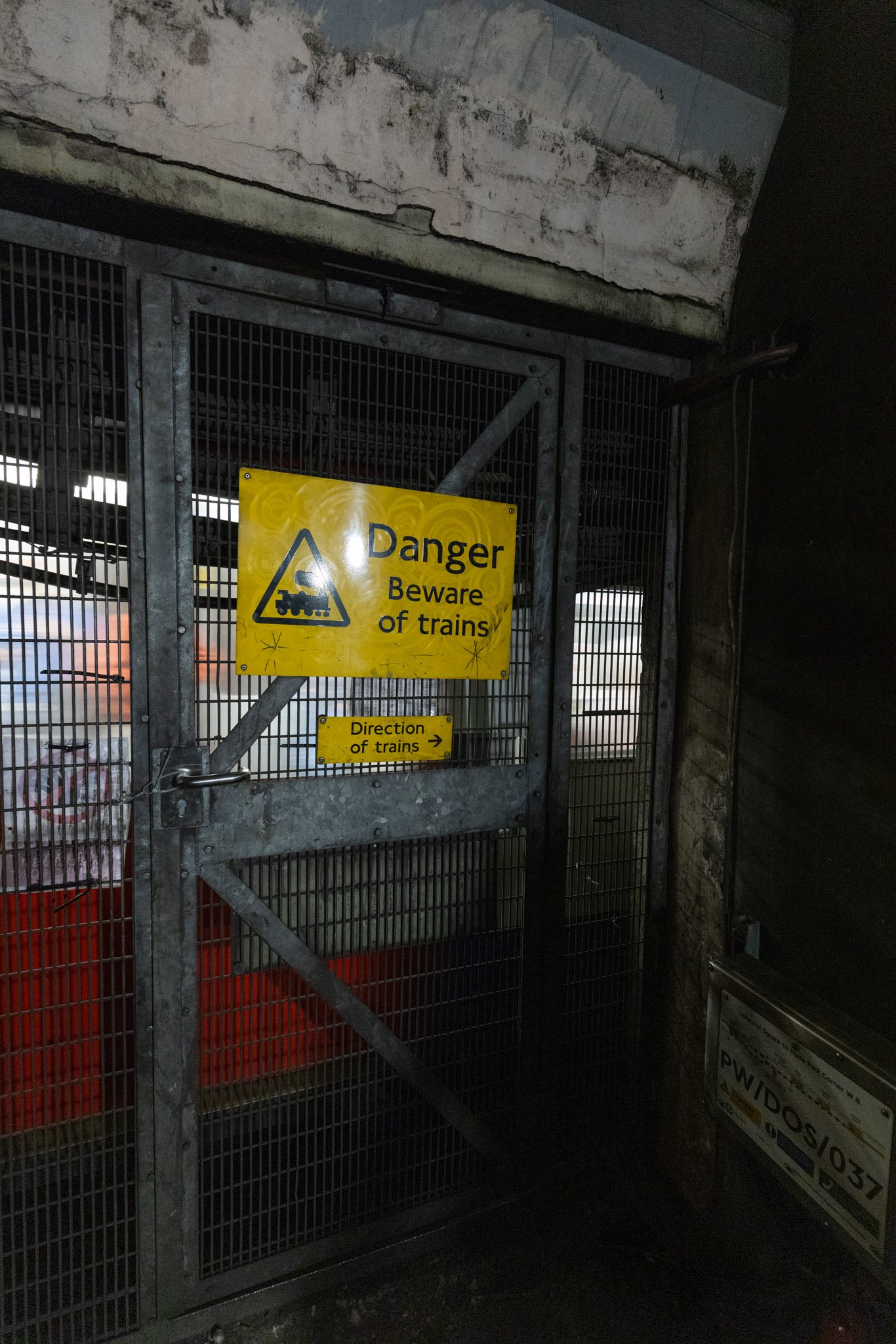
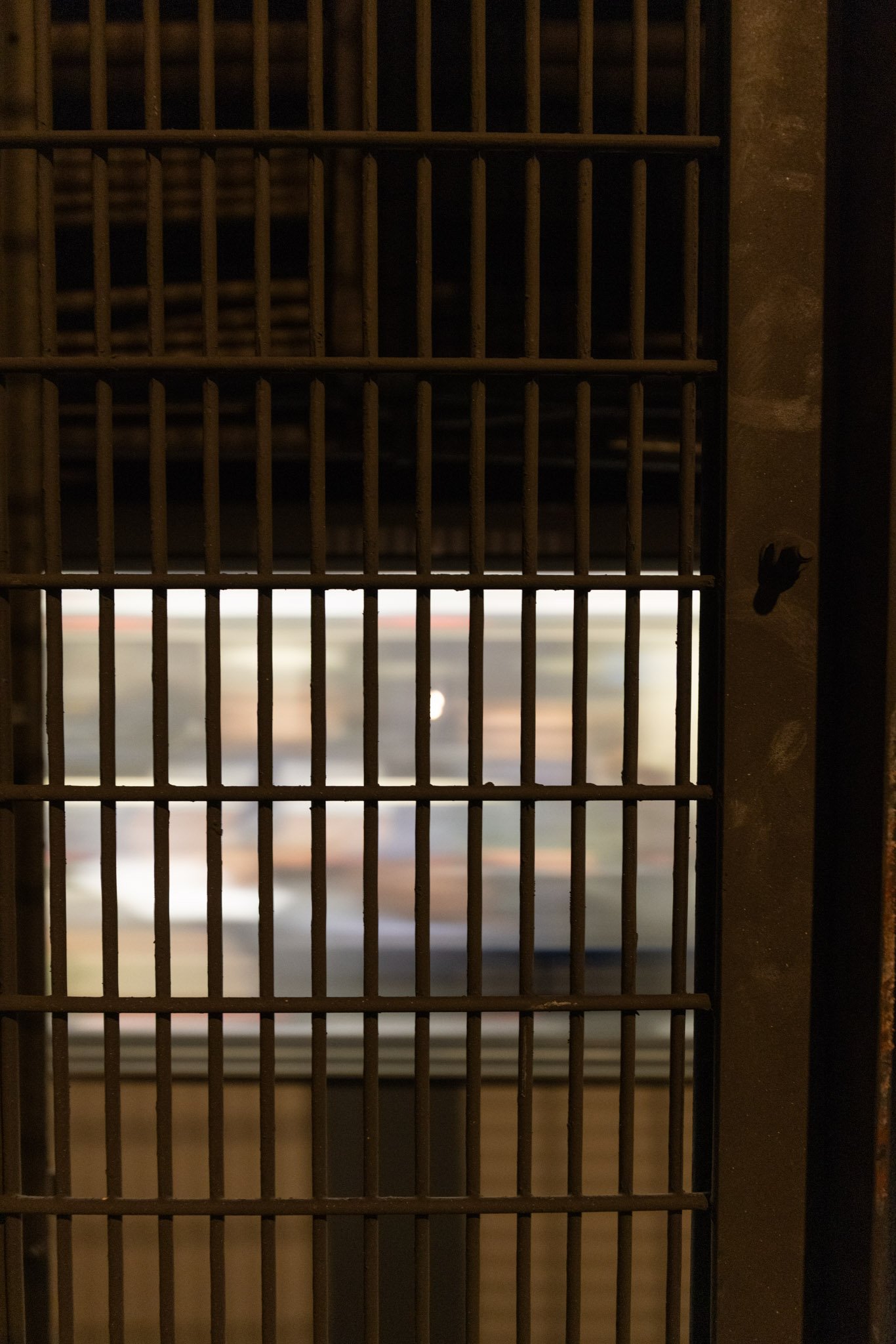
Down at the former platforms, metal gates mark emergency evacuation points. They also bring you incredibly close to the live Underground tracks.
When a train approaches, the experience changes completely.
We were asked to turn off our torches so that we wouldn’t dazzle the driver. Suddenly, the space disappeared into complete darkness.
You can hear the train coming long before you see it.
The rumble grows.
The sound becomes louder.
Then, almost without warning, a train flashes past only feet away.
For a few seconds, the abandoned station is anything but silent.
And then it’s gone.
The darkness returns.
The silence returns.
You are left standing in the same place, wondering how something so old and forgotten can still feel so connected to the modern Underground above.
For me, that was probably the most atmospheric part of the entire visit—and one of those experiences that is difficult to capture in a photograph.
Exploring the Old Lift Shaft
Before heading back to the surface, we also passed through the old lift shaft.
With the machinery long removed, it is now an enormous vertical void disappearing upwards into the darkness.
It was another reminder of just how much infrastructure lies beneath London’s streets, much of it hidden from the millions of people travelling through the city every day.
And that, perhaps, is what makes Down Street so fascinating.
It isn’t simply an abandoned station.
It is a collection of different moments in London’s history layered on top of one another.
A tube station.
A wartime bunker.
A workplace.
A shelter.
And now, an extraordinary photographic time capsule.
Photographing Down Street
From a photographic point of view, Down Street was certainly challenging.
The light levels were extremely low, and working with torches meant that much of the scene was illuminated unevenly. There were also plenty of restrictions around where we could stand and what we could photograph, particularly near the live railway.
But those limitations actually made the photography more interesting.
Rather than relying on bright, clean compositions, I found myself looking for small areas of light, strong leading lines and details emerging from the darkness.
Corridors naturally drew the eye into the frame. Doorways created layers. Old signage provided small points of visual interest. Pipes, cables and brickwork added texture.
And sometimes, the best photograph was simply the one that captured the atmosphere of the place.
I came away pretty pleased with the images I managed to capture, particularly given the conditions. More importantly, though, I came away with a much greater appreciation of the history hidden beneath London’s streets.
A Final Look Into the Darkness
There are plans for some of the station’s space to potentially be used for new ventilation equipment, which means that the Down Street we explored may not remain exactly as it is today.
That makes the visit feel even more special.
We may have been among the last groups to experience these spaces in their current form—to stand in the old offices, walk along the former platforms and hear modern Piccadilly line trains thunder past an abandoned station that closed almost a century ago.
For photographers, places like this are difficult to resist.
The darkness, the decay, the textures, the history and the sense that very few people get to see what lies beneath the surface all combine to make Down Street a remarkable place to photograph.
A huge thank you to the London Transport Museum and the Hidden London team for the opportunity to explore it and learn more about its history.
Hopefully, tours will return in the future.
If they do, take a camera.
And be prepared to spend a little time looking into the darkness.
Here are some images from my visit…